
Time, I've found, is a curious thing for art. It can make some things feel dated, while it polishes others into timeless gems. As I sit here in 2026, looking back at the landscape of 2D platformers, I don't just see games; I see galleries. I see worlds that didn't just want me to play, but to feel. They whispered secrets in the rustle of pixelated leaves and shouted joy in explosions of watercolor light. This genre, once the humble home of running and jumping, has become a canvas for some of the most profound visual storytelling in our medium. Let me take you through this living museum, one breathtaking exhibit at a time.
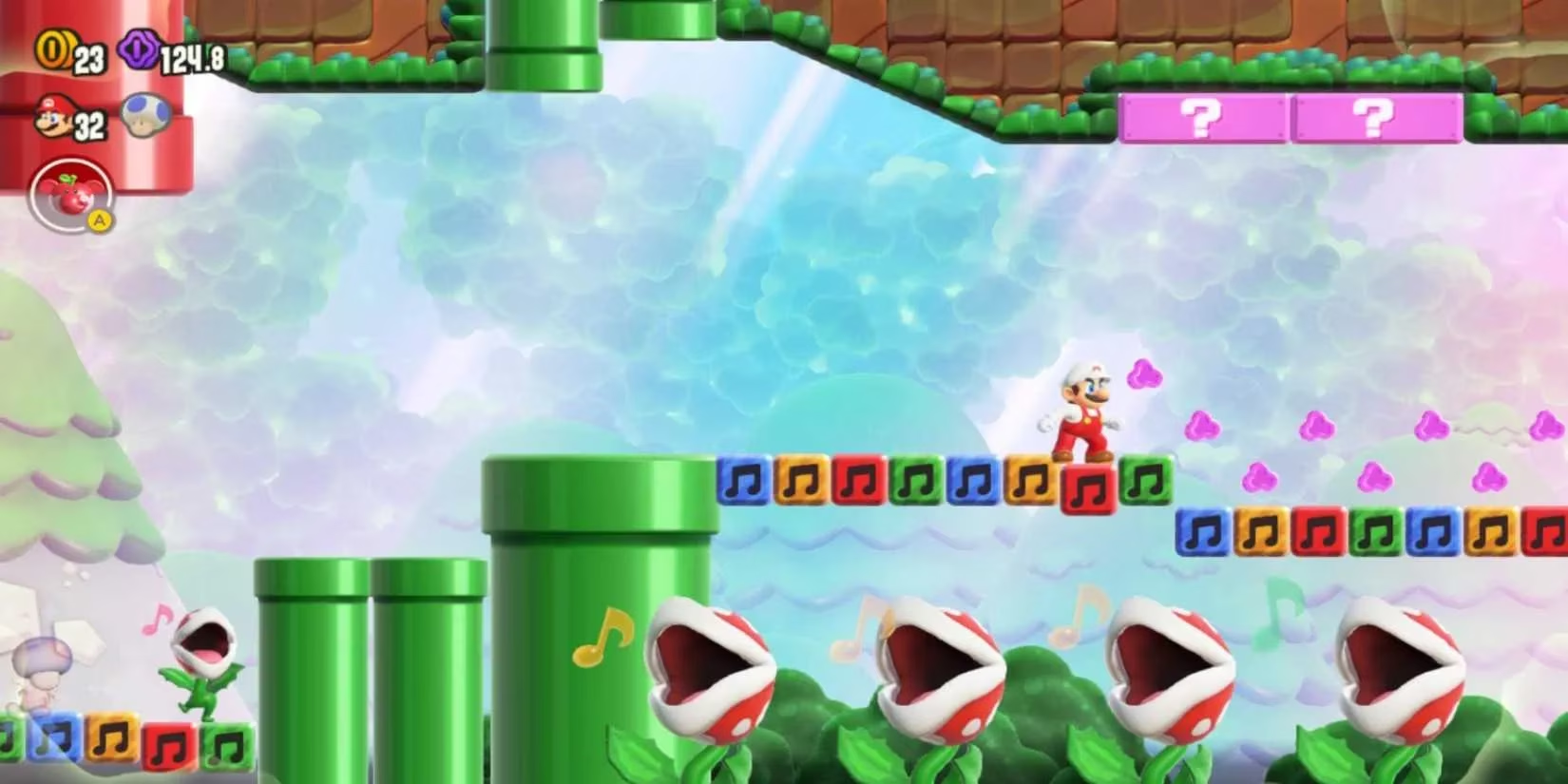
We begin with a dream, or something very much like it. Super Mario Bros. Wonder feels like Nintendo bottled pure, childlike imagination and let it spill across the screen. It’s not just colorful; it’s alive. Every animation has a bouncy, joyful rhythm, every background feels like a page from the most wonderful storybook you never closed. Playing it, I wasn't just controlling a plumber; I was tumbling through a living painting where flowers sang and pipes had faces. It’s the kind of game that makes you grin like an idiot, you know? Pure, unfiltered joy, rendered in the most expressive lines and hues.
Then, there's the quiet, thoughtful beauty of Braid. Time may have passed since its debut, but its painterly art style hasn't aged a day. It’s like walking through a series of evocative, melancholic watercolors. The palette is so delicate, so perfectly balanced, it tugs at something deep in your soul. The visuals act as this beautiful, radiant counterpoint to the game's more somber narrative threads. It’s a masterpiece that proved games could be contemplative art, and honestly, it still takes my breath away.
If Braid is a contemplative watercolor, Rayman Legends is a vibrant, kinetic mural. This game is a festival for the eyes. Every frame feels like a masterpiece of animation in motion—a living, breathing painting. The way particles float, characters stretch and snap, and environments pulse with life is nothing short of magical. It’s an explosive burst of creativity where every screen feels like a celebration. Talk about a feast for the senses!
Venturing into the indie skies, Owlboy awaits. This game is a love letter to pixel art, written with astonishing detail and care. Its fantasy world is so rich, so brimming with charming folklore and inventive characters, it feels like playing through a lost Studio Ghibli film. The pixel work is so warm and inviting, it wraps you in a blanket of nostalgia and wonder. It’s a hidden gem that deserves so much more spotlight.
Speaking of pixels, Shovel Knight took the 8-bit style and polished it to absolute perfection. It doesn’t feel retro for retro's sake; it feels timeless. The sharp, clean lines, the expressive character sprites, the wonderfully atmospheric backgrounds—it all coalesces into an aesthetic that’s both nostalgic and utterly fresh. It’s comfort food for the eyes, proving that true style is eternal.
My journey then took a turn upward, toward a mountain. Celeste is, let's be real, brutally difficult. But oh, what a gorgeous struggle it is. While my fingers cramped from precision jumps, my heart soared at the vistas. From the serene, purple-hued tranquility of the Old Site to the frantic, neon-drenched chaos of the Core, every screen is a meticulously crafted piece of art. The way the background parallax layers create depth, the subtle shifts in palette to reflect Madeline's emotional state… it’s a masterclass in using environment as narrative. A true homage to two-dimensional beauty, indeed.
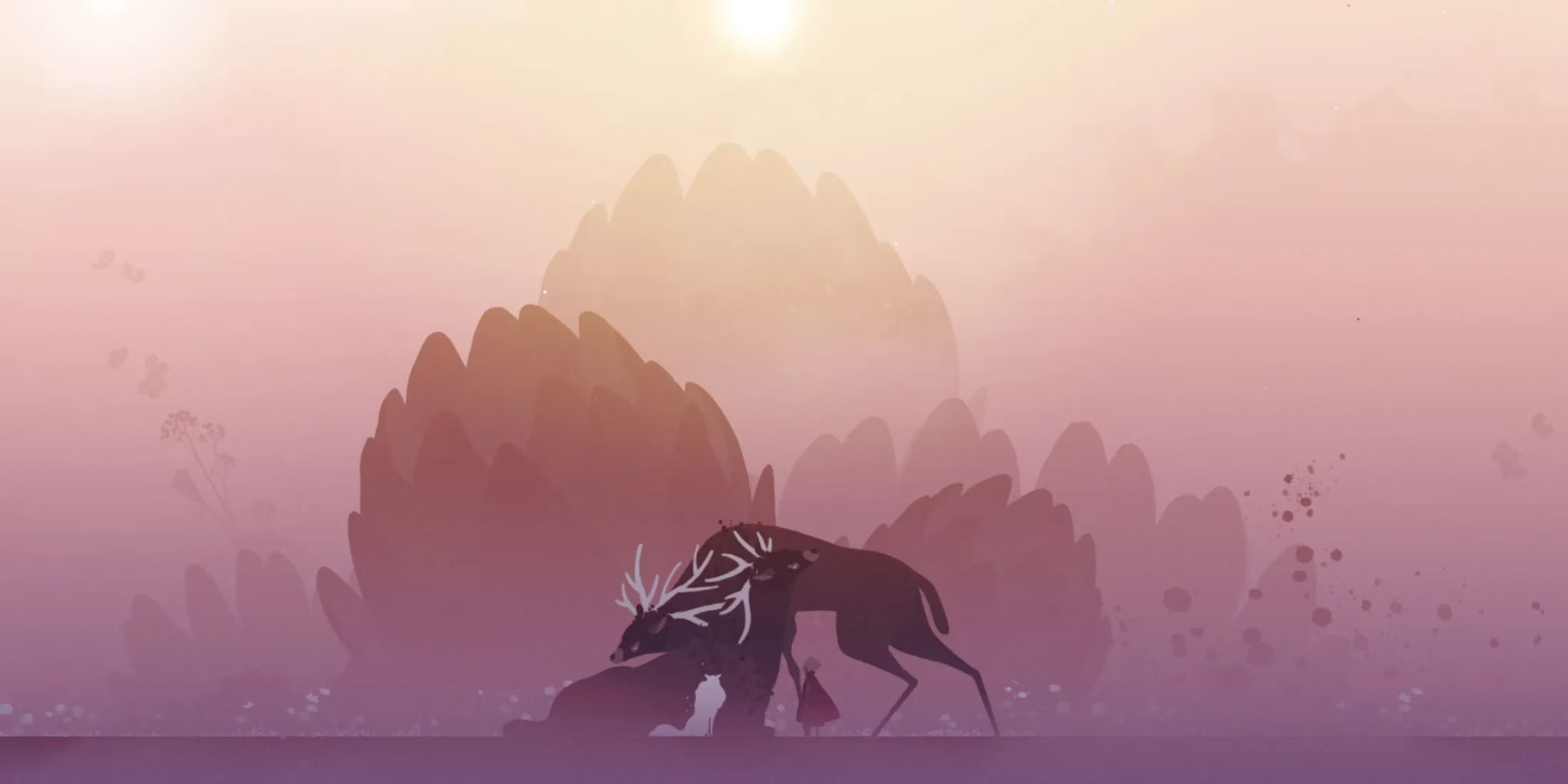
Then, in 2024, a storm of emotion arrived named Neva. Even now, years later, the memory of its visuals is visceral. It’s maximalist art in motion—a watercolor wonder that feels so raw and beautiful it can literally bring tears to your eyes. Alba’s journey is painted with such profound grace that mere words feel inadequate. It’s one of those experiences that just… hits different. The emotions it conjures purely through its aesthetic display are unlike anything else. A recent masterpiece whose brilliance has only grown with time.
The Ori series, particularly Will of the Wisps, built a world that feels like the ultimate fantasy painting. It’s a world of corrupt beauty and pure light, where every biome is a symphony of color and particle effects. The way light filters through decaying leaves, how water refracts in glowing pools, how shadows cling to ancient ruins—it’s a technical and artistic marvel. It doesn’t just show you a world; it makes you feel its decay and its hope in your bones.
Descending into darkness, Hollow Knight presents a beauty that is beautifully bleak. The ruined kingdom of Hallownest is a character in itself, a sprawling, melancholic canvas. The contrast between the lush, overgrown life of Greenpath and the sterile, painful beauty of the White Palace is staggering. It’s a world so visually compelling that even on your tenth visit, you’ll find moments that make you pause and just… absorb it. The art tells the story of a kingdom’s glorious past and tragic fall without a single line of needed dialogue. Simply stunning.
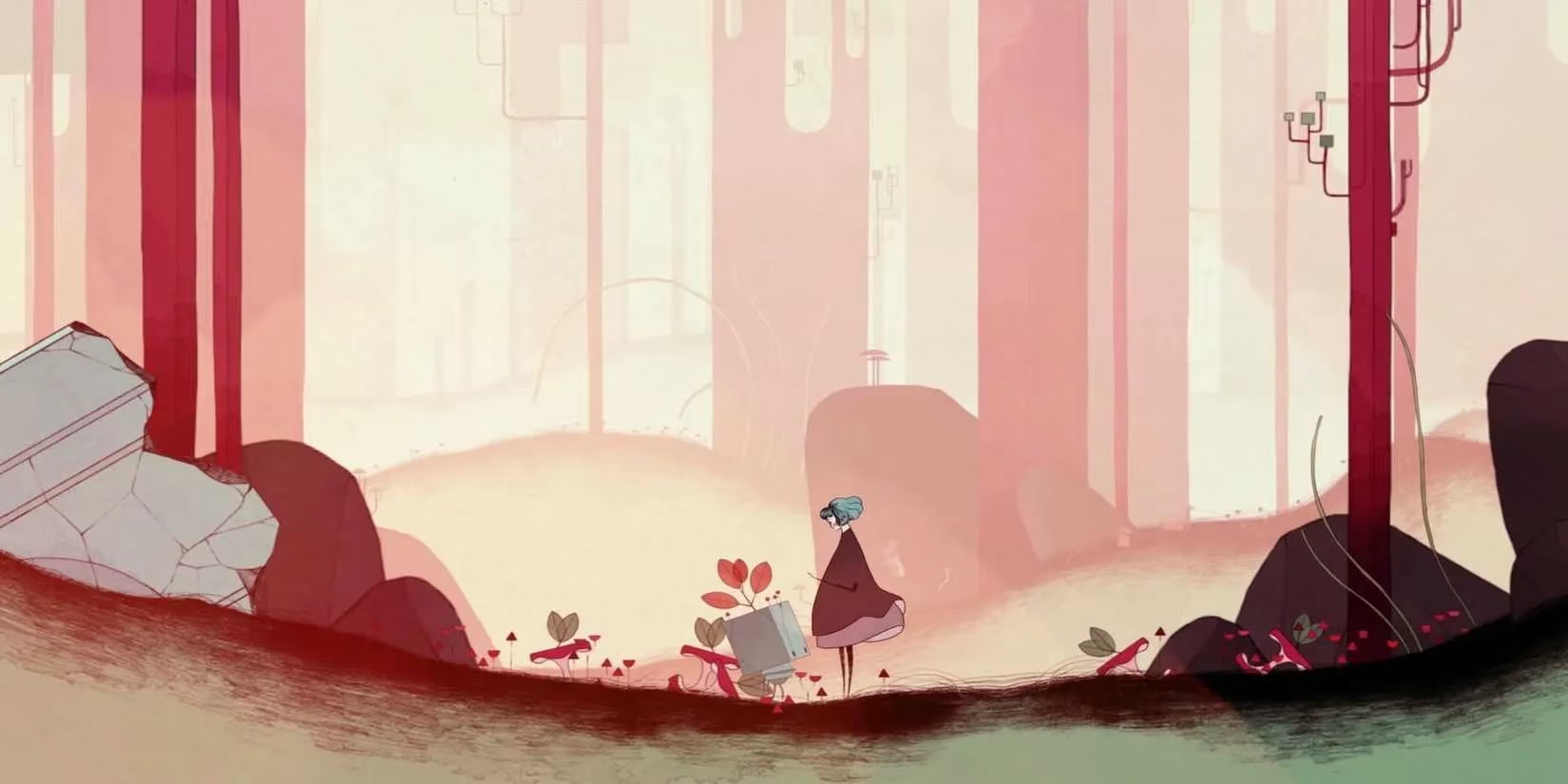
And this brings me to the pinnacle, the game that sits in my heart as a life-changing piece of art: GRIS. Where Neva is maximalist, GRIS is the power of sublime minimalism. It communicates one of the most heart-wrenching stories in gaming almost solely through aesthetics. The use of color—starting in a drained, gray world and slowly reintroducing vibrant reds, greens, and blues as the protagonist heals—is narrative genius. The way shapes form and dissolve, the vast spaces that convey profound loneliness and eventual peace… it’s less a game and more a therapeutic visual poem. It transcends. It achieves a kind of quiet godhood that very few works in any medium ever reach. In the end, calling any game "the most beautiful" is subjective. But what GRIS does, what it represents for emotional expression through visual design, is an undeniable achievement for video games as a whole. It’s the quiet space at the end of a loud, colorful journey—a reminder that sometimes, the most powerful beauty speaks in a whisper.
This is my gallery. These are the worlds that have painted themselves onto my memory. In 2026, they remind me that in a world of ever-advancing polygons, the soul of a game often lives in the stroke of a brush, the placement of a pixel, and the courage to paint with emotion.
Comments