
The indie metroidvania scene has undergone a seismic shift since the late 2010s, and by 2026 the genre feels richer than ever. While mainstream audiences often point to Hollow Knight as the catalyst, the truth is that a wave of inventive developers has used the template established by Metroid and Castlevania in the 1990s to build worlds that feel distinct, daring, and deeply personal. Navigating labyrinthine maps, mastering precise movement, and uncovering hidden secrets remain the core joys, but the modern indie landscape offers so much variety that even seasoned explorers can still stumble upon true hidden gems. In this feature, we dive into several standout titles that have kept the metroidvania spirit blazing bright—titles that deserve a spot in every fan’s library well into the current decade.
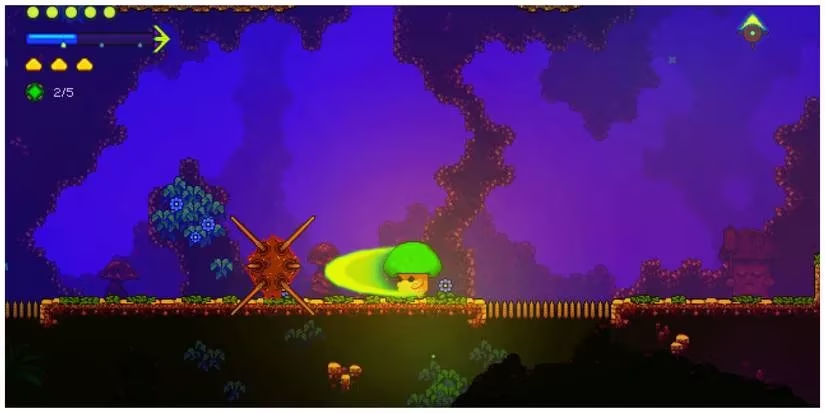
One of the most quietly confident entries is Lone Fungus, a game that wears its fungal theme with joyful abandon. At a glance, it might seem like a quirky twist on the bug-knight formula, but the experience is anchored by remarkably precise movement controls. The protagonist’s nimble leaps and wall-clings turn intricate platforming sections into a rhythmic dance rather than an ordeal of frustration. Crucially, the most punishing platforming gauntlets are entirely optional, which lets players choose between a breezy exploration-focused journey and a hardcore skill-testing gauntlet. Combat, too, carries more depth than it initially lets on: a responsive parry system sits at its core, while an expansive badge collection system allows for buildcrafting that rewards experimentation. Players can mix and match emblems to create setups that emphasize aggression, survivability, or mobility, ensuring that even skirmishes with common enemies feel fresh after a dozen hours.
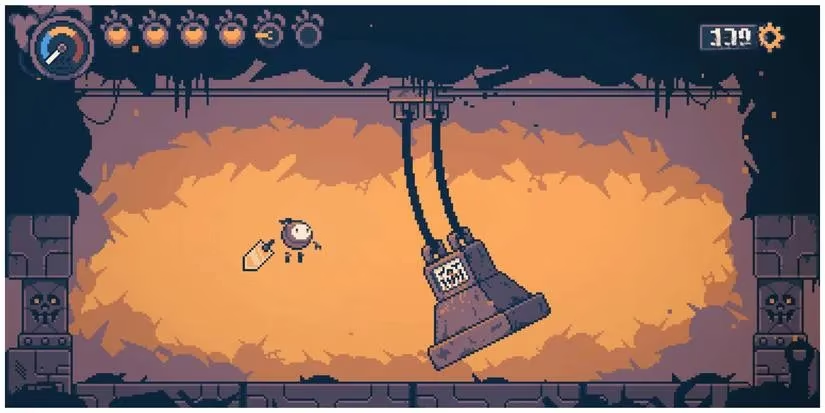
Then there is Haiku, The Robot, a title that first catches the eye with its immaculate Game Boy-style pixel art. The subdued green-tinted palette, the chunky sprites, and the delicate animations evoke a wave of nostalgia, yet the game never feels like a mere throwback. Beneath the charming retro shell lies a meticulously designed metroidvania where every corridor connects with purpose. The mechanical world brims with corrupted robotic foes, and progression is gated by abilities that feel satisfyingly tactile—whether it’s a charged slash, a ground pound, or a dash that doubles as an offensive tool. While the combat loop isn’t revolutionary, the combination of buttery-smooth controls and an atmospheric, coherent world makes exploration its own reward. It stands as proof that a well-executed vision can turn a simple idea into something truly memorable.
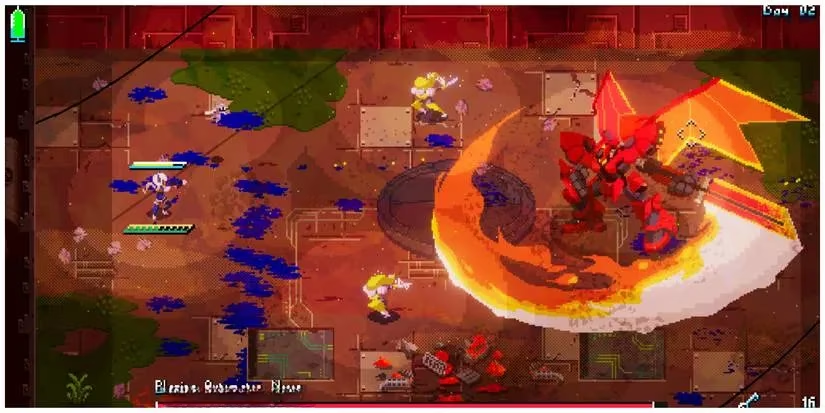
Perhaps the boldest design among recent metroidvanias belongs to Unsighted, a top-down adventure that ties every character—including the player—to an in-game countdown. This timer represents a finite lifespan, and as seconds tick away, beloved NPCs will permanently perish. The mechanic sounds stressful on paper, and indeed it is, but the game allows the timer to be toggled off for those who prefer a traditional pace. Yet many players who lean into the tension discover an emotional weight that few other games manage to achieve. Staring at the dwindling hours of a blacksmith you desperately need for upgrades flips routine resource management into urgent moral decisions. Outside that central gimmick, Unsighted packs a punch with its parry-centric combat and varied biomes that twist from neon-lit cityscapes to overgrown ruins. It remains, years after release, one of the most conversation-worthy indie titles for how it rethinks player agency.
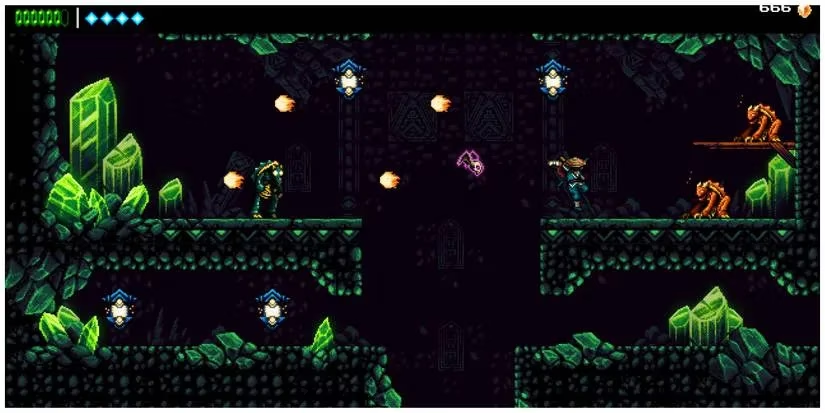
The Messenger plays a clever trick on its audience. It begins as a straightforward action platformer evoking Ninja Gaiden, but partway through the journey it unfolds into a full-fledged metroidvania with a time-travel twist. The most celebrated feature is its dual presentation: areas flicker between 8-bit and 16-bit aesthetics to represent past and future eras, and this isn’t just cosmetic. Environment layouts, enemy placements, and even music change with the shift, giving every zone a dual identity. The platforming demands precision, yet the game’s innovative movement options—like the mid-air grappling hook and the Cloudstep technique that chains jumps off of projectiles—transform traversal into a playground of creative momentum. With its sharp writing and rock-solid design, The Messenger stands as a masterclass in how a metroidvania can surprise even veterans.
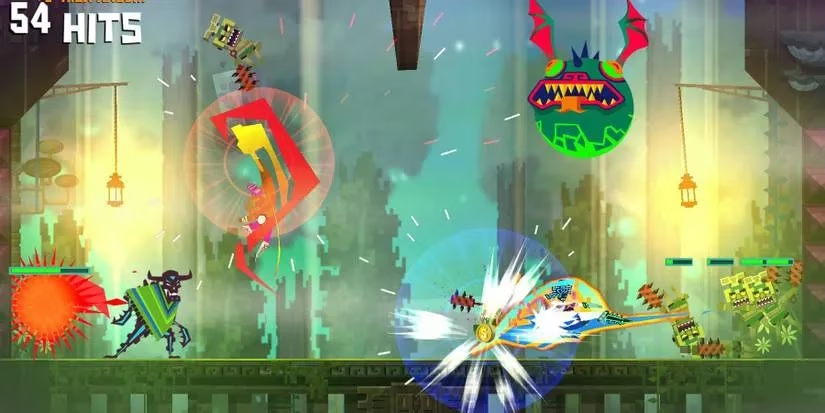
For those craving vibrant color and continuous momentum, Guacamelee! remains a joyous explosion of luchador culture and interdimensional brawling. Its combat channels the spirit of beat-‘em-ups, with grapple moves, slams, and flashy specials that turn groups of enemies into punching bags of confetti. The metroidvania layering comes through dimension-swapping—at the press of a button, the living world transforms into the land of the dead, revealing hidden platforms, new pathways, and secret challenge rooms. While the ability-gating is more straightforward than in some contemporaries, the game compensates with immense style and one of the best cooperative modes in the genre. Even in 2026, booting up Guacamelee! feels like a fiesta, and its streamlined structure makes it a perfect entry point for newcomers.
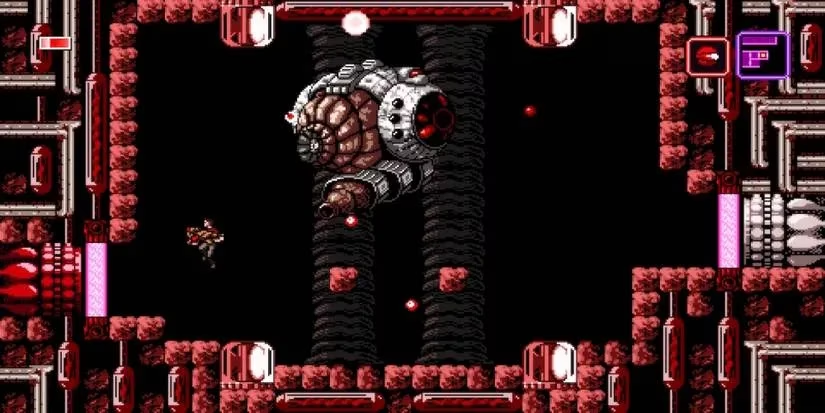
Axiom Verge goes in the opposite direction, wrapping players in crushing isolation. Its retro-pixel aesthetic deliberately echoes the original Metroid, but the alien biomes go deeper into biomechanical strangeness. The labyrinth is not dotted with friendly faces; instead, glitching artifacts and unsettling organic corridors push the protagonist deeper into a scientific nightmare. A wide arsenal of weapons, many with bizarre properties like a drill that phases through walls or a beam that corrupts enemies, ensures combat never grows stale. While the lack of distinct visual landmarks can occasionally leave players disoriented, that sensation is intentional—Axiom Verge wants you to feel like an intruder in a world that doesn’t want you, and it succeeds brilliantly.
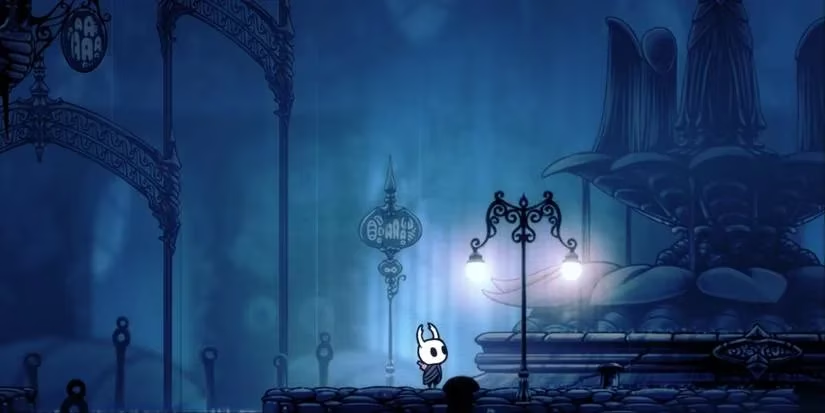
No discussion of modern metroidvanias can ignore Hollow Knight, the game that became both benchmark and blessing for the genre. Even as the years roll forward and the shadow of the sequel looms, the original Hallownest remains a masterpiece of interconnected design. Every crumbling kingdom, fungal grove, and rain-drenched city street feels hand-painted with melancholy and mystery. The combat demands precision yet remains fair, the Charm system allows for deep build customization, and the boss roster is legendary—from the elegant dance with Hornet to the brutal endurance test of the Pantheons. What truly elevates Hollow Knight, however, is how its world-building seeps into every quiet moment: a humming miner, a grieving warrior, a cryptic wanderer. It is a game that rewards curiosity not just with loot but with fragments of a sorrowful, beautiful story. As the indie metroidvania scene continues to grow, Hollow Knight endures as the gold standard that each new contender must measure itself against.
The metroidvania genre, far from stagnating, has proven in recent years that two-dimensional exploration can still ignite wonder, tension, and pure delight. Whether you crave the fungal tightrope of Lone Fungus, the oppressive countdown of Unsighted, or the polished grandeur of Hollow Knight, 2026 offers a map filled with brilliant destinations. These games show that the genre’s true strength isn’t just locked doors and new abilities—it’s the worlds waiting to be discovered behind them.
Comments