
As 2026 rolls around and I look back on the first half of this decade, it's impossible not to marvel at the indie gaming landscape. The early 2020s gifted us with so many breakthrough titles, but two in particular didn't just enter the scene—they redefined their entire genres and set a new gold standard. Hades and Hollow Knight, despite their different gameplay loops, share a legacy of excellence that has left an indelible mark on how we think about indie development.
👑 The Crowning Jewels of Their Genres
These two games are perfect examples of indie studios reaching for the stars and actually grabbing them. Supergiant Games' Hades wasn't just another roguelike; it was a masterclass in weaving compelling narrative into a genre known for its punishing repetition. Meanwhile, Team Cherry's Hollow Knight didn't just create a Metroidvania—it crafted an entire haunting, beautiful world that players got utterly lost in (in the best way possible!).
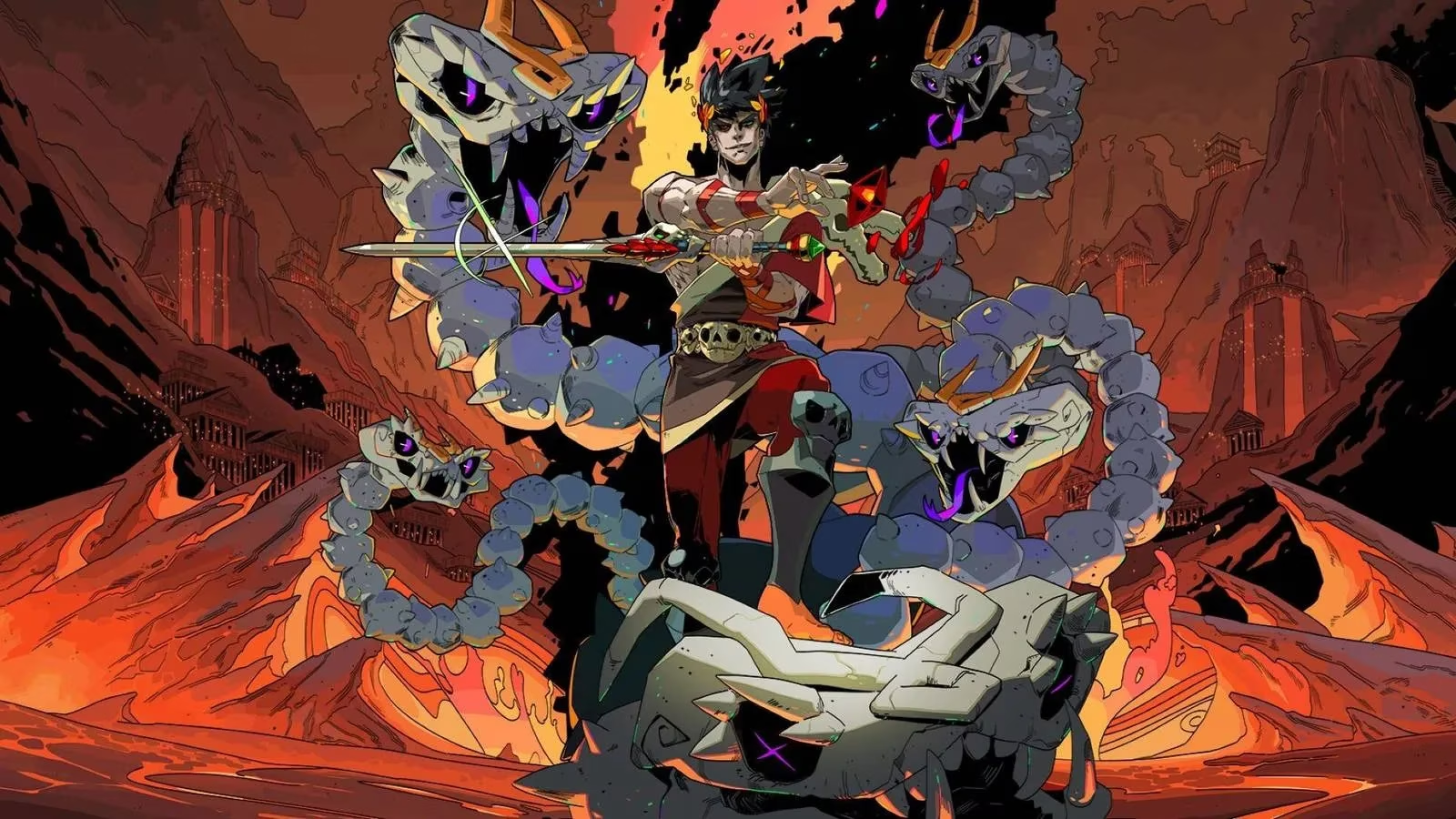
🔥 Hades: The Roguelike That Made Death Rewarding
Let's talk about Hades first. When it hit early access in 2018, I remember thinking, "Another roguelike?" But Supergiant had a genius idea: make every death part of the story. Instead of feeling like a reset, each run back to the House of Hades revealed more about the dysfunctional Greek god family. The gameplay was perfectly paced, the art style was spectacular, and it absolutely nailed that "one more try" feeling.
What made Hades special was its accessibility. Unlike many roguelikes that pride themselves on brutal difficulty, Hades pulled in players of all skill levels with its God Mode and gradual power progression. You felt yourself getting stronger, both in terms of character upgrades and player skill. By the time it fully launched in late 2020, it had already captured hearts and awards alike.
Why Hades Worked So Well:
-
✅ Narrative Integration: Story progressed with each escape attempt
-
✅ Accessible Design: Welcoming to newcomers without sacrificing depth
-
✅ Artistic Cohesion: Every visual and audio element served the Greek myth theme
-
✅ Replay Value: Different weapon and boon combinations created endless variety
🐛 Hollow Knight: The Metroidvania That Built a Universe
Now, Hollow Knight's journey was different. Announced back in 2013 and finally releasing in 2017, Team Cherry's debut was a labor of love that showed in every pixel. Inspired by classics like Metroid and Zelda II, it took the exploration-focused platformer and injected it with soul (literally and figuratively). The game's difficulty became part of its legend, but what kept players coming back wasn't just the challenge—it was the world.
Hallownest felt alive, tragic, and mysterious. Every new area revealed more about the kingdom's fall, every NPC had a story, and the simple yet evocative art style created an atmosphere that heavier games couldn't match. It proved that a small team could create a world as rich and interconnected as any AAA title.
Hollow Knight's Lasting Impact:
-
🏆 Genre Elevation: Became the benchmark for modern Metroidvanias
-
🏆 World-Building Masterclass: Environmental storytelling at its finest
-
🏆 Commercial Success: Proved indie games could achieve massive popularity
-
🏆 Difficulty as Feature: Tough but fair gameplay that rewarded mastery
📈 Parallel Paths to Greatness
What's fascinating is how both games followed similar trajectories despite their differences:
| Aspect | Hollow Knight | Hades |
|---|---|---|
| Genre | Metroidvania | Roguelike |
| Release | 2017 | 2020 (Full) |
| Core Appeal | Exploration & Atmosphere | Narrative & Combat Flow |
| Legacy | Metroidvania Renaissance | Roguelike Evolution |
| Sequel Status | Silksong (Highly Anticipated) | Hades II (Early Access) |
Both titles have become so influential that their sequels are among the most anticipated games in the indie space. Hades II entering early access shows Supergiant's confidence in their iterative process, while the enduring mystery around Hollow Knight: Silksong demonstrates just how hungry fans are for more of that world.
💫 Why These Games Matter in 2026
Looking at the current gaming landscape, the influence of both titles is everywhere. You can see Hades' DNA in how roguelikes now incorporate more persistent storytelling and progression systems. Hollow Knight's approach to world-building has become a template for atmospheric exploration games. They proved that indie games could not only compete with AAA titles but actually surpass them in innovation and heart.
These games weren't just popular—they became cultural touchstones. They showed that gameplay innovation, artistic vision, and compelling storytelling could come from small teams with big ideas. As we move further into the 2020s, their legacy continues to shape what players expect from indie experiences: not just good games, but unforgettable ones.
🎮 The Takeaway for Players
If you haven't experienced these masterpieces yet, what are you waiting for? In 2026, they're more accessible than ever across multiple platforms. Each offers dozens (if not hundreds) of hours of deeply satisfying gameplay. They represent the absolute best of what indie development can achieve—creative freedom executed with precision and passion.
So whether you're drawn to the underworld escapades of Hades or the haunting depths of Hallownest, you're in for a treat. These aren't just games; they're landmarks in gaming history that continue to inspire both players and developers alike. And with their sequels on the horizon, their stories are far from over! ✨
Comments