
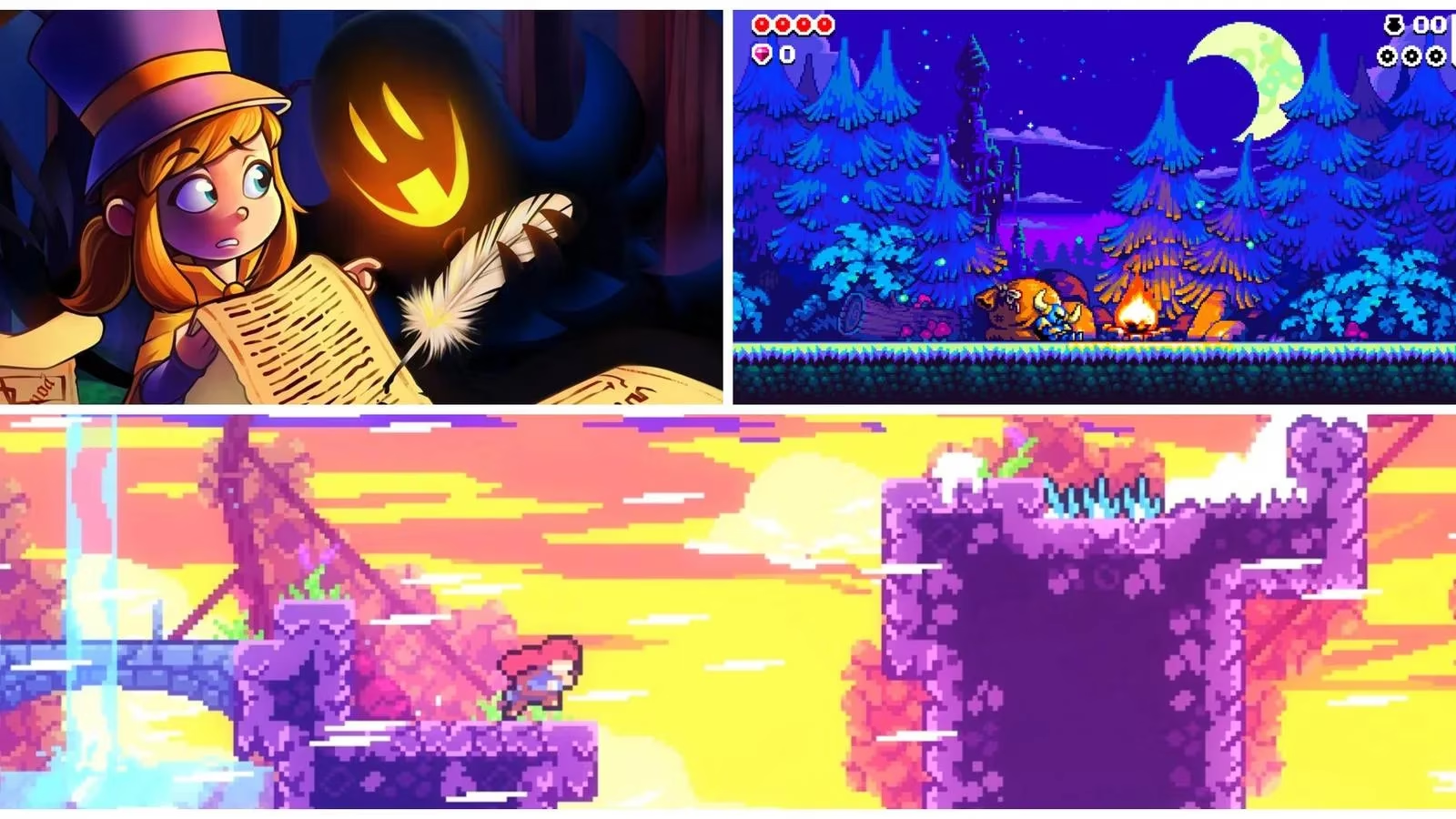
As the gaming industry marched into the 2020s, something curious happened to a genre that once defined the medium. Big-budget studios, obsessed with sprawling open worlds and cinematic shooters, largely abandoned the humble platformer. Where had the thrill of perfectly timed jumps gone? The simple joy of exploring colorful, obstacle-laden landscapes? For a while, it seemed the days of bouncing through dreamlike levels were destined to become nostalgic relics. But nature abhors a vacuum, and in that void, a legion of independent developers rose to craft some of the most unforgettable experiences of the last ten years. By 2026, these indie masterpieces haven’t just survived; they’ve become the gold standard, cherished by players who still lose themselves in their crafted worlds. Could a handful of passionate creators truly revive the magic of the platformer? The answer echoed from every rooftop and cavern: absolutely.
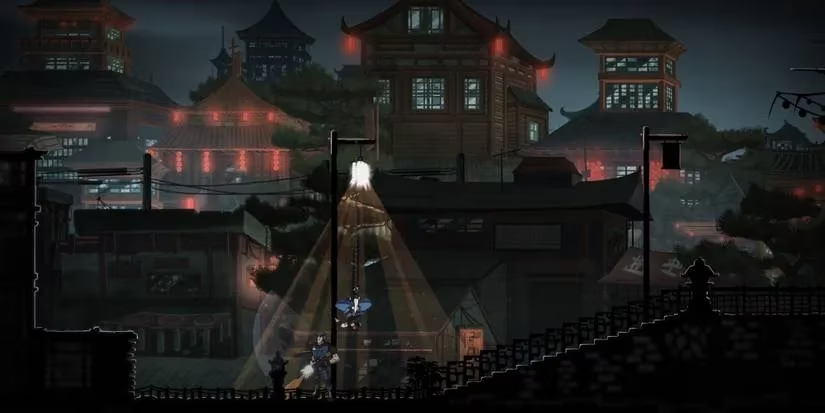
Take the silent, deadly grace of Mark of the Ninja, for instance. In a world where stealth often feels clunky, this 2D gem turned every shadow into a playground. A ninja slid across moonlit rooftops, somersaulting through bamboo scaffolds, and slipped past guards with a fluidity that felt like a dance. Its hand-drawn, Saturday-morning-cartoon aesthetic belied the razor-sharp precision required. How does a game make you feel both incredibly powerful and perpetually on edge? By making every successful silent takedown a work of art. Even in 2026, players return to its ancient temples and neon-lit cities, not for the nostalgia, but because the mechanics remain as crisp as ever.
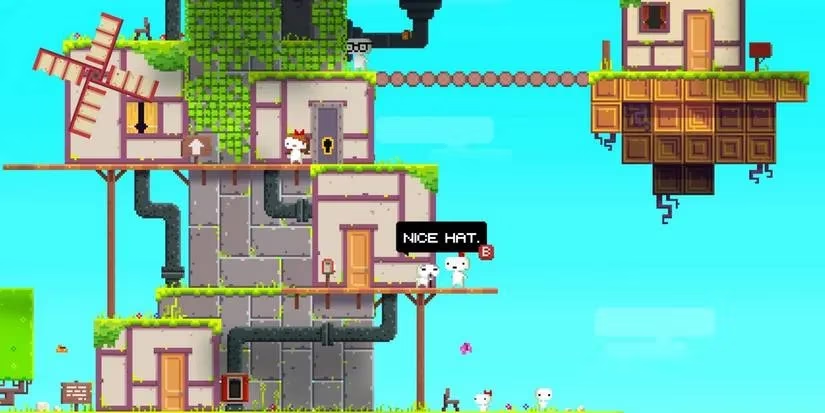
Then there was the gentle revolution of Fez, a game that asked a simple question: what if the world itself could turn? Wearing its pixel-art heart on its sleeve, Fez introduced a dimension-rotating mechanic that transformed platforming into a serene, mind-bending puzzle. At the press of a button, the entire scenery shifted, revealing new pathways hidden in plain sight. It was never about reflexes, but about perspective. Players found themselves staring at screen after screen, whispering, “What if I just look at it differently?” That single clever twist inspired a wave of genre-blending experiments, proving that platforming didn’t need enemies to be captivating—just a brilliant idea.
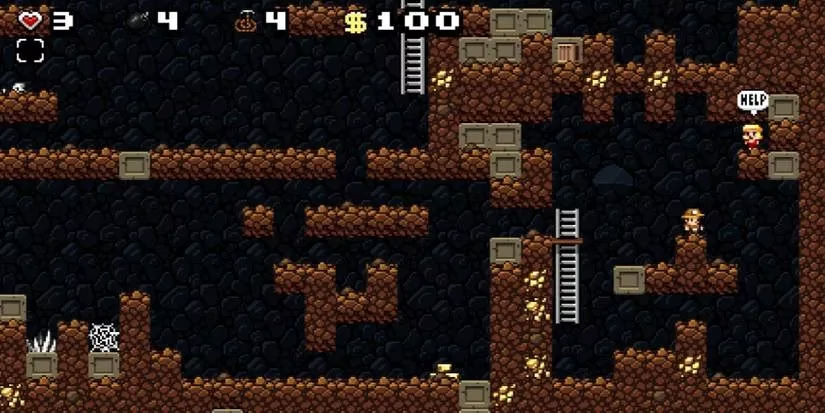
Not every indie journey was serene. Some were brazenly punishing, like Spelunky, the rogue-lite that turned every cave dive into a nail-biting tale of triumph or tragedy. Each descent into its procedurally generated mineshafts was a fresh story, where a misplaced whip crack or an unseen arrow trap meant starting from square one. But what a story it always became! The clink of a golden idol, the crack of the explorer’s whip against a bat, and the desperate scramble to escape a collapsing temple forged memories that players still share like war stories. In 2026, the community around Spelunky remains as lively as ever, a testament to how unpredictability and mastery can coexist perfectly.
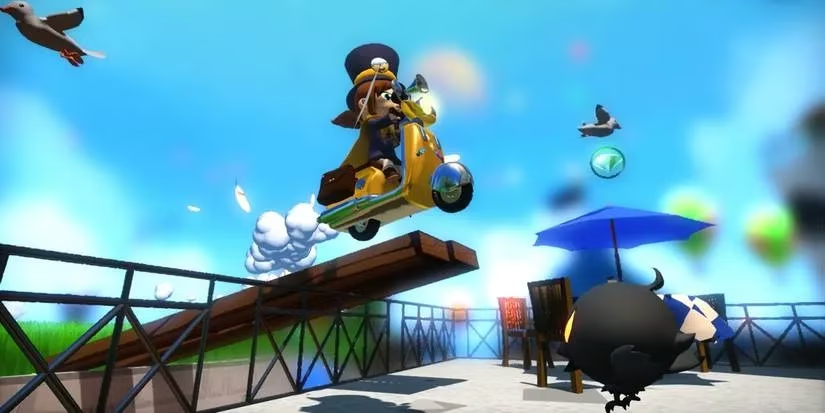
And yet, for all its difficulty, the platformer also remembered how to be pure, unfiltered delight. A Hat in Time marched into the scene with all the charm of the 3D collect-a-thons that once ruled living rooms. Players controlled Hat Kid, a time-traveling youngster with a mighty top hat, bouncing across disparate planets that oozed personality. It felt like a lost relic from the Nintendo 64 era, polished to a glint. How many games can successfully mimic the joy of Super Mario 64 without feeling derivative? A Hat in Time didn’t just mimic; it captured the very soul, filling a void so many had felt for decades. By 2026, it remains a favorite comfort game, its hub worlds still ringing with the laughter of players discovering its secrets.
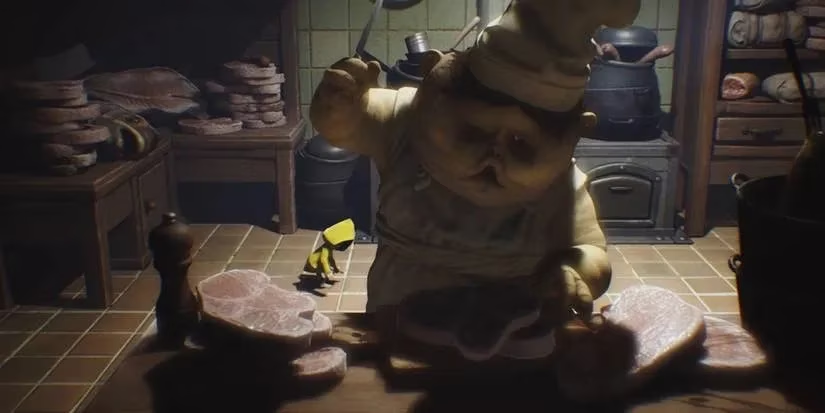
But the indie platformer wasn’t content with just being cute or nostalgic. It also peered into the shadows and found profound, unsettling beauty. Little Nightmares dragged players into the depths of the Maw, an iron vessel ruled by grotesque adults whose mere presence oozed dread. What appeared as a children’s tale quickly curdled into a silent, anxious escape. The floorboards groaned, chefs lumbered with cleavers, and a long-armed janitor reached from impossible distances. Was there ever a platformer that made vulnerability feel so visceral? To play Little Nightmares in a dark room in 2026 is still to feel your heart pounding against your ribs, a masterclass in atmospheric horror disguised as a puzzle-platformer.
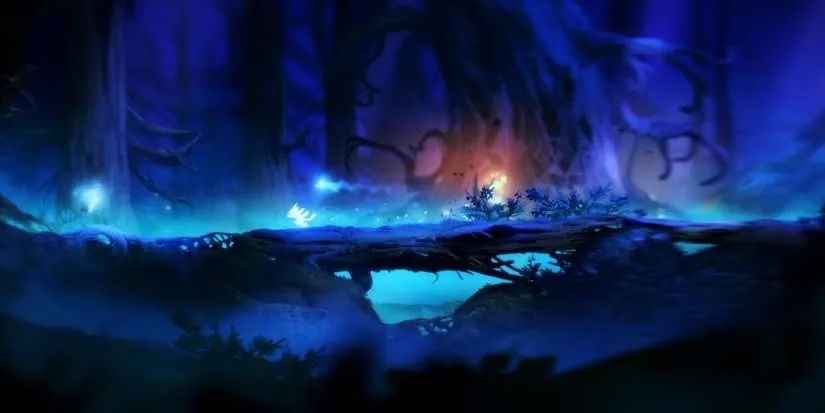
Some indie titles blurred the line between studio size and ambition, and few did so as breathtakingly as Ori and the Blind Forest. This metroidvania was a living painting, its luminescent forests and mournful soundtrack pulling players into a world of loss and hope. The platforming itself was a kinetic ballet—bash, leap, glide—a seamless flow that other games still struggle to match. Was it truly indie? That debate fades the moment you take control of the guardian spirit; the heart and soul poured into every frame feel utterly handcrafted. Years later, the Ginso Tree escape sequence is still held up as one of the finest set-pieces in gaming history.
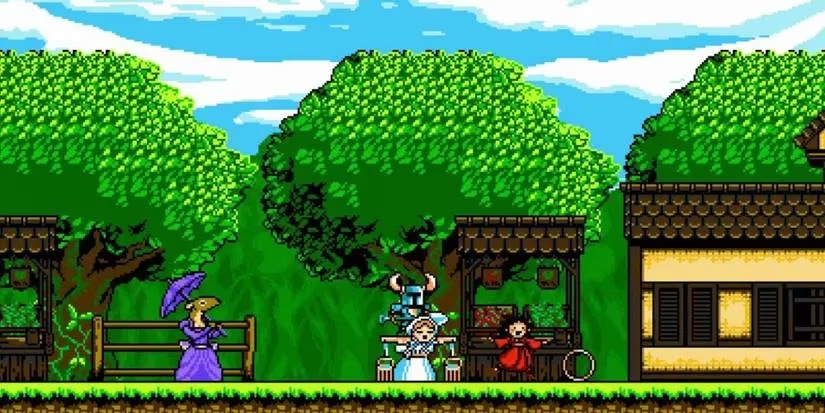
From lush forests to 8-bit castles, the platformer also proved that retro aesthetics could hide modern depth. Shovel Knight arrived like a love letter to the classics, yet it wrote its own legend. The blue-armored hero dug through themed stages with a pogo-rebounding shovel strike that felt both familiar and fresh. Behind the nostalgic beeps and boops lay meticulously designed levels and a cast of tragic knights, the Order of No Quarter. In 2026, the expanded Treasure Trove compendium is still a go-to for any player craving a pure, chiptune-fueled adventure, a reminder that pixel art never goes out of style when the heart is genuine.
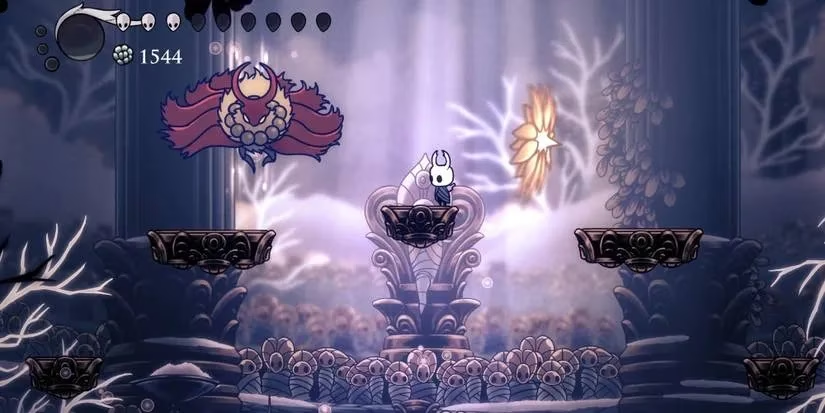
Then there’s the dark, sprawling kingdom of Hollow Knight, a game that redefined what a $15 purchase could deliver. Beneath the melancholy surface of Hallownest lay a labyrinth of interconnected passages, fierce bosses, and secrets that whispered of a fallen civilization. Its difficulty was legendary, but never unfair; every death was a lesson in patience and pattern recognition. Could a game about a tiny, voiceless bug elicit such profound feelings of isolation and wonder? Players in 2026 still debate the best charm builds and still get chills from the City of Tears’ haunting score, proving that this metroidvania has etched itself permanently into gaming culture.
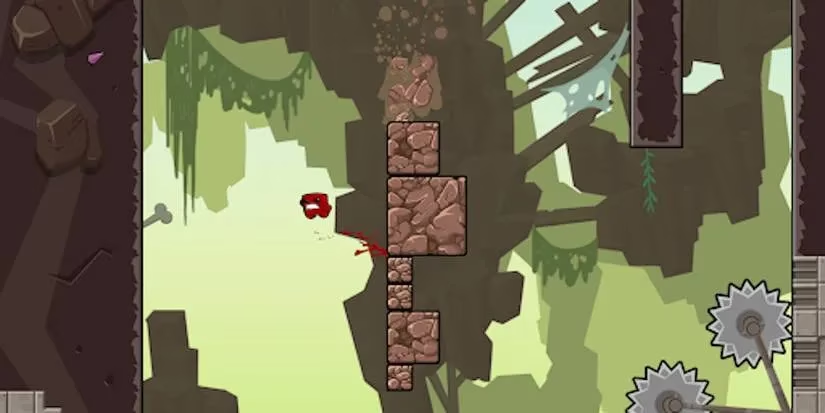
If Hollow Knight was a slow-burning epic, then Super Meat Boy was a lightning-fast, blood-splattered challenge. This was platforming distilled to its rawest, most addictive form: a cube of meat sprinting, wall-jumping, and narrowly dodging circular saws across thousands of devilish levels. Success wasn’t about exploration, but about muscle memory and instant restarts. How many times did a player slam a controller, only to immediately press “retry”? The answer was always “one more time.” In the speedrunning communities of 2026, Super Meat Boy is still a fierce proving ground, a testament to the genre’s ability to forge superhuman reflexes from sheer determination.
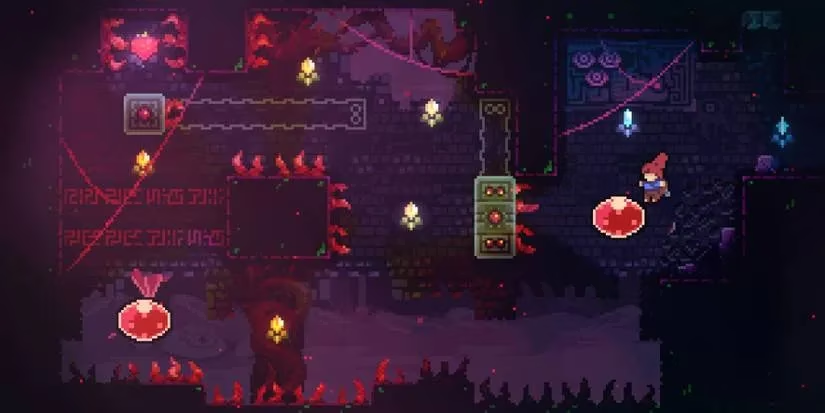
And finally, at the summit of both literal and metaphorical mountains, stands Celeste. Not merely a platformer, but a tender, life-changing narrative wrapped in pixel-perfect design. Madeline’s climb up Celeste Mountain was about more than strawberries and crystal dash refills; it was a metaphor for confronting anxiety and self-doubt. Every screen was a puzzle of movement, every death an encouragement to try again without mockery. The soundtrack soared, the colors shone, and the entire experience felt like a personal triumph shared with a friend. Could a game be perfect? In 2026, when players talk about games that matter, about experiences that genuinely helped them through dark times, Celeste is always spoken of with reverent silence. It stands as the crowning achievement of the indie platforming renaissance—proof that a small team, armed with empathy and pixel art, can change lives.
These ten games, and so many more like them, didn’t just fill a gap. They showed a direction. While the blockbuster industry chases the next monolithic live-service, the platformer thrives in the hands of those who genuinely love it. In 2026, they are not relics of a bygone era; they are vibrant, treasured worlds, waiting to be discovered or revisited. And as any player who has ever nailed that impossible jump can attest, there’s a timeless magic in making the leap.
Comments