
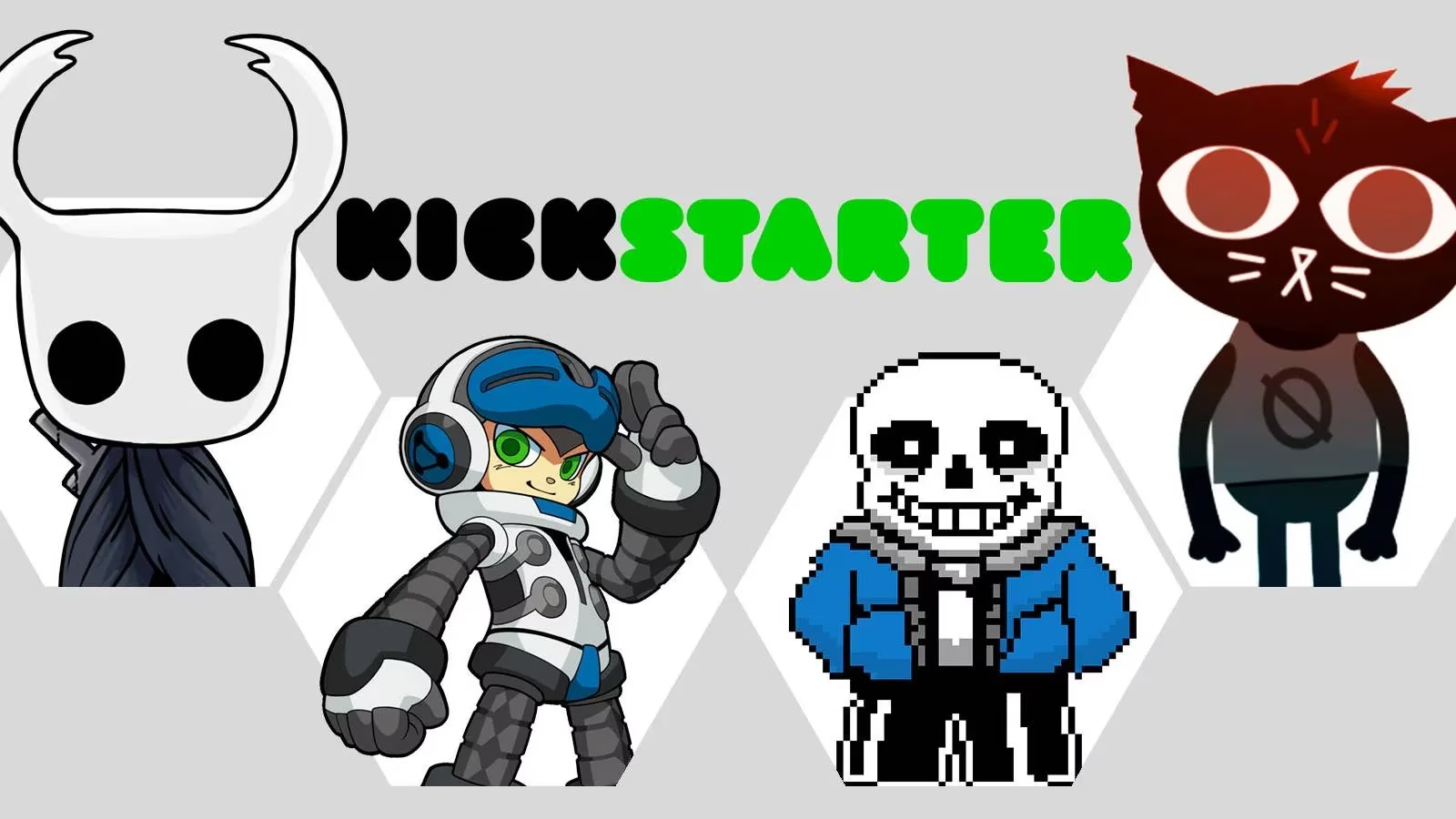
Looking back from 2026, I’m still struck by how much the video game landscape has changed since I first discovered independent gems through crowdfunding. Back in the early 2010s, I was a gamer tired of the same AAA sequels, longing for something fresh. That’s when I stumbled upon Kickstarter—a digital campfire where passionate developers shared dreams, and ordinary players like me could help kindle them. Today, as I scroll through my library, I see titles that started as humble PDF proposals and now stand as undeniable pillars of gaming culture. These are the stories of the campaigns I backed, the failures I watched, and the masterpieces that forever reshaped my taste.
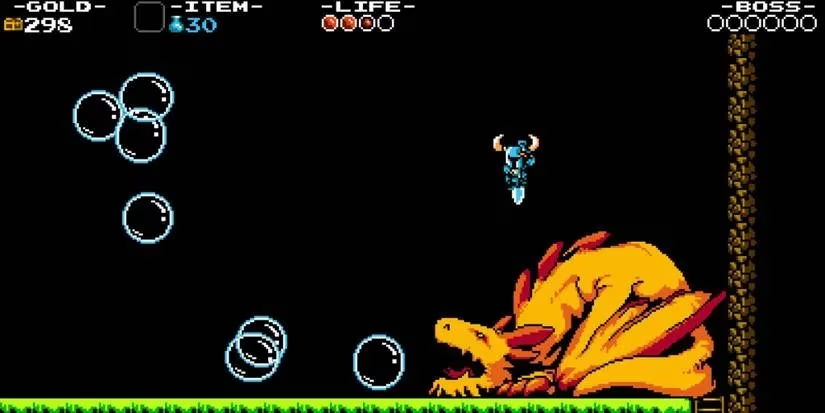
I vividly remember the moment I clicked “Pledge” on Shovel Knight. It was 2013, and Yacht Club Games was a tiny team promising a love letter to Mega Man and Castlevania. They quadrupled their $75,000 goal, and I got a digital copy that later became a true phenomenon. In the years that followed, I dove into every expansion and spin-off—Shovel Knight: Treasure Trove became the definitive edition, and even in 2026, my friends and I still debate the best boss fights while we play the roguelike prequel Shovel Knight Dig. Who would have thought a little blue warrior with a shovel could spark such a legacy?
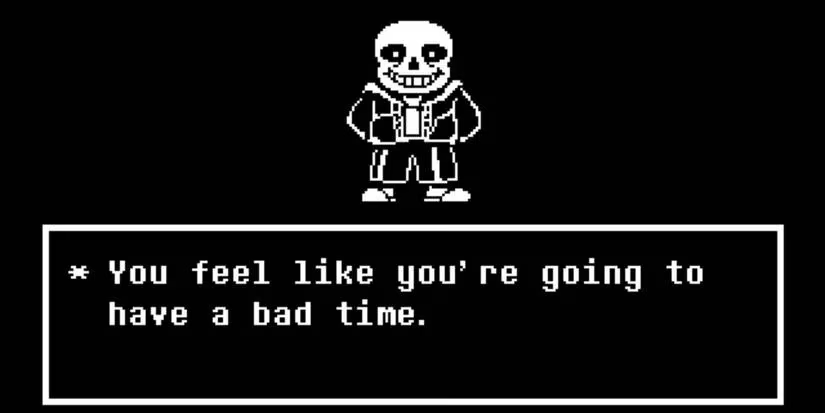
Then came Undertale, a game that almost single-handedly redefined storytelling in RPGs. Toby Fox’s Kickstarter pitch was modest, but what he delivered was a heartfelt odyssey of monsters, mercy, and moral choices. I remember staying up until 3 a.m., sobbing after the true pacifist ending. Even now, “Megalovania” blares from my workout playlist, and Sans still pops up in Super Smash Bros. Ultimate tournaments. It’s surreal to think that a game created almost entirely by one person influenced an entire generation of developers—and that I was among the first to believe in it.
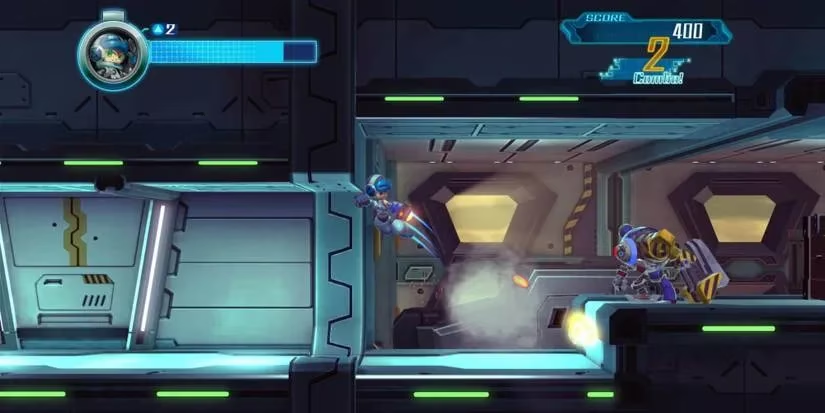
Not every story had a perfect ending, though. I still cringe when I recall Mighty No. 9. Led by Mega Man legend Keiji Inafune, it raised over $3.8 million on Kickstarter, only to suffer endless delays and a tepid reception. I was among the backers who never received their promised bonuses, and that ending credits sequence longer than the game itself became an industry joke. Yet, in a strange way, it taught me an important lesson: crowdfunding is about passion, not guarantees. Even so, some failures paved the way for smarter campaigns and more resilient developers.
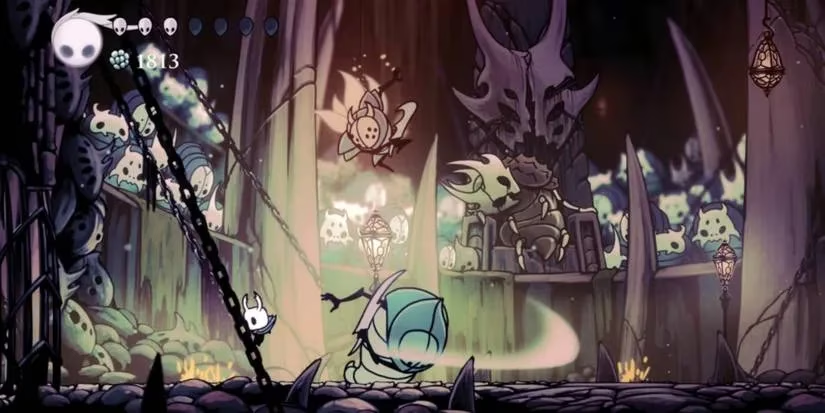
Redemption came in the form of Hollow Knight. I backed it without knowing it would become the gold standard for hand-drawn Metroidvanias. When the game finally launched in 2017, I was blown away by the tragic beauty of Hallownest and the relentless difficulty that rivaled Dark Souls. By 2026, I’ve completed Silksong three times, but the original still holds a special place. Every time I see Hornet’s swift movement, I’m reminded of that 2014 Kickstarter page and the tiny team from Adelaide who dared to dream big.
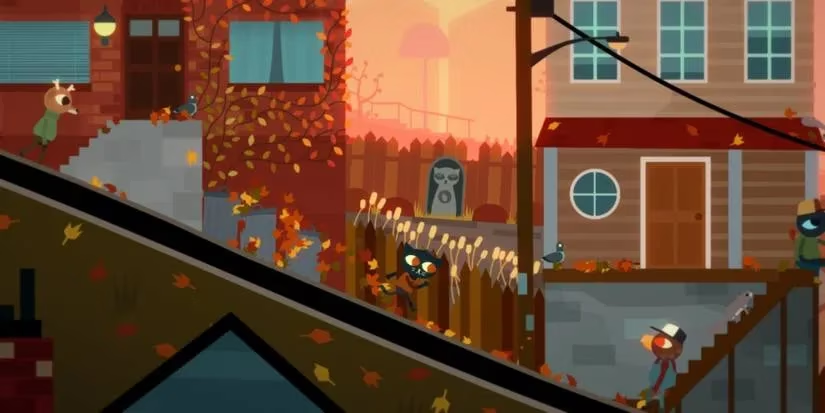
Of course, Kickstarter didn’t only fuel action-platformers. Night in the Woods was a narrative masterpiece that I originally overlooked until friends begged me to read its Kickstarter update emails. The story of Mae, a college dropout uncovering small-town secrets, felt painfully real and hilariously absurd. Years later, I still quote lines from Gregg the fox, and the game’s exploration of mental health remains a touchstone for indie storytelling. It proved that a game doesn’t need deep mechanics to leave a deep scar.
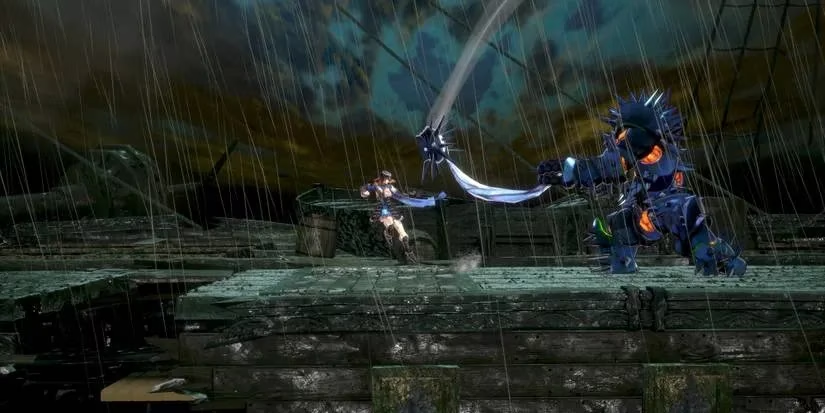
Another gem was Bloodstained: Ritual of the Night. After Konami’s Castlevania went dormant, Koji Igarashi’s Kickstarter—which amassed $5.5 million—felt like a desperate plea from fans. I was one of them, and the wait was agonizing. But when Miriam dashed through demon-infested corridors in her glass-stained dress, I wept with joy. The success spawned the Curse of the Moon prequels and even a sequel in 2024, cementing the franchise as the true spiritual successor to Symphony of the Night. It wouldn’t exist without crowdfunding.
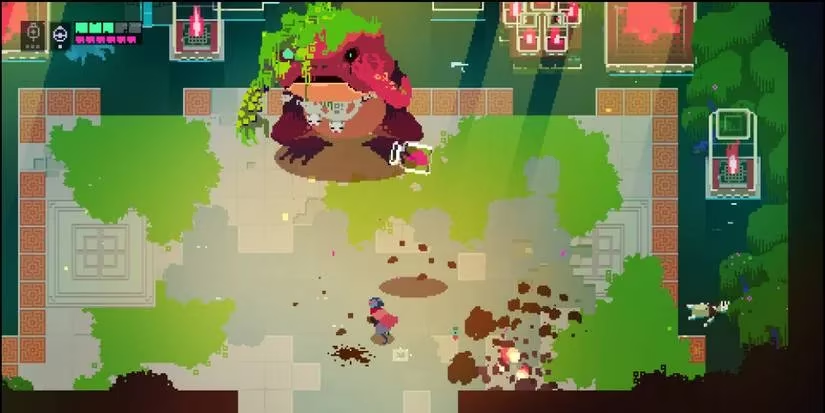
Looking at my shelf full of Yooka-Laylee figures and Hyper Light Drifter art books, I’m amazed by the community that turned spare change into cultural milestones. Hyper Light Drifter in particular—funded with $640,000 from a modest $27,000 goal—later blossomed into the universe of Solar Ash and a gorgeous animated series. Every time I boot up its neon-drenched ruins, I still feel the same awe I did a decade ago.
Crowdfunding wasn’t perfect. For every Hollow Knight, there was a Mighty No. 9. But in 2026, I can’t imagine a gaming world without these experiences. They taught me that true magic often comes not from massive budgets, but from creators and communities willing to take a leap of faith together. And as I watch yet another indie Kickstarter notification light up my phone, I’m ready to believe again.
Comments