
It’s the fall of 2026, and I’m huddled in my apartment as rain streaks down the window, controller in hand, completely lost in another world. As a professional gamer, I’ve spent thousands of hours dissecting mechanics, mastering frame data, and chasing the competitive edge—but the games that truly stay with me are the ones that swallow me whole. You know the feeling: when the soundtrack seems to seep into your bones, when the art style wraps around you like a fog, and when you catch yourself holding your breath because the atmosphere is just that thick. Did I ever think a fishing game could make my heart race? Or that commanding a drone through a dead spaceship could leave me genuinely spooked? Let me walk you through my journey with the most atmospheric games of the last decade—each one a doorway into a world I’ll never forget.
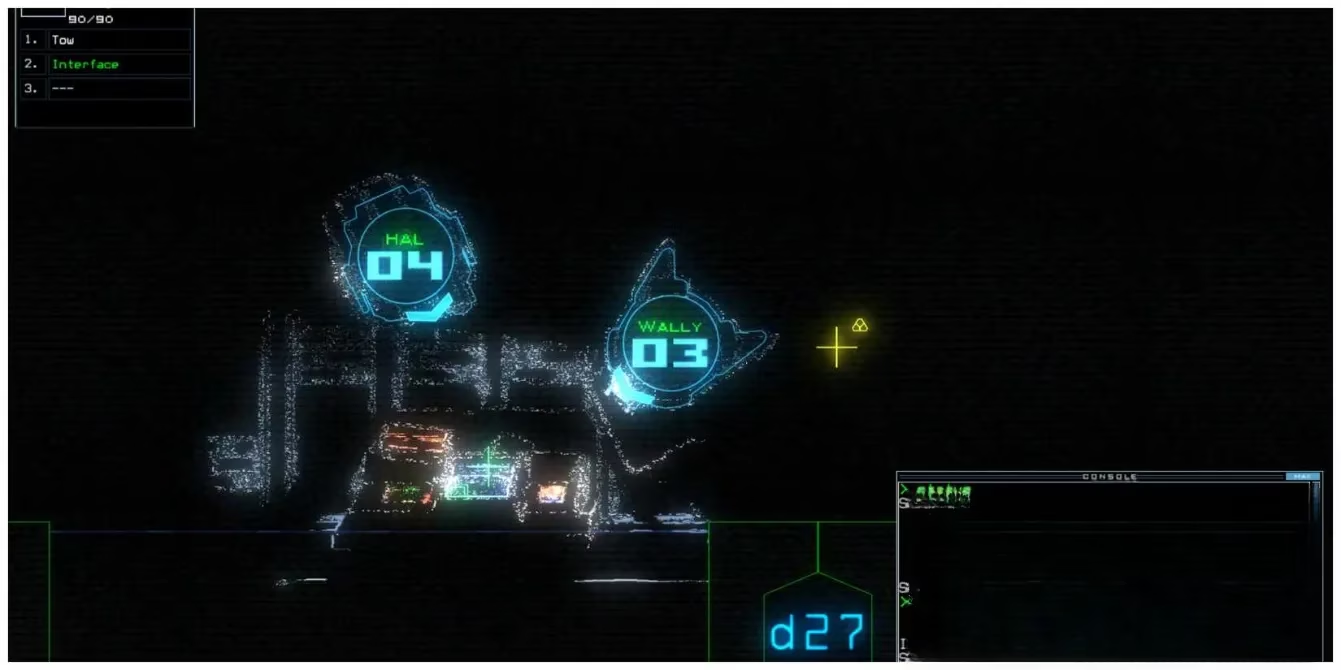
My obsession with atmosphere kicked into high gear the first time I booted up Duskers. The screen flickered to life, a grainy CCTV feed showing rusted corridors and flickering lights. I didn’t have a sleek avatar or a sweeping score—just a command line and a handful of lumbering drones. Every keystroke felt like a calculated risk. I’d type “navigate to room 4” and watch through the static as my drone rolled into darkness, sensors pinging. What was that shadow lurking in the corner? Did that vent just move? The game’s genius is that it never shows you the monster directly—just a glitch, a scrambler, a sudden spike in your heart rate. Have you ever felt true dread from a top-down interface? Duskers taught me that vulnerability is the ultimate atmosphere engine. Without weapons, I could only run, hide, or slam a door console command in time, praying the creature didn’t follow.
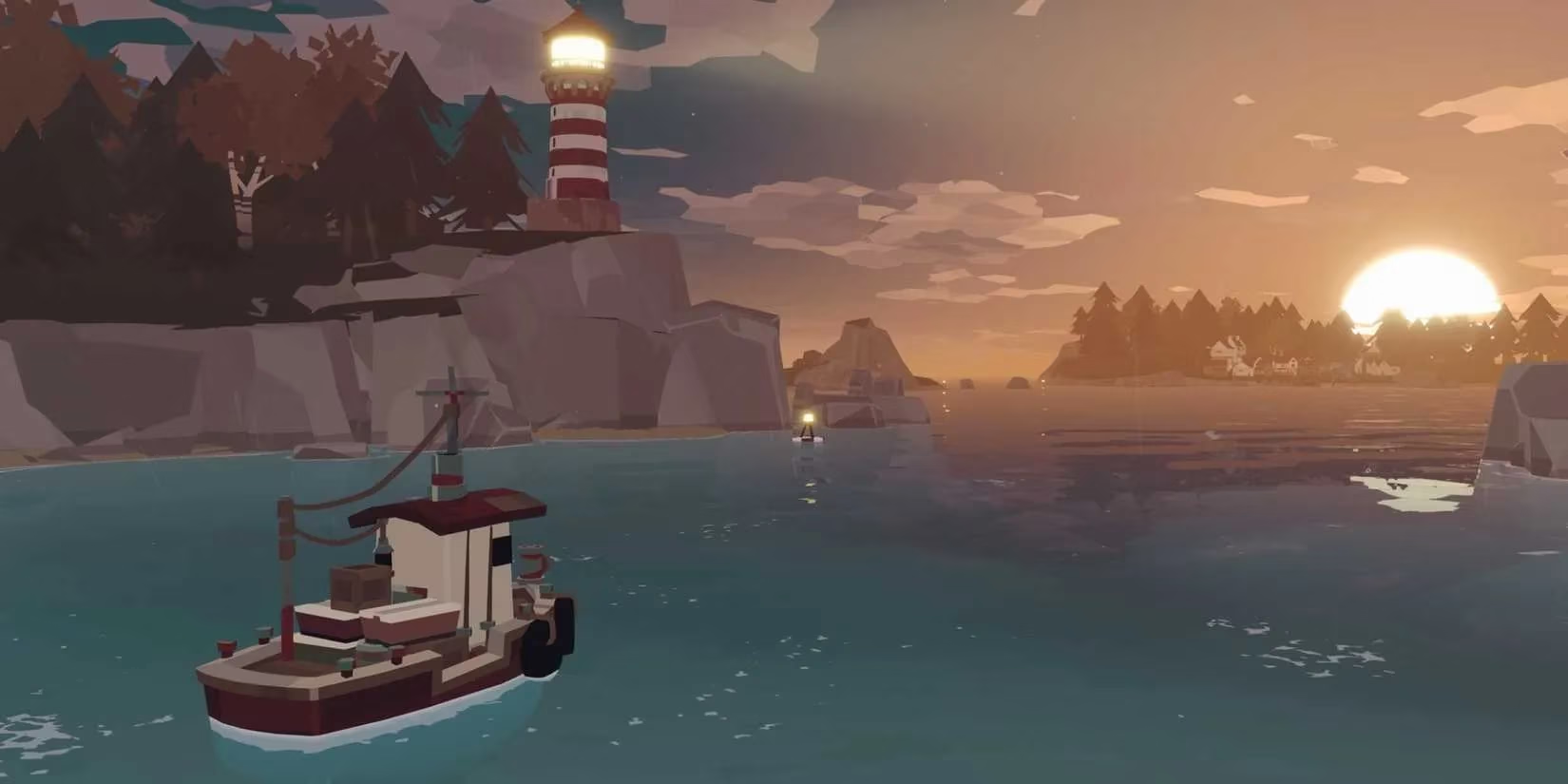
Then came Dredge, which caught me completely off guard. I remember thinking: a Lovecraftian fishing game? How scary can that be? But from the moment my little boat pushed out into the fog-cloaked archipelago, I understood. The sea was a flat, low-poly canvas of deep blues and sickly greens, and the sunsets painted the sky in hues that felt too beautiful to be safe. During the day, I’d reel in mutated fish with too many eyes; at night, the fog thickened, and the same waters that had been peaceful grew teeth. I’d hear the groaning hull of something ancient beneath me, and my panic would spike. Should I risk one more haul to afford that upgrade, or race back to port and hope the lantern kept the horrors at bay? The gameplay loop is simple—cast, reel, sell, upgrade—but when your small boat is the only thing between you and the abyss, simplicity becomes sublime tension. I’d often find myself whispering “just one more day” at 2 a.m., utterly spellbound by the dread-filled serenity.
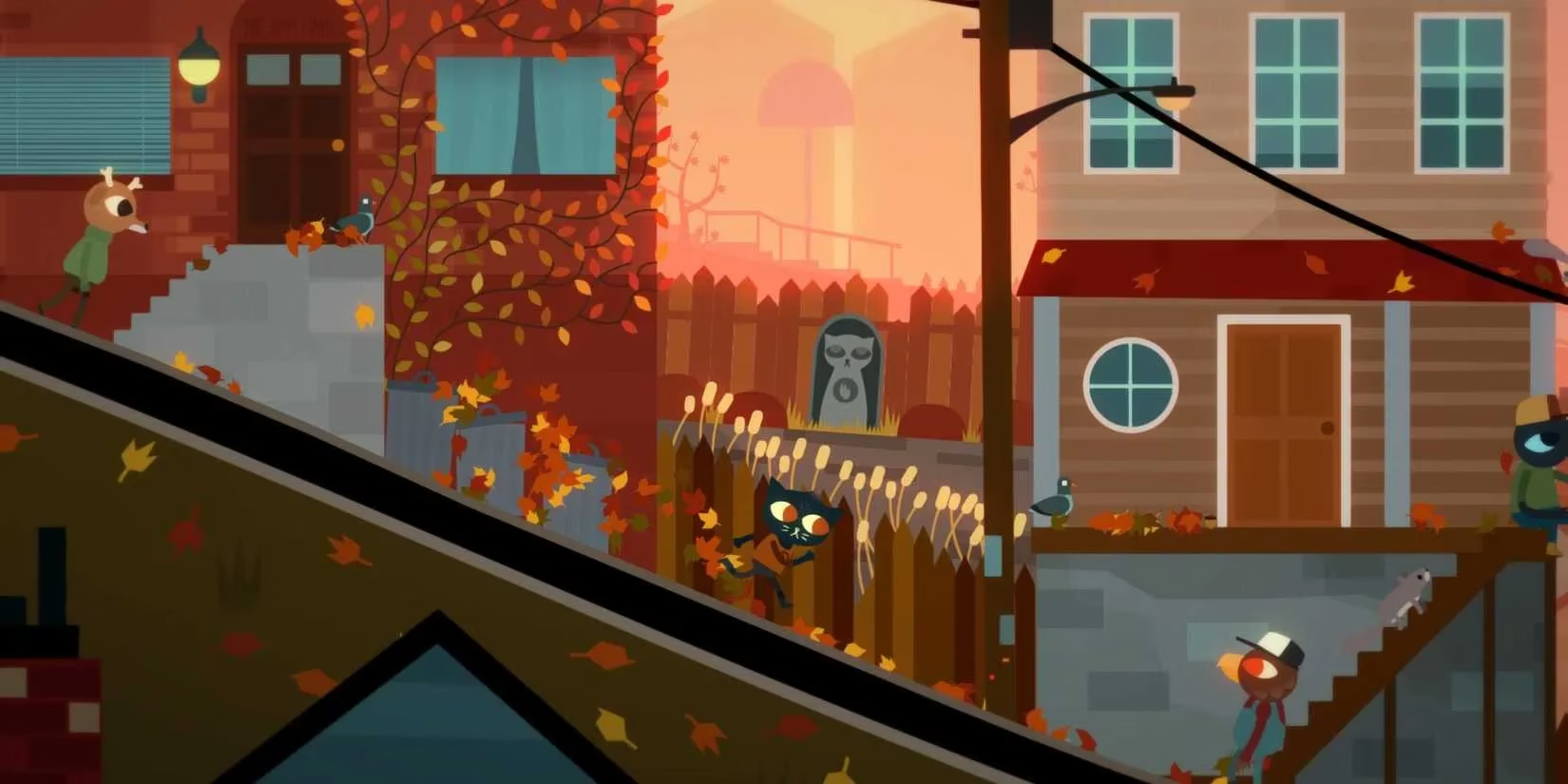
Of course, not all atmospheric wonders come with a side of terror. Night In The Woods wrapped me in a melancholic blanket I never wanted to leave. Stepping into Mae Borowski’s worn sneakers, I returned to the crumbling mining town of Possum Springs. The autumn colors were rust and gold, the streets dotted with quirky animal folk, and the soundtrack felt like a sad indie record playing from a neighbor’s window. There were no world-ending stakes—just conversations on rooftops, band practice in a basement, and the slow realization that you can’t go home again. But what was it about this game that made me feel so deeply understood? Maybe it was the way the dialogue captured the aimlessness of your early twenties, or how the quiet suburban setting made every emotional revelation hit harder. One moment I’d be laughing at a diner chat, the next I’d be staring at the screen, blindsided by a line that echoed my own struggles. It’s a narrative adventure where the atmosphere isn’t built on fear but on nostalgia and ache. I finished it in three sittings and missed Possum Springs for weeks.
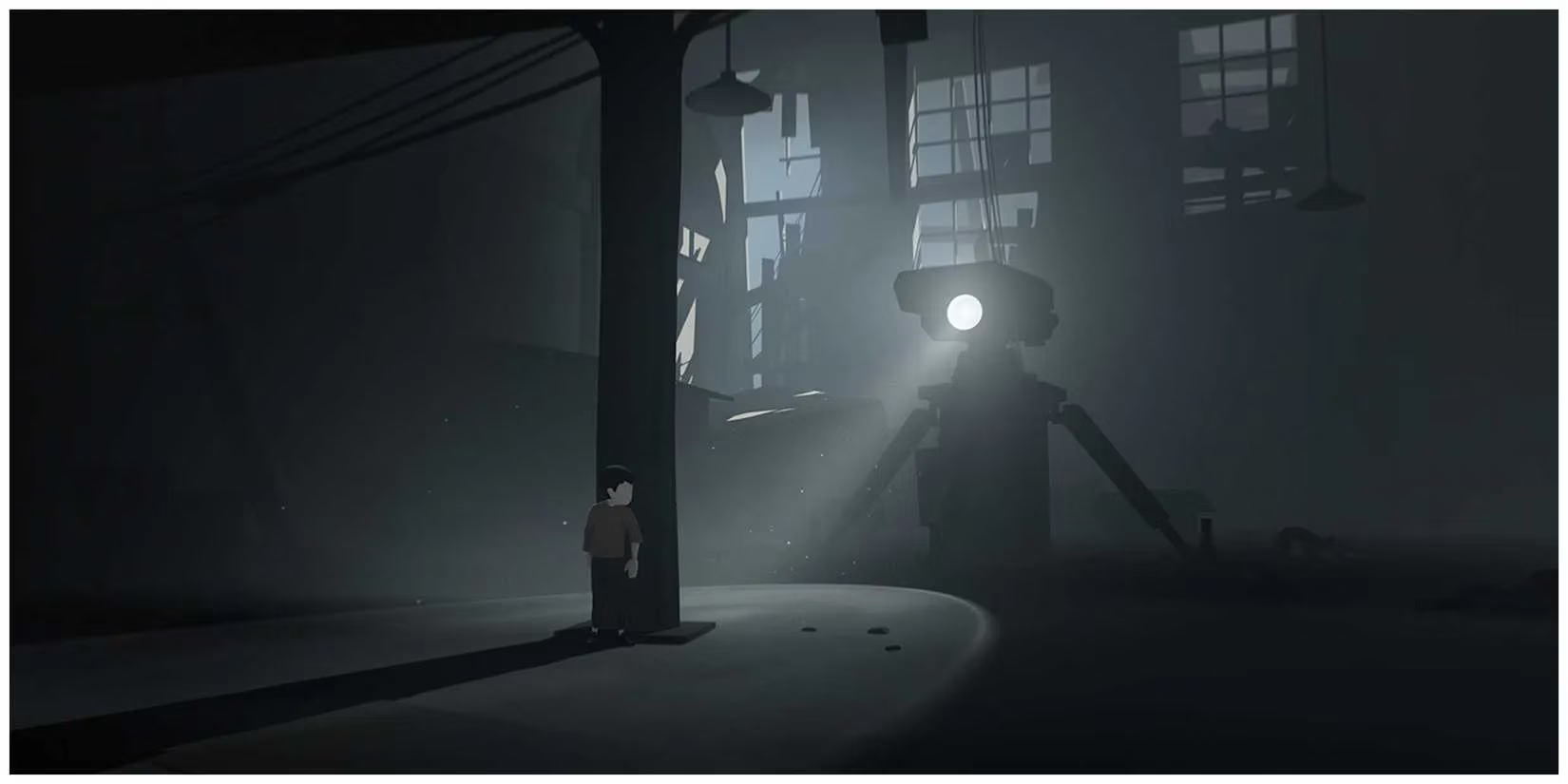
Then there’s the suffocating beauty of INSIDE. I played it on a rainy afternoon, curtains drawn, headphones clamped on. The world was a mute, monochromatic nightmare—factories, cornfields, and laboratories that seemed to breathe with menace. As the unnamed boy, I was hunted by dogs, spotlights, and something far worse that I won’t spoil. The puzzles were brilliant, but it was the silence that unnerved me most. No tutorial, no text, just the rhythmic thump of my character’s feet on wet concrete and the distant hum of machinery. What truly makes INSIDE iconic is the way it builds dread without a single word. When the ending hit—abrupt, grotesque, and strangely liberating—I realized I’d been holding tension in my shoulders for hours. Have you ever experienced a game where the environment itself feels like a character, watching you, judging you, herding you toward a horrific revelation?
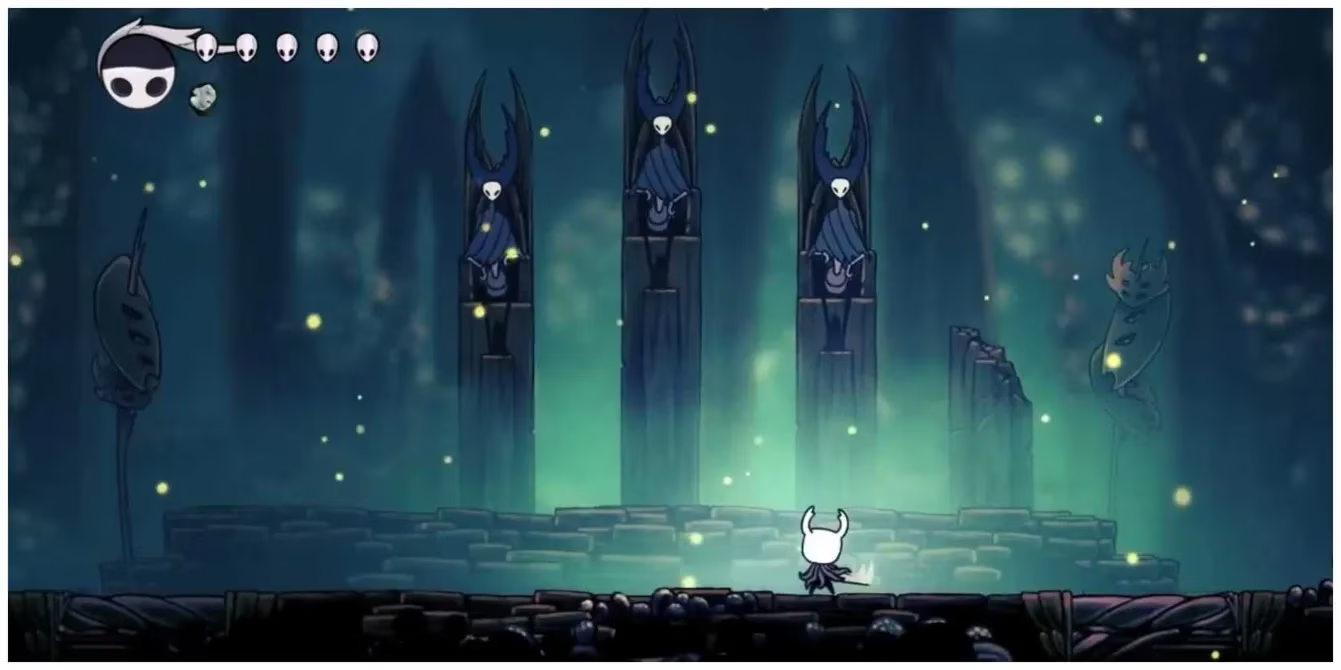
If I had to pick the most melancholic atmosphere, however, it has to be Hollow Knight. Descending into Hallownest felt like stepping into a beautiful, tragic poem etched into bugs and pale light. The hand-drawn visuals gave every fungal grove and crystal peak a haunting elegance, while Christopher Larkin’s music swelled with sorrow at just the right moments. I remember reaching the City of Tears, watching the rain cascade past giant windows, and just stopping. The soundtrack alone could have carried the whole game, but it was the way the world unfolded—through fallen warriors, forgotten kingdoms, and the quiet dignity of its inhabitants—that left me breathless. Is it strange that a 2D insect kingdom feels more alive than most AAA open worlds? Hollow Knight masterfully balances the thrill of discovery with an ever-present sense of loss, creating an atmosphere that’s both inviting and heart-wrenching. I’d get lost for hours, not because I was stuck, but because I just wanted to sit in that beautiful, dying world.
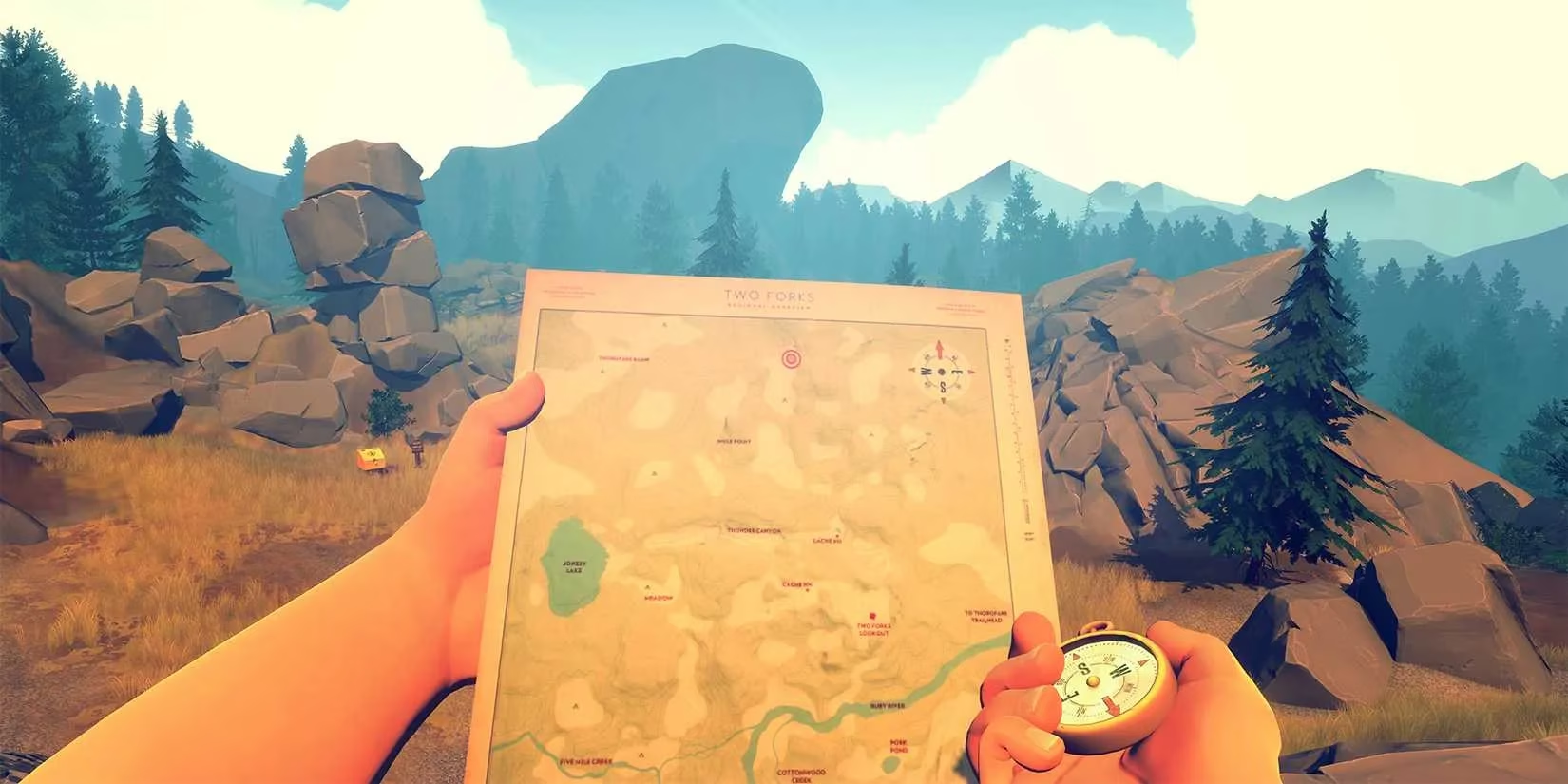
But atmosphere isn’t always about the past or the fantastic; sometimes it’s about a specific, lonely present. Firewatch dropped me into a Wyoming wilderness ablaze with 1980s orange-gold sunsets. I was Henry, a volunteer fire lookout, and my only human connection was a crackling walkie-talkie voice named Delilah. The game is a “walking simulator” by technical definition, but what a walk it was. Towering pine forests, ridgelines that opened onto impossible vistas, and the constant, whispery threat of wildfire created a tension that was both relaxing and loaded. Every conversation with Delilah peeled back layers of their shared vulnerability, making me feel as isolated and yet as connected as Henry must have felt. I laughed at her jokes, worried when she went silent, and felt my stomach drop at the game’s nerve-wracking reveals. Firewatch proved that atmosphere doesn’t need combat or puzzles—it just needs a place you’ll never forget and a voice to keep you company.
By the time I finally surfaced from my atmospheric binge, my backlog had grown, but I didn’t care. These games reshaped how I define a masterpiece. They taught me that atmosphere is a tapestry woven from visuals, sound, and the emotions a space evokes—not just a backdrop for mechanics. Whether it’s the cyberpunk neon of Cloudpunk or the frozen loneliness of The Long Dark, each world left an indelible mark. So, as 2026’s nights grow longer, I’ll be seeking out the next game that makes me forget my own living room. Care to join me?
Comments