
I still remember the first time I booted up Castlevania: Symphony of the Night on my dusty PlayStation. The moment Alucard’s cape fluttered through those moonlit corridors, I knew I’d stumbled onto something far more than a game—it was an invitation to lose myself in a world that felt both hand-painted and alive. Since then, side-scrolling RPGs have become my comfort food and my creative fuel. They fuse the narrative ambition of sprawling fantasy novels with the reactive, split-second thrills of arcade classics, and in 2026, I find myself diving back into them more than ever, hunting for that perfect blend of exploration, growth, and haunting atmosphere.
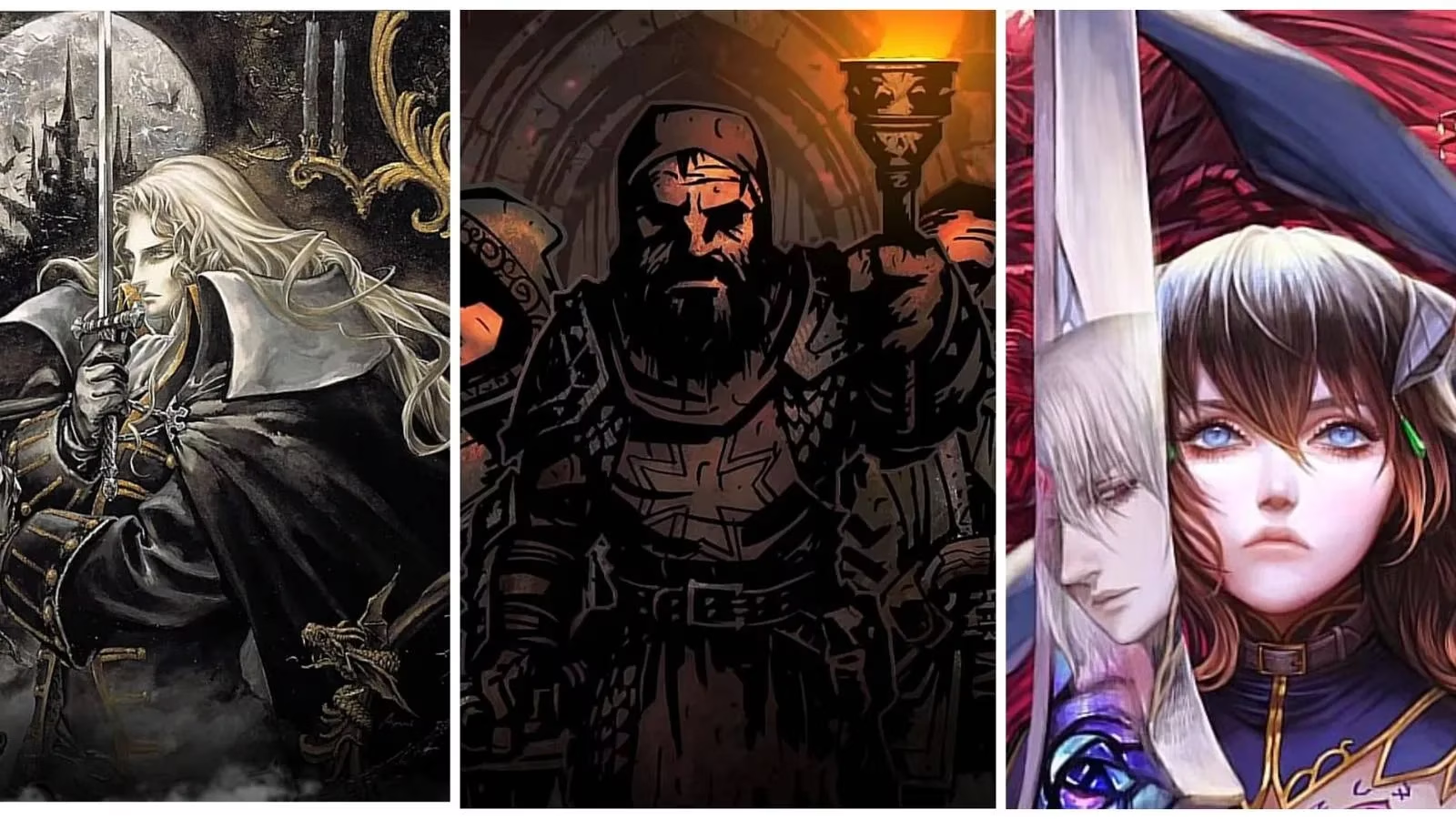
I’ve learned that the best entries in this genre are like meticulously crafted music boxes: wind them up with a gentle push of the joystick, and they reveal layer after layer of interlocking melody. Castlevania: Symphony of the Night is the original masterwork that tuned this mechanism. Its castle isn’t just a level—it’s a labyrinthine memory palace where every locked door whispers a promise about the ability you’ll need to coax it open. I’ve lost count of how many times I’ve replayed it, but even in 2026, the soundtrack’s synthesized strings still raise goosebumps, and the hilariously melodramatic dialogue (“What is a man? A miserable little pile of secrets!”) hits with the same campy punch. It defined the Metroidvania blueprint, a style Super Metroid had already been perfecting on the SNES. Revisiting Planet Zebes often feels like tracing the roots of a giant, interconnected family tree—every power-up is a branch that lets you swing into a new section of the canopy, and the flexibility of the design still fuels the speedrunning fire that burns bright today.
But as much as I revere the classics, I can’t help but gush about the modern gods of the genre. Hollow Knight swept me off my feet with its somber, insect-riddled kingdom of Hallownest. Navigating its labyrinth is like peeling an onion made of silk and sorrow—each delicate layer reveals a new tear, a new boss, a new secret that makes your heart ache a little more. The precision its combat demands feels almost rhythmic, and that heavy sense of consequence when you die, scrambling to reclaim your shade, adds a tension that lingers long after you put the controller down. Blasphemous took that melancholy and soaked it in religious dread; its pixel-art aesthetic is a stained-glass window shattered by nightmare. Every execution animation is a grotesque prayer, and the world of Cvstodia wraps you in a cloak of twisted iconography so thick you can almost smell the incense and rust. The Penitent One’s journey became a grim meditation for me, especially because death there penalizes your fervour instead of your wallet—a small mercy in a world that otherwise offers none.
Switching gears completely, Dead Cells and Darkest Dungeon represent the rogue-infused edge of the side-scrolling spectrum, and they’ve consumed more of my 2026 evenings than I’d like to admit. Dead Cells is pure adrenaline distilled into a pixelated syringe. Playing it feels like dancing on a tightrope over a pit of spikes while the rope itself is on fire—exhilarating, unpredictable, and punishing in equal measure. The ever-shifting levels and the combo system that rewards you for staying in the flow transformed my failures into obsessive lessons. Darkest Dungeon, on the other hand, is a pressure cooker with a cracked lid. Its hand-drawn horrors and the Ancestor’s velvety narration create an atmosphere so thick you could choke on it. The permanent death of my heroes always feels like losing a limb I’d grown attached to, and the stress mechanic is a psychological vice that tightens with every flickering torch. It taught me that sometimes the greatest enemy isn’t the eldritch abomination in front of you, but the creeping madness in your own party’s eyes.
Other gems have carved their own special niches in my heart. Bloodstained: Ritual of the Night is Koji Igarashi’s triumphant love letter to Symphony of the Night, and it captures that same magic while layering on a deliciously random loot system. Miriam’s demon-shard abilities made the castle feel like a playground of possibilities, and hearing David Hayter’s voice again was pure nostalgic bliss. Fury Unleashed turned my TV into a living comic book, its procedurally generated panels exploding with color and empowering me to paint my own chaotic story with every run. Dex surprised me with its cyberpunk meets Metroidvania vibe, reminding me that hand-to-hand combat and a good synth score can carry a conspiracy-laden plot further than any firearm. Then there’s Eastern Exorcist, a title whose hand-drawn brushwork and opera-inspired cutscenes stopped me mid-battle just to admire the art. Its tight, demanding combat felt like a deadly waltz with demons, and the mythos steeped in Chinese folklore gave every exorcism a weight I didn’t expect.
Even as technology marches forward, these side-scrolling RPGs remain my anchor. They’ve taught me that limitation breeds creativity—that a 2D plane can hold more depth than a hundred open worlds if the vision is sharp enough. They’re my go-to when I want to be challenged, moved, or simply reminded why I fell in love with games. So whether you’re a seasoned explorer of Dracula’s inverted castle or a curious newcomer eyeing the Hallownest map, I promise you’ll find a gem here that will burrow into your imagination and refuse to leave. Now if you’ll excuse me, I’ve got one more run in Dead Cells to fail—spectacularly—before bed.
Comments