
Plenty of games borrow from the old mythological playbook—Zeus, Odin, and Anubis have all had their turn in the spotlight. But a braver bunch of developers decided to skip the classics and cook up entirely new cosmologies from scratch. The result? Worlds where gods are raisins, dragons are apocalypse delivery systems, and the local deity might just be a sealed-up nightmare you accidentally unleash. In 2026, these fictional mythologies still hold up as some of the most creative world-building in gaming. So grab a seat, maybe a snack, and let's take a tour of ten universes that played god—and occasionally got smited for it.
Oddworld: Praise the Raisin
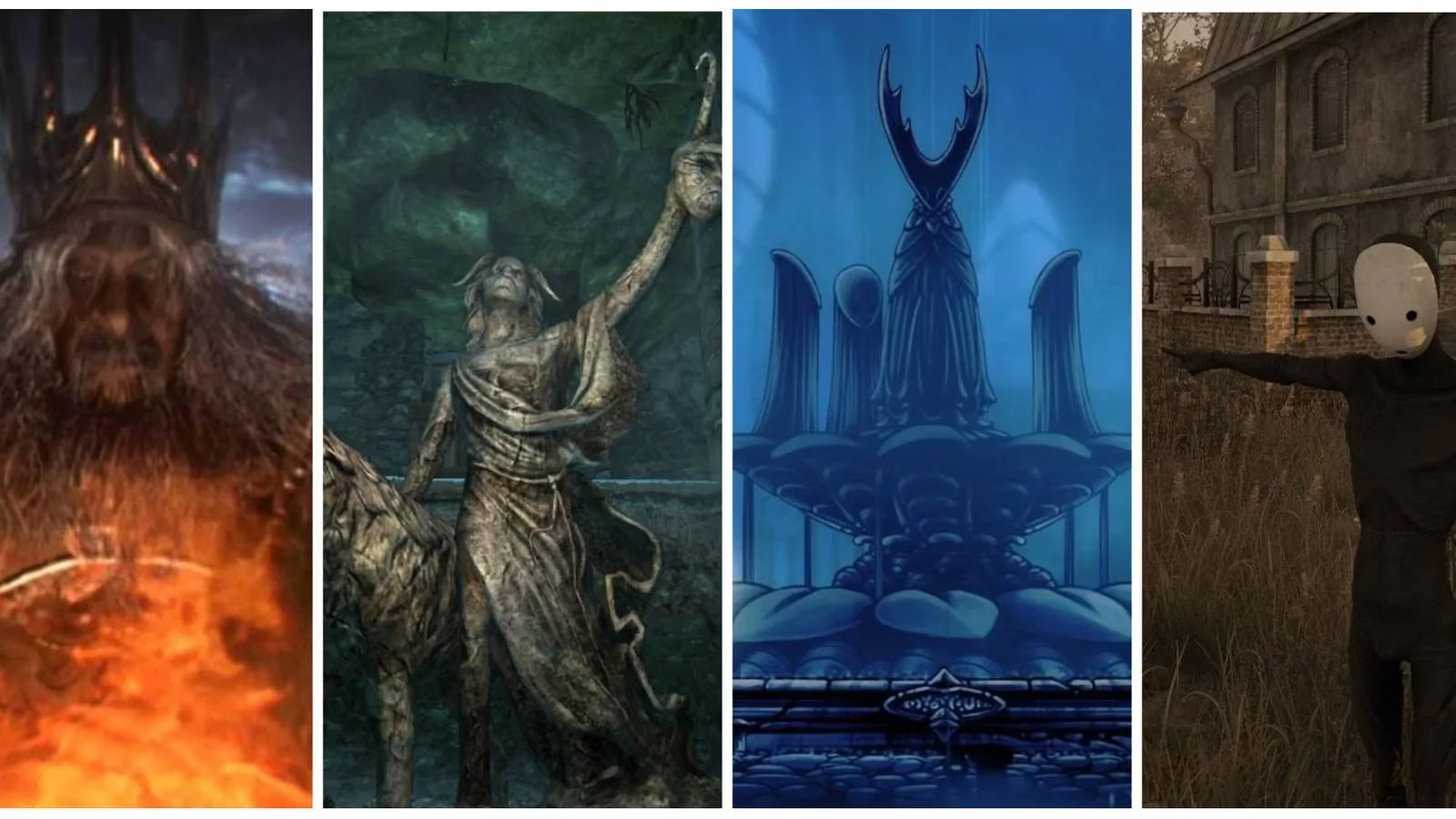
The Oddworld series doesn't have humans, but it does have the Mudokons—spiritual creatures who build homes in remote areas and venerate local wildlife. Sometimes that wildlife wants to eat them, which really puts a damper on enlightenment. Their top deity is the Almighty Raisin, an ancient seed-like being descended from a great tree. Yes, a raisin. And honestly? It's a better name than most. The Mudokons' shamanistic roots and ancestor worship drive their fight against oppression, proving that even a dried-up fruit can inspire a revolution. Just don't ask for communion wine.
 .jpg?q=50&fit=crop&w=825&dpr=1.5)
Sunless Sea: Don't Upset the Weather
Sunless Sea turns freight shipping into cosmic horror, which is a sentence we never thought we'd write. Set in a vast underground ocean, the game's world is at the mercy of three mysterious deities: Salt, Storm, and Stone. They can bless or curse your captain, though Storm's blessing involves driving your crew into murderous rages for no reason. That's less a blessing and more a workplace hazard. Players quickly learn that avoiding the gods altogether is a valid strategy—much like avoiding your ex at a party.
Salt and Sanctuary: Faith Is a Gameplay Mechanic
In this 2D souls-like, gods and creeds are not just lore—they're mechanics. Players can align with The Three (a lawful trio of judgers), Devara the Healing Goddess, or The Iron Ones (committed atheists, because of course). Claiming sanctuaries for your creed is key, and sinning against your patron has consequences. It's like having a very opinionated landlord who also controls your afterlife. The game treats gods as subjective concerns—you can acknowledge them or not—but watch your step, because divine grudges are real.
Dark Souls: The Flame That Wouldn't Die
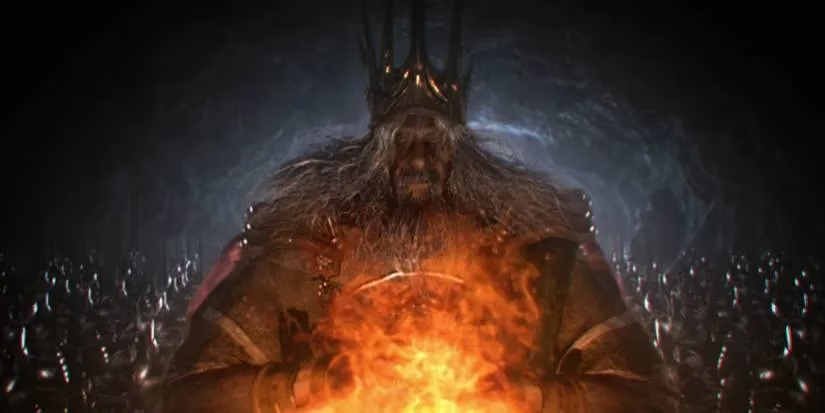
Dark Souls presents a grim world of eternal cycles, where the Age of Fire—the era of the gods—is fading. Gwyn, Lord of Sunlight, decided the best solution was to immolate himself in the first flame to keep it going. Spoiler alert: it didn't work. Now the undead are forced to try and take his place, burning themselves to prolong a dying era. It's like a group project where everyone keeps sacrificing themselves, but the deadline never moves. Ending the cycle is also an option, and honestly, it might be the healthiest choice.
Pathologic: Welcome to the Fever Dream
Pathologic and its remake Pathologic 2 drop you into a town on the edge of a barren steppe, where the locals have beliefs that range from quirky to terrifying. A miracle building made from its own blueprints. A temple turned slaughterhouse where bulls are worshipped and killed. A prophet with a rat's head. Is it all a stage play? Are you just delirious from the Sand Plague? The game won't tell you, and that's the point. It's the kind of world where you leave your sanity at the door and hope the door doesn't eat it.
Dragon's Dogma: The Dragon Is the Apocalypse
Most fantasy worlds treat dragons as powerful monsters. Dragon's Dogma treats them as the bringer of the apocalypse. The Dragon arrives, terrorizes the world, and steals a human's heart—but leaves them alive, turning them into the Arisen. Your job? Slay the wyrm and avert the end of the world. No pressure or anything. The expansion Dark Arisen doubles down on the eternal cycle of fate and destruction, making you wonder if free will is just a fancy word for "delayed inevitability."
Shadow of the Colossus: Trust the Shifty Voice
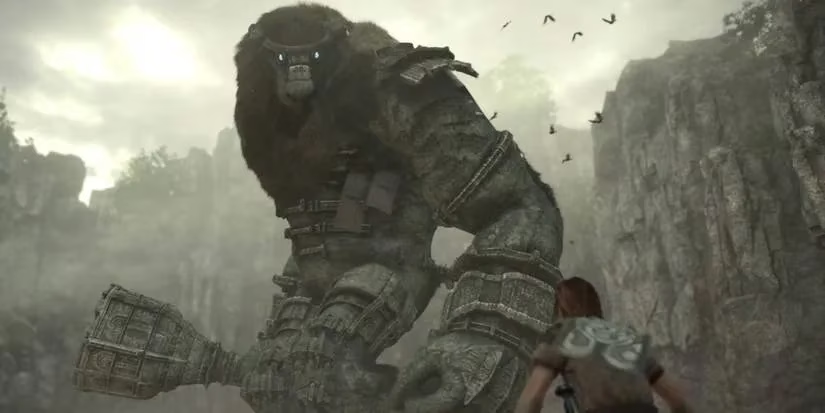
In a forbidden land of gods and monsters, an apparent deity named Dormin can raise the dead. Unfortunately, Dormin is sealed away inside sixteen massive colossi, and killing them is the only way to release the sealed parts. Why was Dormin sealed away? Well, freeing the pieces might give you a hint—and it's not a pleasant one. Still, when faced with letting a loved one stay dead, you might just trust the disembodied voice. It's a classic dilemma: do you listen to the sketchy entity, or do you grieve? The game lets you decide, then judges you silently.
The Elder Scrolls: Nine Divines, Eight Divines, Whatever
You thought you were just out to slay a few dragons, but you're actually part of thousands of years of shifting cosmology in Tamriel. The official pantheon is the Nine Divines—though the Thalmor insist it's Eight, because Talos was once a man and apparently that disqualifies him. Then there are the Daedric Princes, who rule the planes of Oblivion and are basically demons, except some cultures like the Dunmer worship them and credit them with founding civilization. Where your hero places their faith is a matter of values, which is a polite way of saying "pick your flavor of cosmic meddling."
Hollow Knight: The King Was a God, Apparently
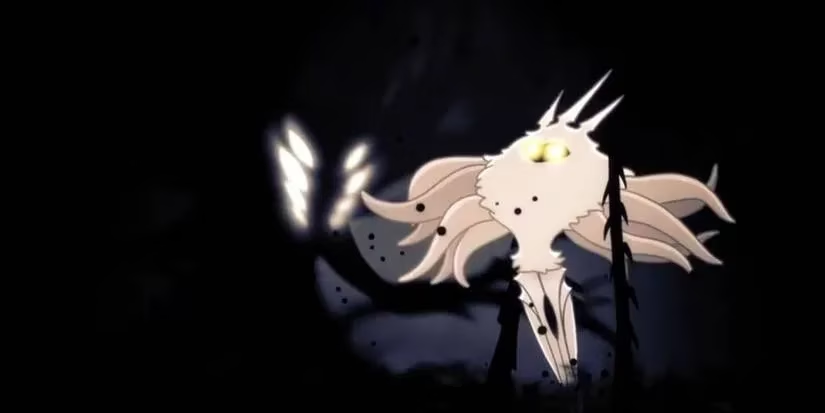
Hollow Knight looks like a cute game about cartoon insects with big heads, but its lore is a sophisticated, mysterious web. Hallownest was a kingdom that worshipped its king like a deity—the Pale King—and in doing so, abandoned one of their previous gods. That, as angering gods often goes, had dire consequences for everyone. Now you're exploring a collapsing ruin, piecing together what happened, and trying not to get emotionally attached to bugs. Good luck with that last part.
Bastion: The Gods Give and Take
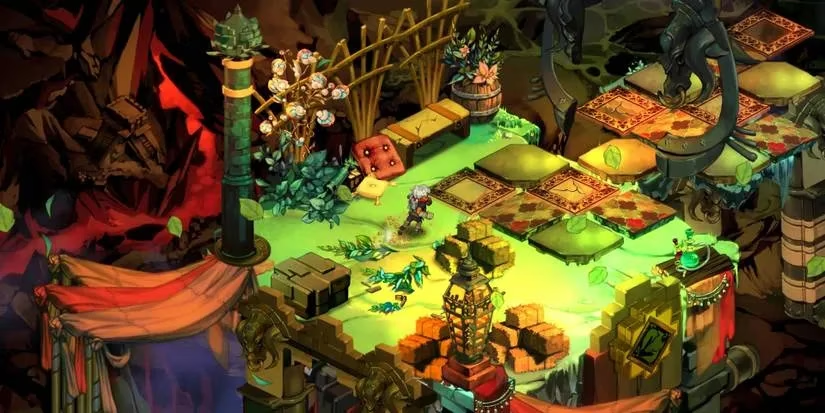
Long before Supergiant took on Greek mythology with Hades, they created Bastion—a shattered world of fading gods. Pyth, the bull Hense, the veiled widow, Yudrig, the morning stallion. Many were considered trivial, their likenesses put on toys and puppets, until the world collapsed. The mythology paints the gods as creatures of duality: order and chaos, health and atrophy, hope and despair. Turning to the Pantheon might grant rewards, but each deal comes with harsh punishment. It's like making a pact with a very moody genie who also charges interest.
So there you have it: ten games that looked at existing mythologies and said, "Thanks, but we'll make our own." Some of them gave us raisins, some gave us sealed gods, and all of them gave us worlds worth getting lost in. Whether you're burning yourself to prolong a dying age or just trying to avoid a storm god's tantrum, these fictional cosmologies prove that the best gods are the ones you build yourself—even if they do occasionally smite you for fun.
Comments