
In the autumn of 2026, a veteran player named Marcus found himself reflecting on two decades of gaming. He had faced procedurally generated galaxies, open worlds without boundaries, and narrative epics that tugged at every emotion. Yet a quiet yearning remained for the kind of challenge that didn’t just entertain, but transformed. So he embarked on a personal pilgrimage back through a collection of the decade’s most notoriously tough, yet impeccably fair, titles. Each would demand everything he had—and return that investment tenfold.
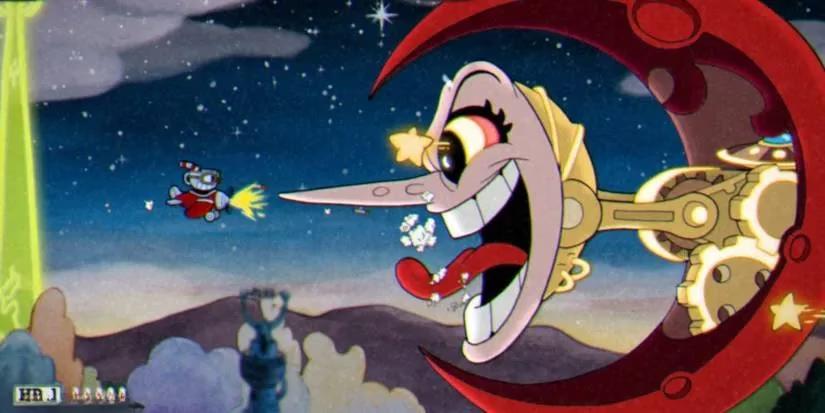
His journey began with a whimsical-looking run-and-gun game that had lulled many into a false sense of security. Cuphead presented a 1930s cartoon veneer so charming that Marcus initially expected a lighthearted romp. Instead, he discovered a gauntlet of split-second platforming and multi-phase boss fights that punished even a single misstep. Dozens of attempts melted into one furious learning curve, but every death taught a pattern, every restart forged muscle memory. When he finally toppled King Dice and earned a perfect score on an expert-level stage, the euphoria was unlike anything a modern checkpoint system could deliver. The game never cheated—it simply expected mastery, and Marcus had earned it.
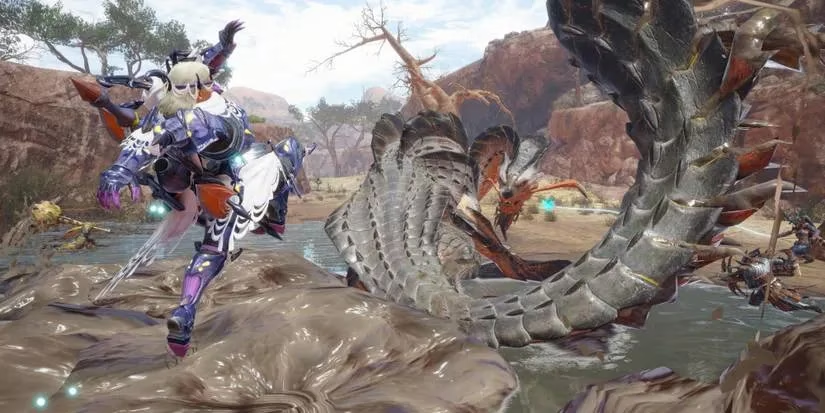
From a cartoon gauntlet, Marcus moved into a vast ecosystem where giants roamed. Monster Hunter Rise, originally a Switch exclusive that had since evolved through expansions and a thriving online community, invited him to track, trap, and triumph over colossal wyverns. Solo hunts were intimidating—every charged attack from a Rathalos could cart a careless hunter in seconds. But the game’s design encouraged cooperation, and Marcus quickly discovered that a carefully coordinated four-hunter party transformed a brutal struggle into a ballet of combos and well-timed heals. Even when comrades fell, the sense of shared responsibility meant failure always felt like a lesson. The monsters were relentless, but their move sets were telegraphed with crystal fairness. As Marcus rose from a fumbling recruit to a sunbreak veteran, each successful hunt cemented a rare feeling: a challenge that scaled precisely with his own growth.
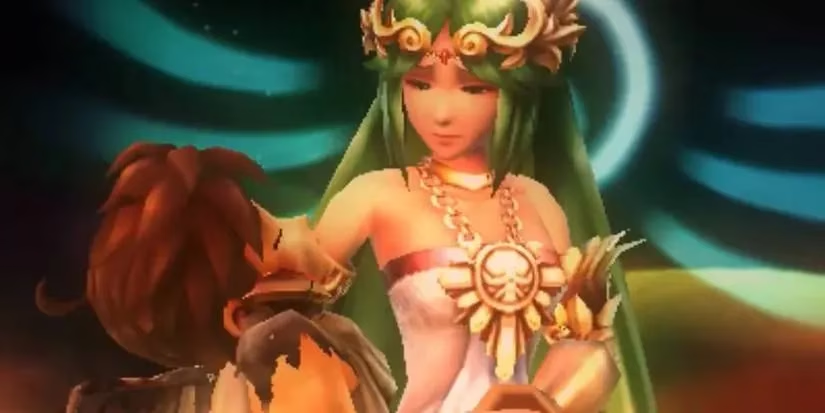
His next stop was a relic from a dual-screen era he had almost forgotten. Kid Icarus: Uprising for the Nintendo 3DS had been a surprise gift from a friend who praised its ingenious difficulty system. Here, Marcus encountered the Fiend’s Cauldron—a mechanism that let him wager in-game hearts to ratchet up the challenge in exchange for richer rewards. He soon realized that his own hubris was the real enemy. Setting the intensity to 9.0, he faced relentless waves of underworld forces, the rail-shooter segments demanding split-second dodges and precise reticle control. When he failed, there was no one to blame but the player who had dared to bet too high. Yet the system never felt arbitrary; it was a transparent contract. By the time he conquered Chapter 25 on the hardest setting, Marcus had learned a profound lesson about accountability that few other games ever taught.
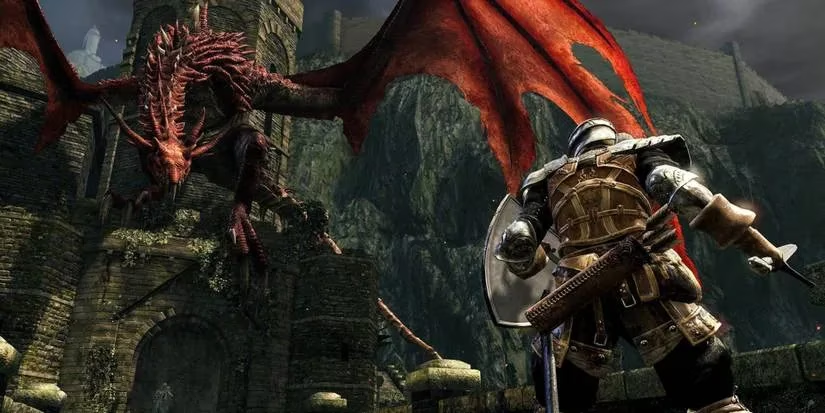
Then came the inevitable pilgrimage to Lordran. Dark Souls, even fifteen years after its 2011 debut, remained the gold standard of fair adversity. Marcus stepped into the Undead Burg with trembling hands, knowing its reputation for crushing spirits. What he found was not the sadistic torture chamber whispered about on forums, but a world of deliberate, meticulous design. Every ambush was telegraphed if one observed the environment; each boss had a rhythm that, once internalized, rendered the dance almost serene. The infamous Capra Demon and Ornstein & Smough tested his composure like nothing before, yet the absence of random cheap shots meant every death was a dialogue. Marcus learned to listen. When he finally linked the flame after a hundred hours of growth, the victory felt genuinely earned. The game hadn’t held his hand, but it had always played by its own rules—rules that rewarded patience and punished foolishness equally.
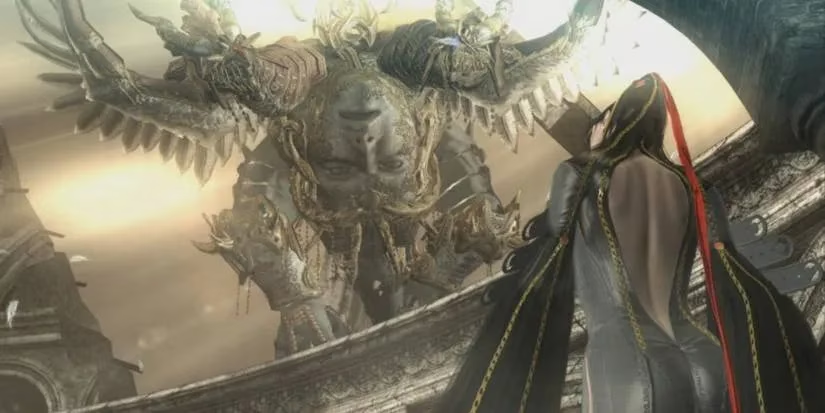
In need of a change of pace, Marcus turned to the stylish action of Bayonetta. The Umbra Witch’s acrobatic combat was a torrent of quick-time events, wicked weaves, and angelic foes that refused to give a moment’s rest. Its “Non-Stop Infinite Climax” difficulty mode lived up to the name, demanding near-perfect dodge timings and an instinctual grasp of combos. Marcus stumbled through countless encounters, often missing the narrow QTEs by milliseconds. Yet frustration rarely curdled into bitterness, because the game’s chaotic tempo was consistent. Failures were simply patterns not yet mastered. As he executed a flawless Torture Attack against a towering Auditio, he grinned at how far his reflexes had come. Though the sequels offered more polish, this original 2009 masterpiece remained a high-water mark for demanding—but never petty—spectacle.
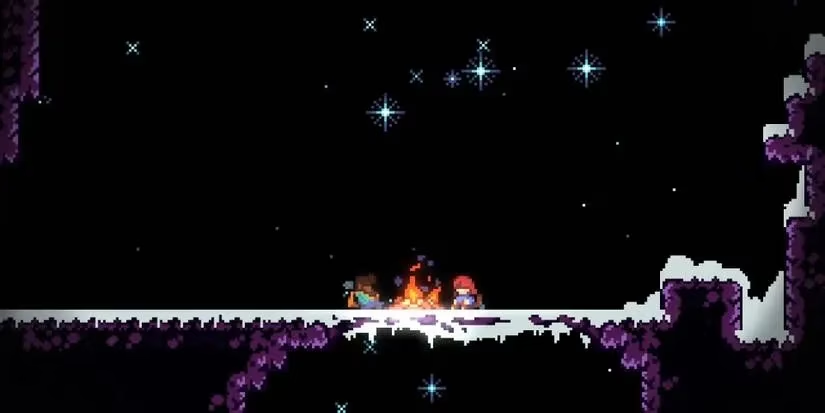
A petite climber named Madeline then invited Marcus to scale a mountain that was as much emotional as physical. Celeste, the pixel-art platformer born from a game jam, presented screen after screen of deadly obstacles and jumps that required frame-perfect inputs. Marcus discovered that the game came with an Assist Mode capable of slowing time or granting invincibility—a gentle safety net for those who needed it. For a while he resisted, his pride bristling. But when he finally decided to tackle the mountain on its own terms, every failed leap became a stepping stone. The secret B-side and C-side levels were masochistically precise, yet the hitboxes and physics were so transparent that blame could only fall inward. By the summit, Marcus had not only conquered the game but had absorbed its quiet message about self-compassion and perseverance.
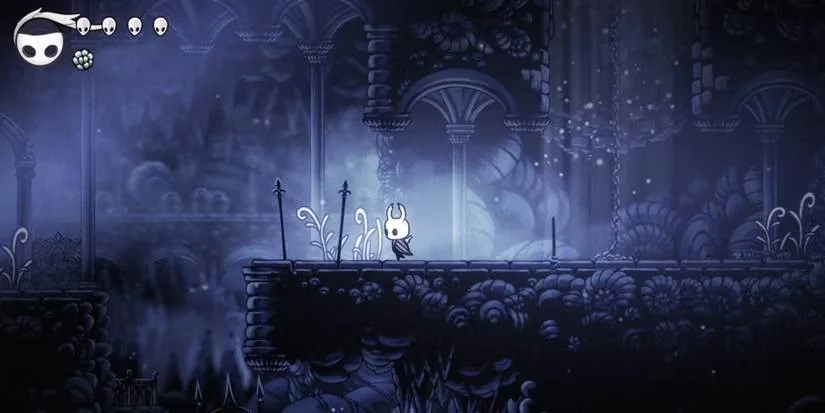
Deep beneath a ruined insect kingdom, Hollow Knight beckoned. This Metroidvania eschewed hand-holding entirely, leaving Marcus to chart his own path through Hallownest’s crumbling corridors. Bosses like the Mantis Lords and Nightmare King Grimm were brutal gatekeepers, their attack sequences blisteringly fast. But the game’s non-linear structure meant he could retreat, upgrade his nail, find new charms, and return stronger. Every encounter felt like a duel where victory hinged on recognizing the enemy’s tells. Critics had occasionally called certain fights unfair, but Marcus never felt that way; the telegraphs were always present, even if they required ferocious concentration. By the time he achieved the true ending, the journey had reshaped his definition of what a fair challenge could be.
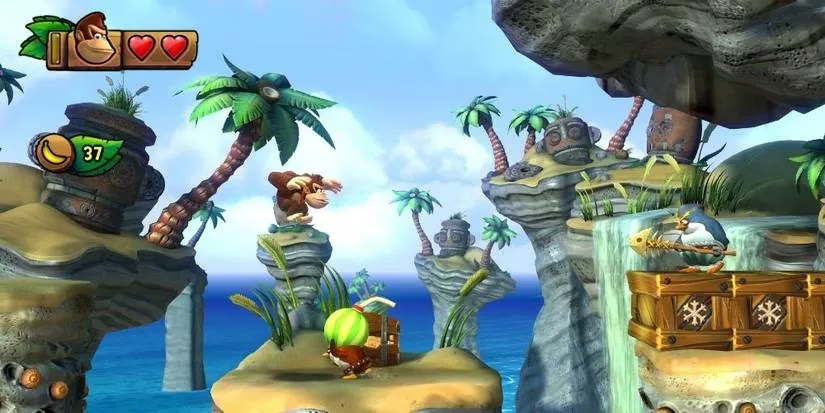
A vibrant tropical island brought a different flavor of rigor. Donkey Kong Country: Tropical Freeze, revived on the Nintendo Switch, offered 2D platforming so exacting that a single mistimed jump meant doom. Marcus experimented with Cranky Kong’s pogo-cane for an extra layer of difficulty, then switched to the slightly more forgiving Funky Mode to help a younger cousin. The game accommodated both extremes without diluting its core demand for precision. Dynamic minecart chases and rhythmic underwater sequences tested spatial awareness relentlessly, yet the controls remained impeccably tight. Like the retro classics it honored, Tropical Freeze revealed that challenge and accessibility need not be enemies.
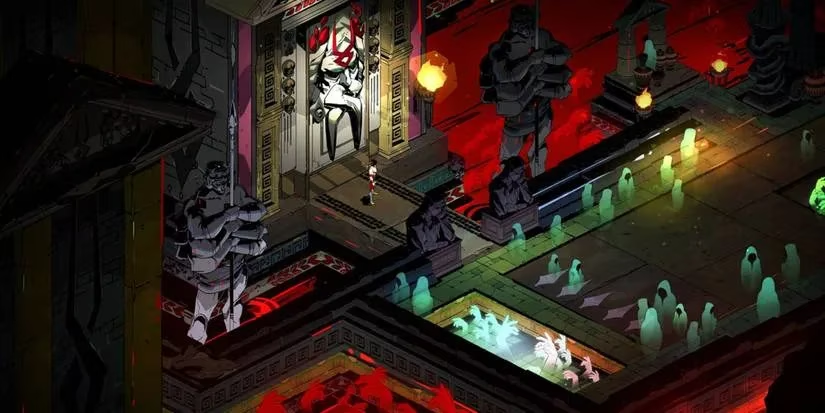
Roguelike elements added a cyclical twist when Marcus delved into Hades, the hellish escape saga that had stolen countless hours since its early access days. As Zagreus, he died, and died, and died again, each failure sending him back to the House of Hades for new boons and a fresh start. The game’s escalating heat levels let him customize difficulty right down to enemy attack speed and boon rarity. Against the furious final boss, he sweated through dozens of runs before savoring a victorious exit. Importantly, every death advanced the story, making failure feel less like a punishment and more like essential data. Hades taught him that repetition, when woven into narrative, could transform grinding into a meditative ritual. With the 2024 sequel now expanding the Underworld, Marcus knew this lineage of challenge would continue inspiring the gaming world.
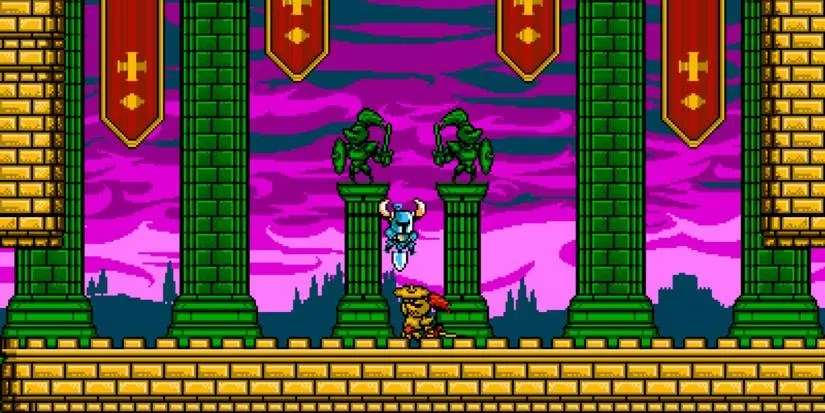
His pilgrimage concluded with a return to the 8-bit era via Shovel Knight: Shovel of Hope. The original 2014 campaign was a love letter to Mega Man and DuckTales, replete with precise platforming and charismatic boss duels that punished greed but honored skill. Marcus then dove into the free DLC expansions—Plague of Shadows, Specter of Torment, and King of Cards—each introducing a protagonist with a completely different move set and a startling spike in difficulty. Plague Knight’s alchemical bursts required re-learning the entire game from scratch, while Specter Knight’s fluid slashes demanded a flawless rhythm. None of it felt unfair: enemies followed strict patterns, levels telegraphed hazards, and checkpoints, though sparse, were strategically placed. Shovel Knight’s enduring legacy, secured through a decade of community passion, proved that a game could be lovingly brutal without crossing into cruelty.
By the end of his months-long odyssey, Marcus had amassed more than just completion percentages. He had reacquainted himself with a dying art: the handshake between developer and player that says, “This will be hard, but we will always fight fair.” In an age of adaptive difficulty and narrative-first design, these ten games stood as monuments to a philosophy where struggle is the price of glory. They demanded patience, observation, and humility. Most of all, they respected the player enough to let them fail—and in that failure, to grow. As he shut down his console, Marcus smiled. The pixelated battlegrounds had become old friends, their lessons etched into every synapse. And he knew that whenever he craved another fair fight, they would still be waiting, as unforgiving and as generous as ever.
Comments