
In the hauntingly beautiful and desolate world of Hollow Knight, the player's journey through the fallen kingdom of Hallownest is not defined by a single, linear conclusion. Instead, the game masterfully weaves a narrative tapestry that allows for multiple interpretations of the Knight's ultimate fate and the future of the land itself. With a base game offering three distinct endings and the Godmaster DLC expanding the possibilities to five, each conclusion provides a unique lens through which to view the story's core themes of sacrifice, legacy, and the nature of existence. But have you ever wondered which ending provides the most complete resolution, or which one leaves the deepest mark on the player's soul? Let's delve into the five canonical conclusions to Hollow Knight, ranked and analyzed for their narrative weight and satisfaction.
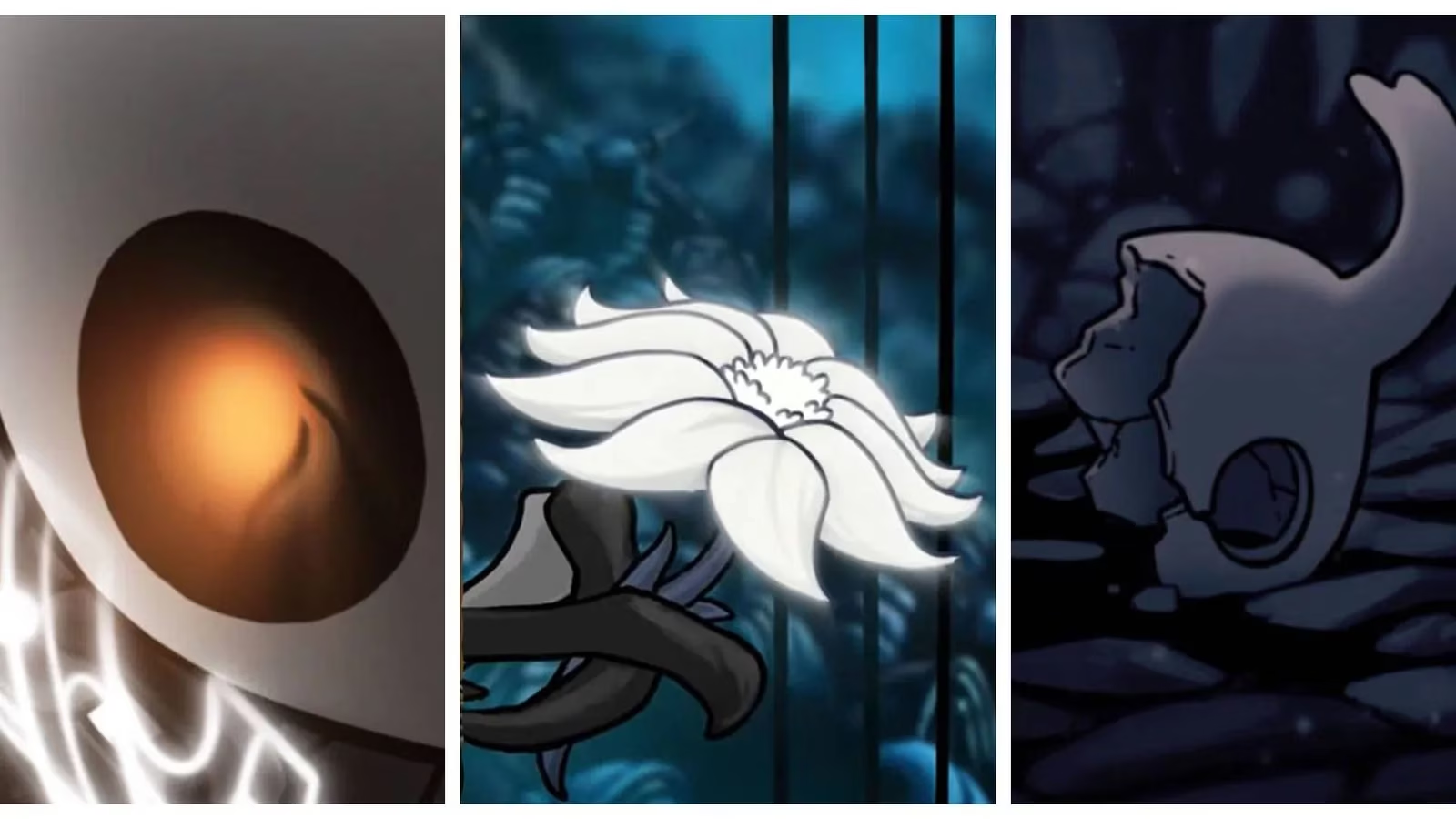
5. Sealed Siblings: The Most Tragic Conclusion
Easily the most bleak and least satisfying ending, Sealed Siblings presents a future devoid of hope for Hallownest, Hornet, and the Knight. In this outcome, the Knight defeats the Hollow Knight but, with Hornet unconscious within the Temple of the Black Egg, chooses to absorb the Radiance's infection and reseal the temple. This act effectively traps all three key figures—the Knight, the Hollow Knight, and Hornet—inside forever. The implication is chilling: the infection is not cured, only contained, and the only beings capable of challenging it are now permanently imprisoned. Hornet's warning that entering the Black Egg would be fatal for her rings true in the most tragic way. This ending confirms the perpetuation of the kingdom's haunted stasis, with no hero left to attempt another solution. It's a conclusion of absolute sacrifice with no tangible benefit, a poetic but deeply sorrowful failure.
4. The Hollow Knight: A Cycle Repeated
The ending simply titled The Hollow Knight represents a poignant, if cyclical, transfer of duty. Here, the Knight defeats the original Hollow Knight and takes its place as the new vessel containing the Radiance. The outcome is deliberately mysterious; the game concludes shortly after the Knight absorbs the light, leaving the state of Hallownest largely ambiguous. However, the implication is clear: the kingdom remains in the same infected stasis, merely with a new jailer. Hornet survives outside the temple, meaning her quest continues, but the core problem persists. This ending is satisfying in a darkly poetic way, asking the player: Did anything truly change? The Knight's entire journey leads to it becoming the very thing it sought to replace, highlighting the tragic, inescapable nature of the Pale King's original flawed plan.
3. Embrace The Void (Standard): A Godmaster's Triumph
This is where endings shift from conclusions within the kingdom to cosmic-scale events. Embrace The Void is one of the two immensely difficult endings added by the Godmaster DLC, requiring players to complete the monumental "Pantheon of Hallownest"—a gauntlet of 42 bosses culminating in a battle against the Absolute Radiance. Achieving this feat is a badge of honor reserved for the most skilled players. The ending itself is spectacular and transformative. Instead of simply replacing the Hollow Knight, the Knight, fully unified with the Void, confronts and defeats the Radiance within the dream realm of Godhome. The aftermath shows the Void erupting, consuming Godhome and spilling into the real world. The final shot implies Hornet discovering the now-freed Hollow Knight, its mask clean of infection. This ending is less about curing Hallownest and more about the Void achieving a form of ascendance, offering a thrilling, high-stakes conclusion that directly fuels anticipation for Hollow Knight: Silksong.
2. Dream No More: The Base Game's True Ending
Widely considered the "true" ending of the base game, Dream No More offers the most concrete and cathartic resolution to the central infection. To achieve this, the Knight must delve into the Dream Realm and defeat the Radiance at its source, rather than just its vessel. The victory is absolute and beautiful. We witness the Radiance shattered, its light fading. The scene then shows the Knight's shell breaking apart, followed by visions of all the Vessels—the Knight's siblings—alongside Hornet and the Hollow Knight, peacefully sinking back into the Void. The endless dream that kept Hallownest in a zombified nightmare is finally over. It's a conclusively happy ending for the kingdom, though a bittersweet one for the Knight, who sacrifices its existence to grant everyone else peace. The cycle is broken, and the land can finally begin to heal.
1. Embrace The Void (Delicate Flower): The Perfect Balance
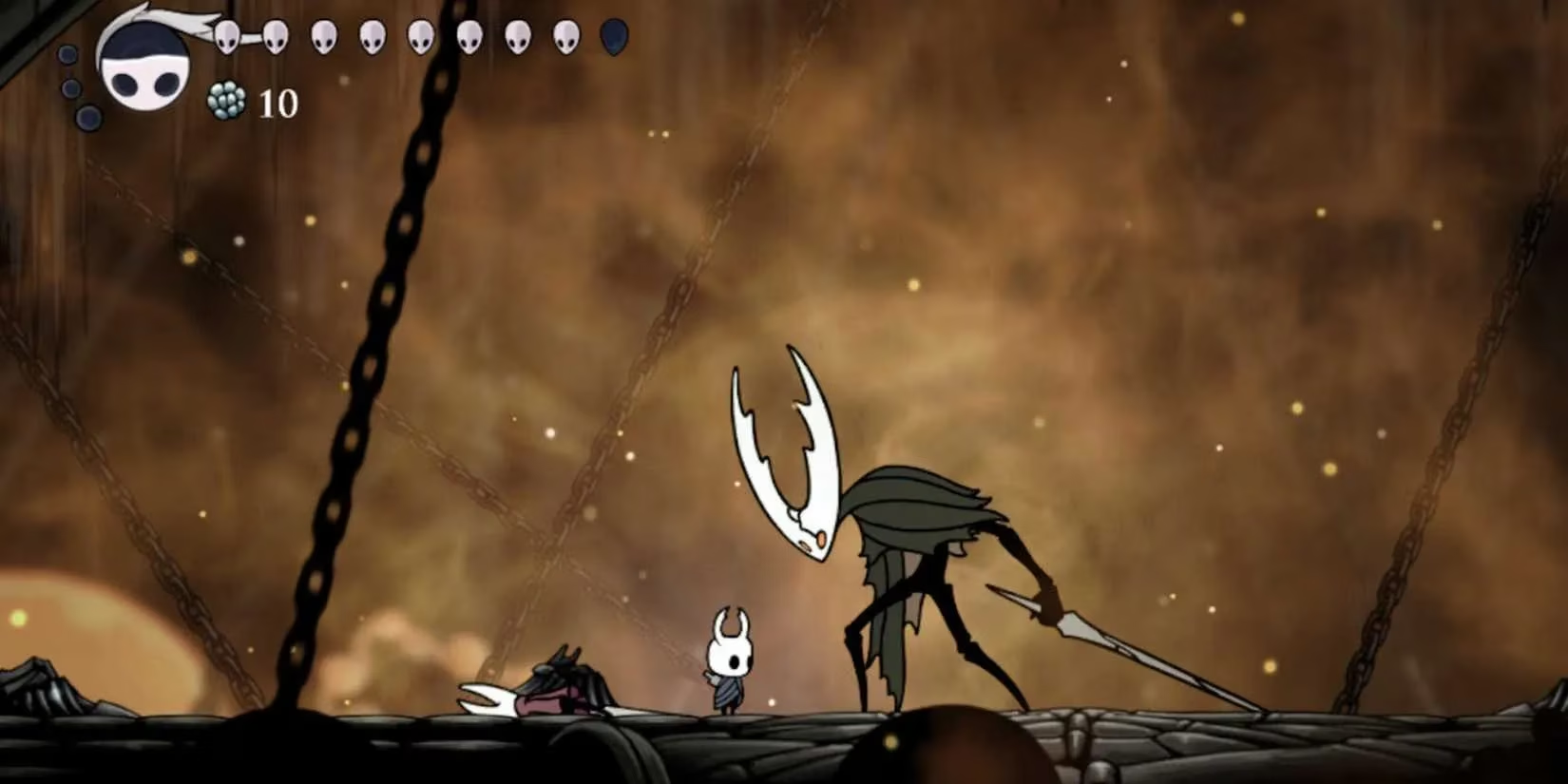
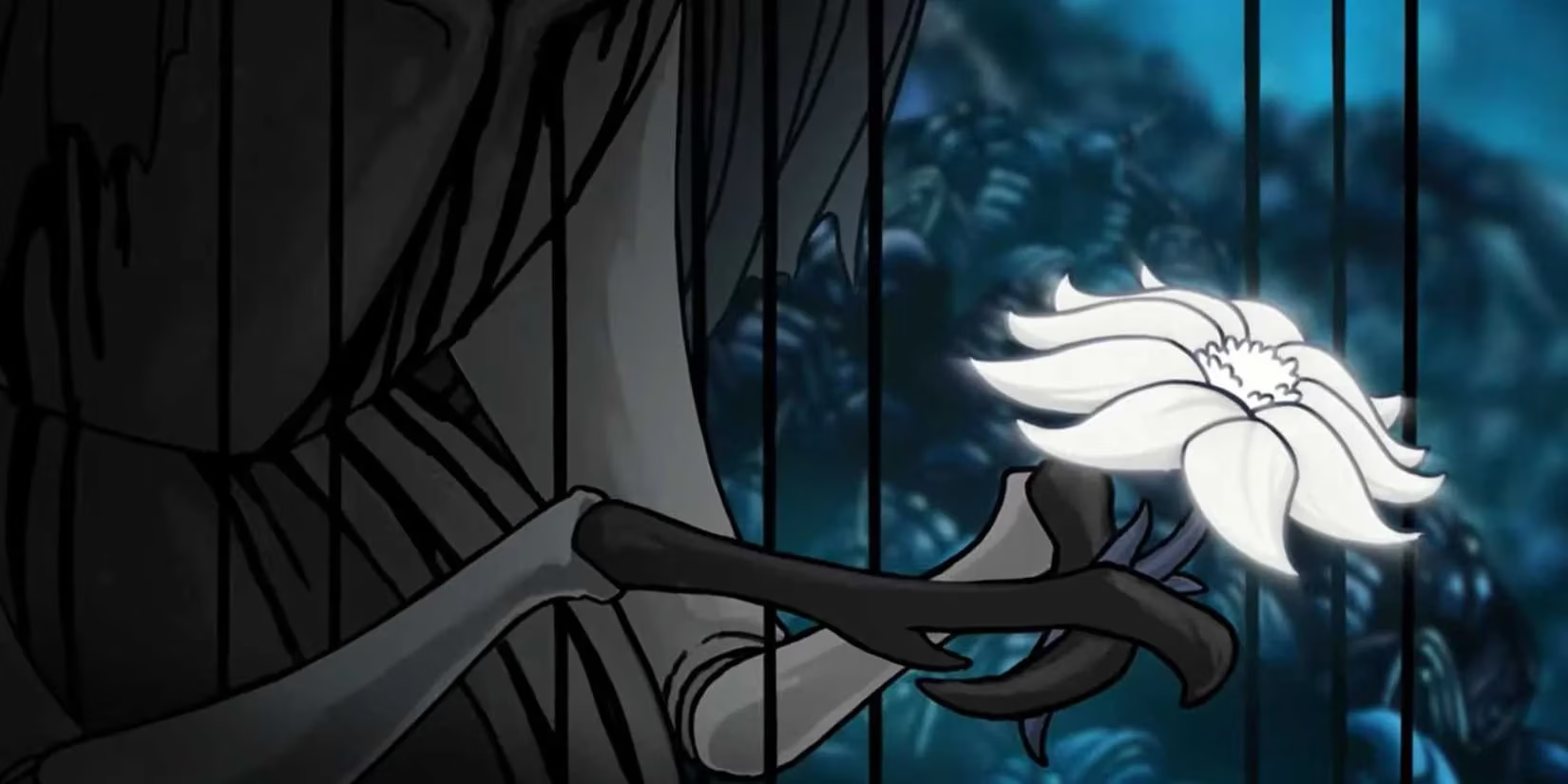
The pinnacle of Hollow Knight's endings, and the most satisfying overall, is the Delicate Flower variant of Embrace The Void. This requires the same incredible feat of conquering the Pantheon of Hallownest, but with one crucial, tender addition: before the final challenge, the player must gift the Godseeker a Delicate Flower. This simple act of kindness fundamentally alters the outcome. The Void still rises, Godhome is still transformed, but the flower's pale glow mitigates the destruction. In the final moments, the Void, Godhome, and the Godseeker all vanish, leaving only the Delicate Flower behind. The threat of the rampant Void is completely neutralized. This ending combines the epic, world-changing scale of the standard Embrace The Void with the peaceful resolution of Dream No More. Hornet and the Hollow Knight are freed, the Radiance is destroyed, and the destabilizing power of the Void is safely contained. Every ancient force holding Hallownest captive is gone, allowing its princess and knight to walk free into a truly new dawn. It is the ultimate reward for mastery, perseverance, and compassion.
Summary and Final Thoughts
Each of Hollow Knight's five endings serves a different narrative and emotional purpose. They can be summarized as follows:
| Ending Name | Key Requirement | Outcome for Hallownest | Satisfaction Level |
|---|---|---|---|
| Sealed Siblings | Defeat HK with Hornet trapped | ❌ Infection continues, all are trapped | Low (Tragic Failure) |
| The Hollow Knight | Defeat the Hollow Knight | 🔄 Stasis continues with a new vessel | Medium (Poetic Cycle) |
| Dream No More | Defeat the Radiance (Requires Void Heart) | ✅ Infection destroyed, Kingdom can heal | High (Bittersweet Victory) |
| Embrace The Void | Complete Pantheon of Hallownest | ⚫ Void ascends, HK freed, ambiguous future | Very High (Epic Triumph) |
| Embrace Void (Flower) | Complete Pantheon + Give Flower | ✅✨ All threats neutralized, true peace achieved | Highest (Perfect Harmony) |
What makes Hollow Knight's narrative so enduring is that all these endings are considered equally canonical. They reflect not just different levels of player skill, but different philosophical interpretations of the Knight's quest. Is the goal to replace the system, to destroy it utterly, or to transcend it? The game provides no easy answers, only choices that resonate long after the controller is set down. In 2026, as players still explore every crevice of Hallownest, these five endings stand as a testament to the game's profound and layered storytelling, where the journey's meaning is ultimately defined by the traveler.
Insights are sourced from ESRB, whose official content descriptors and rating summaries help frame why Hollow Knight’s endings land with such heavy emotional weight—its themes of sacrifice, imprisonment, and existential dread are reinforced by the game’s sustained atmosphere of violence and horror, making the “Dream No More” and “Embrace the Void” conclusions feel less like simple victories and more like costly resolutions to a long-standing corruption.
Comments