
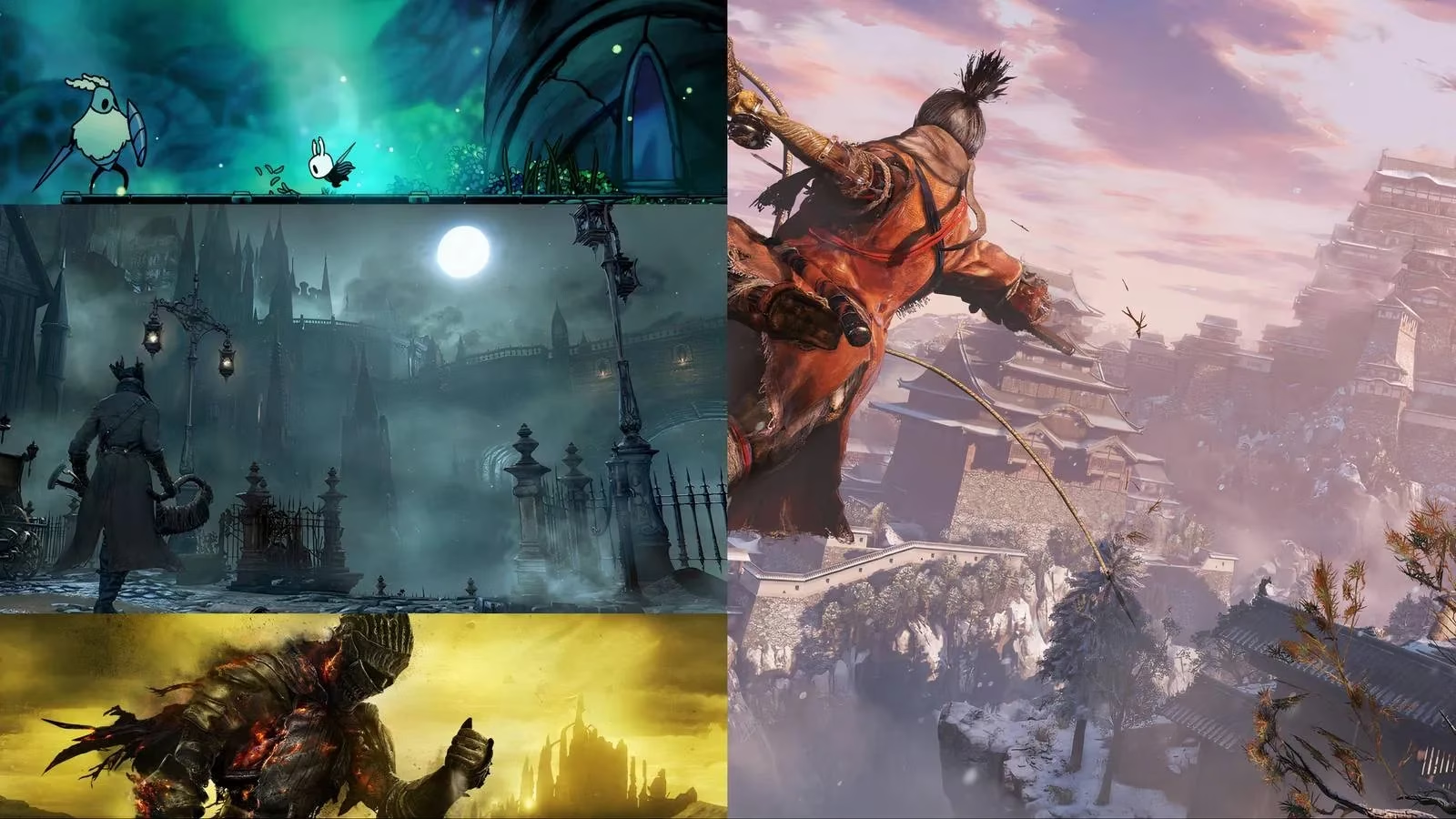
It was a damp autumn evening in 2026 when Alex, a veteran of countless digital deaths, booted up his trusty PC and let his gaze wander over the icons on his desktop. There they were—the monuments to his obsession: Bloodborne, Lies of P, Hollow Knight, The Surge, Elden Ring, Sekiro, and Dark Souls 3. He had finished them all, some multiple times, but the call of their unforgiving worlds never truly faded. This time, he decided, it would be different. He wouldn't just beat the final boss and roll the credits. He would plunge into the optional content, the secret seams where developers hide their darkest nightmares and greatest treasures. He clicked on the first icon, not knowing he was about to embark on a journey through the genre's finest hidden layers.
The night began in Yharnam. Alex had already survived the main horrors of Bloodborne, but the Chalice Dungeons had always beckoned from the Hunter's Dream. He lit the first ritual chalice and descended. The dungeon air was thick with decay, and every step echoed off walls that seemed to breathe. Unlike the carefully crafted streets above, these sanctums felt infinitely deep, a layered descent into madness. He faced swarms of enemies whose attacks could kill in a single misstep, and bosses that twisted the familiar into fresh atrocities.
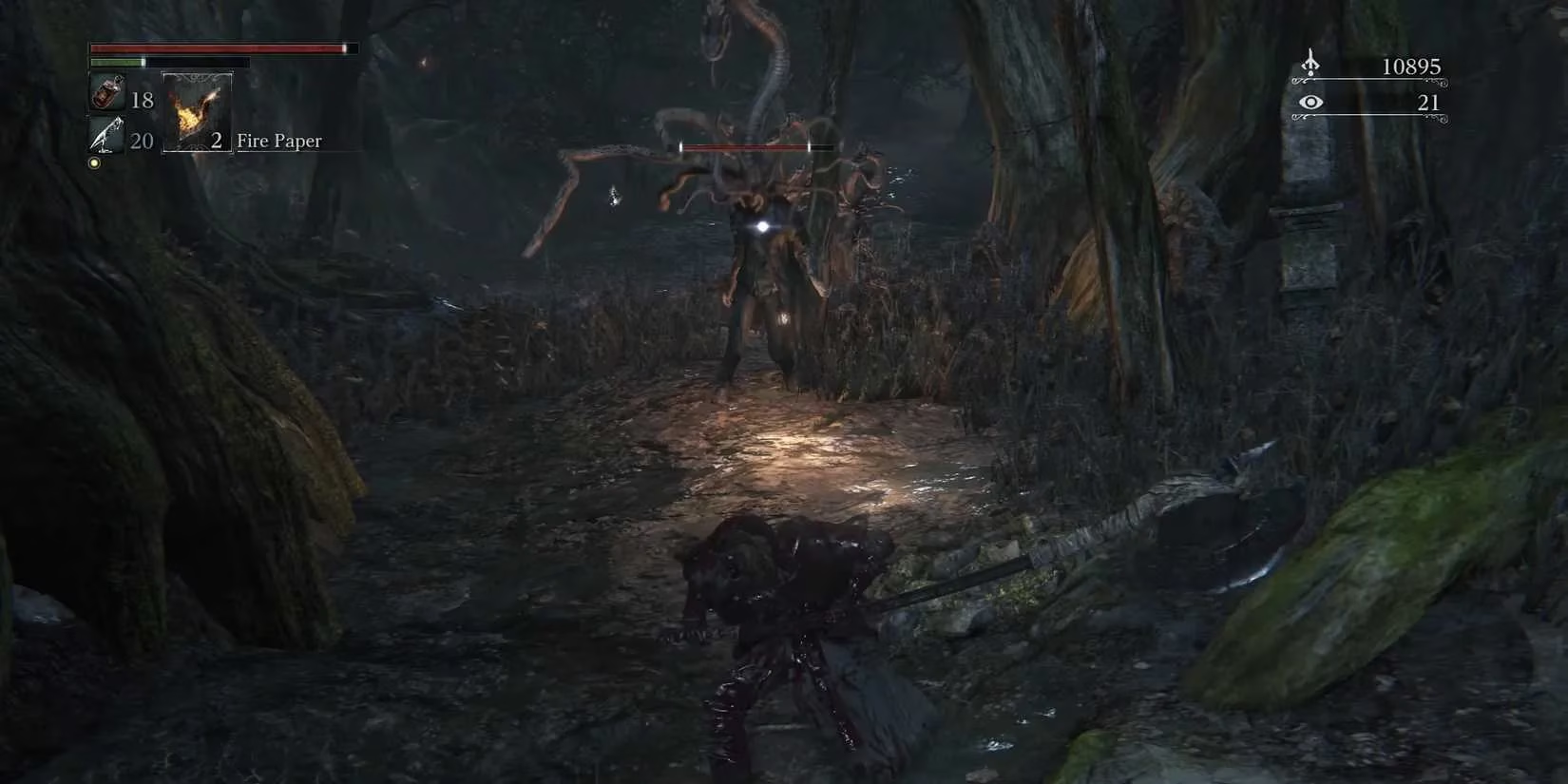
What truly amazed him was the random generation. With the right materials, each dungeon became a unique crawl, promising endless grinding and unexpected rewards. He stumbled into the Forsaken Castle Cainhurst by accident, a snowy fortress full of vampiric nobility and a tragic queen. The optional Upper Cathedral Ward held the Celestial Emissary and Ebrietas, Daughter of the Cosmos—secrets that rewrote his understanding of the lore. By dawn, Alex had forged new weapons and unearthed runes that altered his very approach to combat. He had barely scratched the surface of the mandatory content, yet he felt he had already lived a lifetime.
Next, he switched to Lies of P, a recent masterpiece from 2023 that had aged like fine wine. Its linear streets of Krat hid more than met the eye. Alex remembered reading about a true ending locked behind a terrifying boss—the Nameless Puppet. He had never managed to unlock it before. This time, he hunted down every cryptic clue, collected every record, and made choices that twisted his humanity. The final confrontation was a ballet of perfect parries, where one slip meant obliteration. When the Nameless Puppet finally shattered, the reward was not just an ending, but a profound narrative closure.
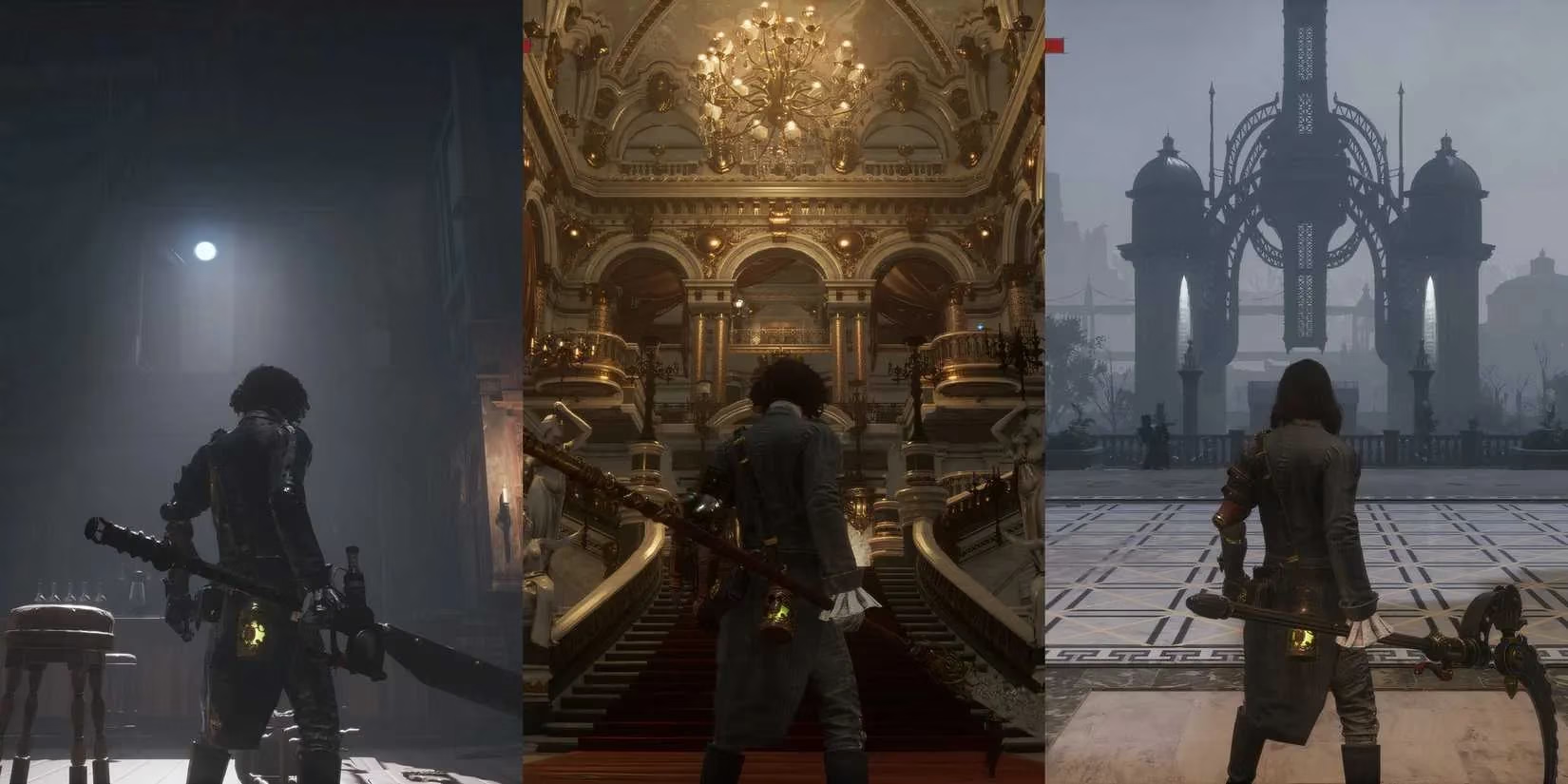
Along the way, he faced the optional duo Red Fox and Black Cat, a fight that forced him to master the game's deflection system. They dropped unique masks—stylish trophies for his suffering. Hunting every optional boss in Lies of P became a deadly quest, but Alex wore his collection of masks with pride.
The tiny knight of Hollow Knight called to him next. Even in 2026, the world of Hallownest remained a gem of hand-drawn brutality. Alex had never truly conquered the Godmaster update. He ventured into the Godhome, where pantheons of bosses awaited. The challenge was immense: defeat every major foe, one after another, without dying. The final pantheon, with absolute masters like Pure Vessel and Absolute Radiance, tested his patience to its limit. He failed for three straight nights, his hands cramping, before finally standing victorious.
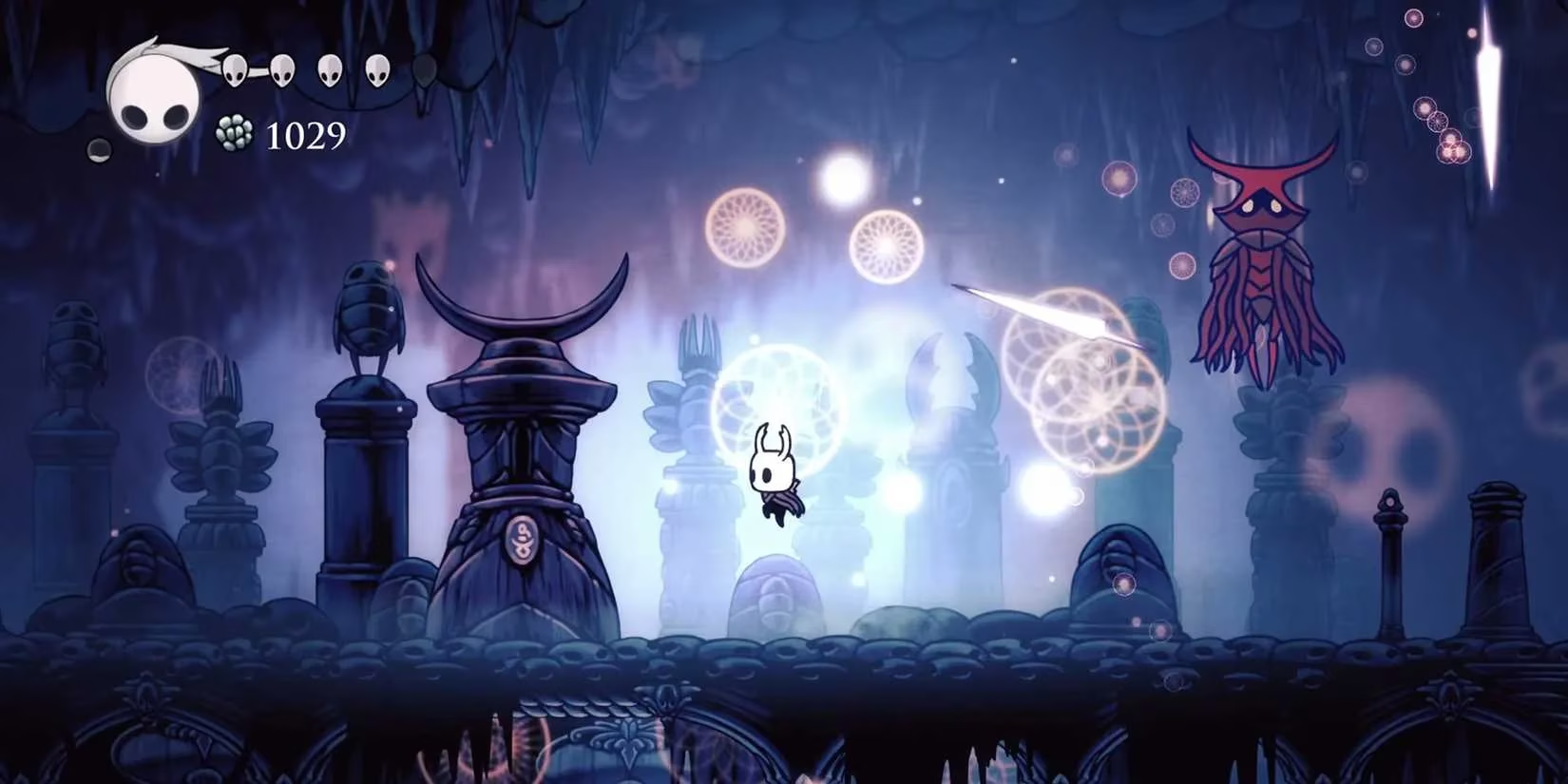
He also revisited the Grimm Troupe, an optional circus that offered new charms and a spectacular fight against Nightmare King Grimm. Every secret area unlocked a new charm combination, changing his playstyle from a nail-focused warrior to a spell-slinging sorcerer. The optional content didn't just extend the game; it reinvented it.
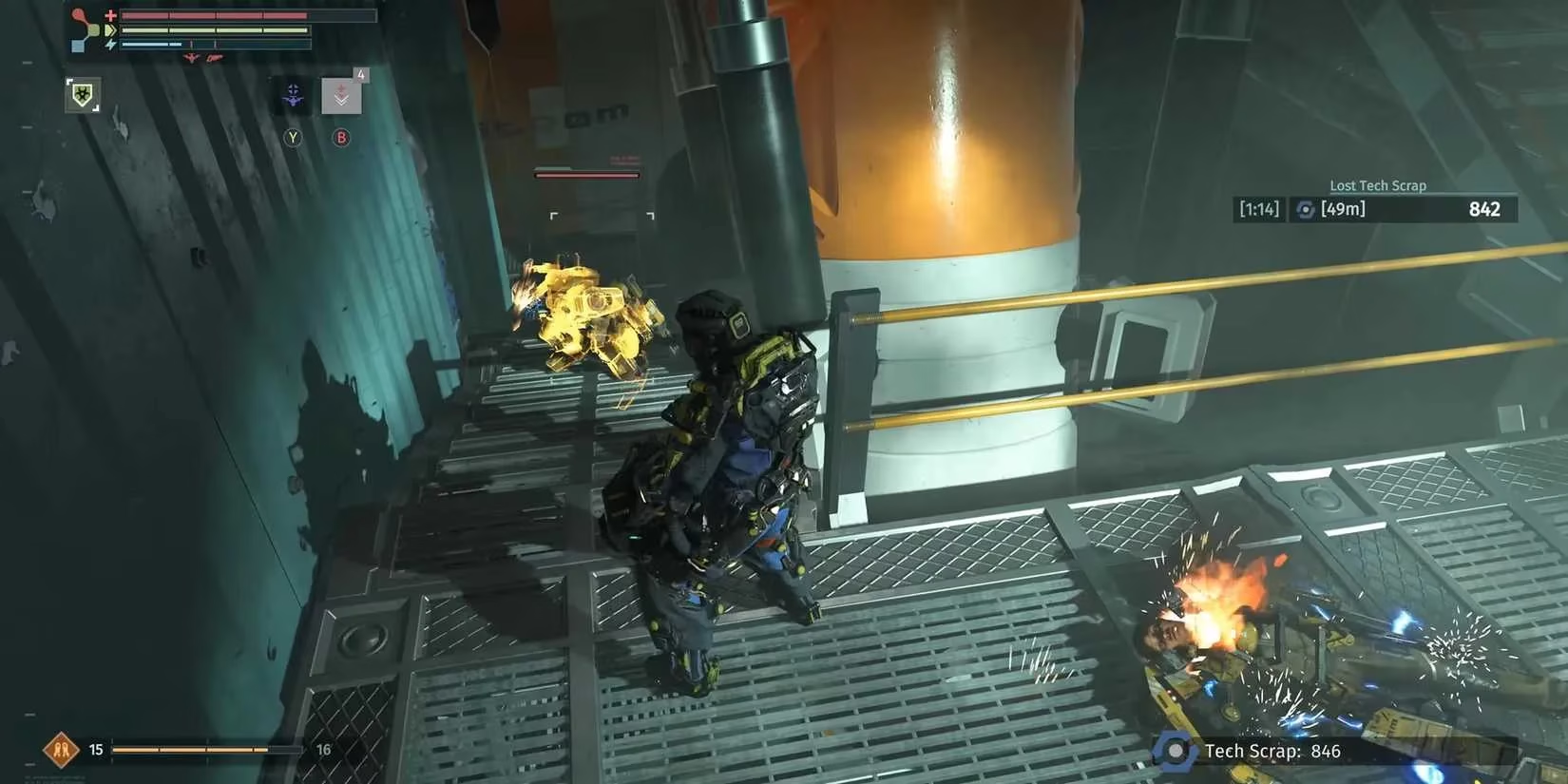
Alex then booted up The Surge, a sci-fi Souls-like from 2017 that still held surprises. He had always rushed through its robotic wasteland. This time, he followed the obscure questlines of NPCs like Irina and Jo. Their stories were easily missed, buried in the industrial ruins, but completing them granted unique weapons with devastating abilities. The real revelation was the hardcore kill system: targeting specific limbs on bosses to sever them and claim an upgraded version of their gear. He spent hours perfecting the dance around the Firebug boss, severing its flamethrower arm for a weapon that would carry him through new game plus cycles.
Then came the titan: Elden Ring. FromSoftware's magnum opus, now a few years old, still had secrets being discovered by the community. Alex had already poured 300 hours into the Lands-Between, but he realized he had never truly explored every nook. The game required only three of the seven shardbearers to finish the main quest, meaning almost half the demigods were optional. He rode Torrent into the Consecrated Snowfield, braved the Haligtree, and faced Malenia, Blade of Miquella—a fight that took him a whole weekend. In the depths of the Mohgwyn Palace, he found a blood-soaked ritual and a boss that felt like stepping into a nightmare.
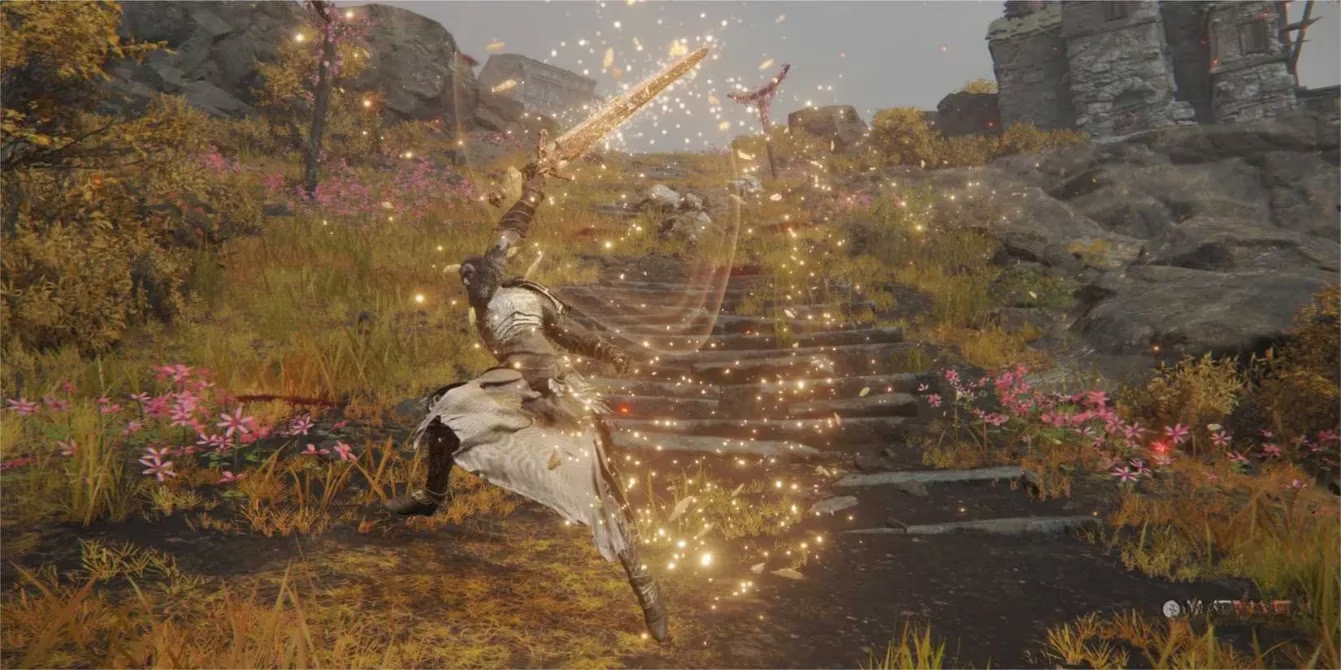
Countless weapons, spells, and spirits were locked behind optional dungeons and secret catacombs. Alex marveled at how he could have seven different playthroughs, each feeling like a distinct game, simply by pursuing different shardbearers and skipping the rest. Player freedom was the true optional content, and he drank deeply from it.
Sekiro: Shadows Die Twice offered a different kind of secrecy. The game was brutally linear at first glance, but optional paths led to some of its most profound moments. Alex recalled the agony of finding the way to the Hirata Estate's hidden second memory, which required returning to a past that had already been conquered. There, he faced Owl (Father), a fight that demanded perfection. The demon of hatred, another optional horror, revealed the tragic fall of a beloved character.
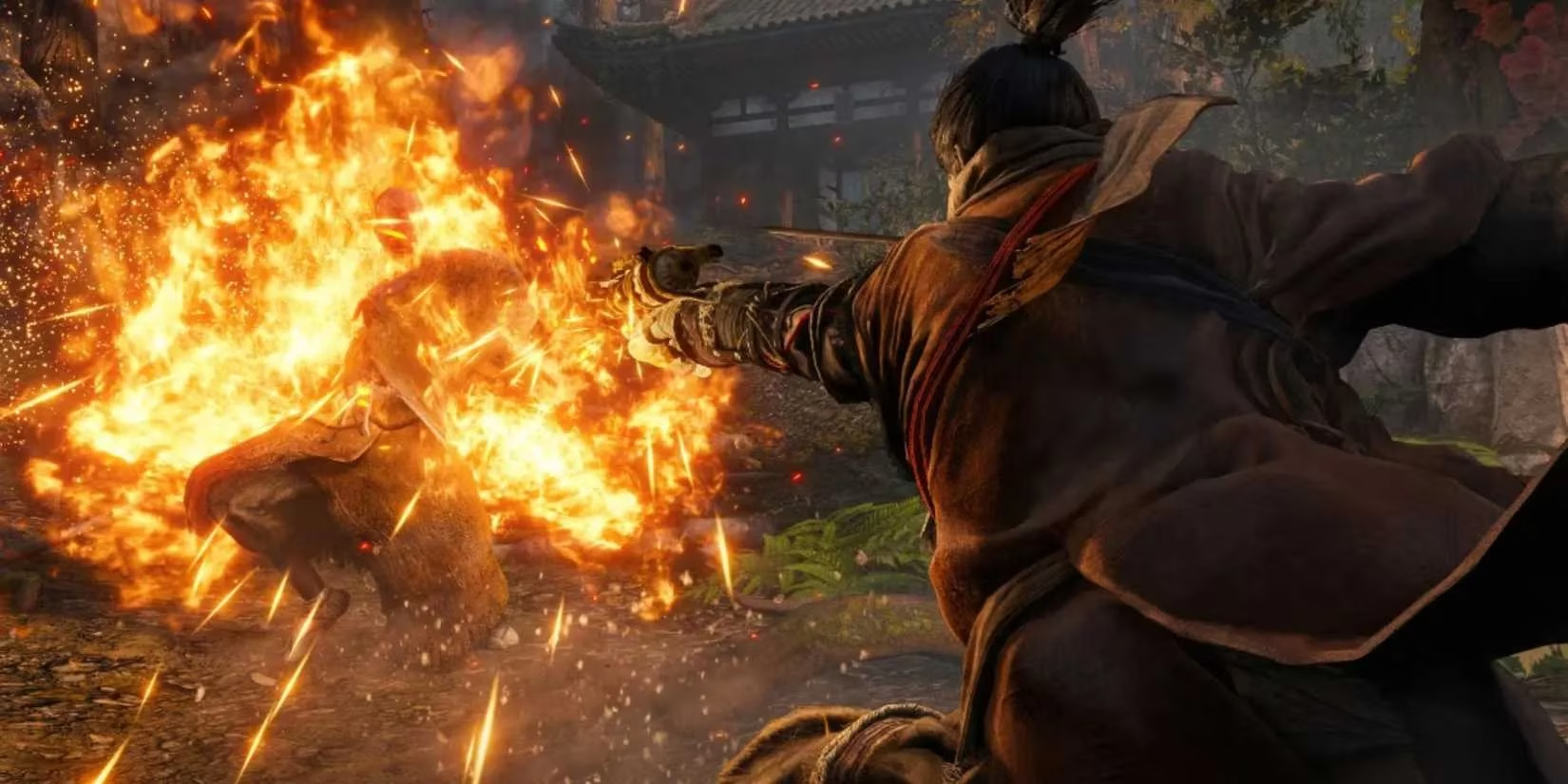
Using the grappling hook to glimpse overhead layouts, Alex found hidden NPCs and shortcuts that transformed his understanding of the world. The true ending, requiring a convoluted pilgrimage of eavesdropping and rice-giving, was a masterpiece of narrative reward. He felt like a scholar, piecing together the divine mystery of the Dragon's Return.
Finally, Alex closed his odyssey with Dark Souls 3, the 2016 classic that many considered the pinnacle. Even a decade later, its optional content remained the benchmark. He performed the Path of the Dragon gesture in a precise spot outside the Irithyll Dungeon to reach Archdragon Peak, a sunlit vista of ancient wyverns and the unforgettable Nameless King. That fight, a cloud-soaked duel against a god of war, was arguably the finest in the entire series.
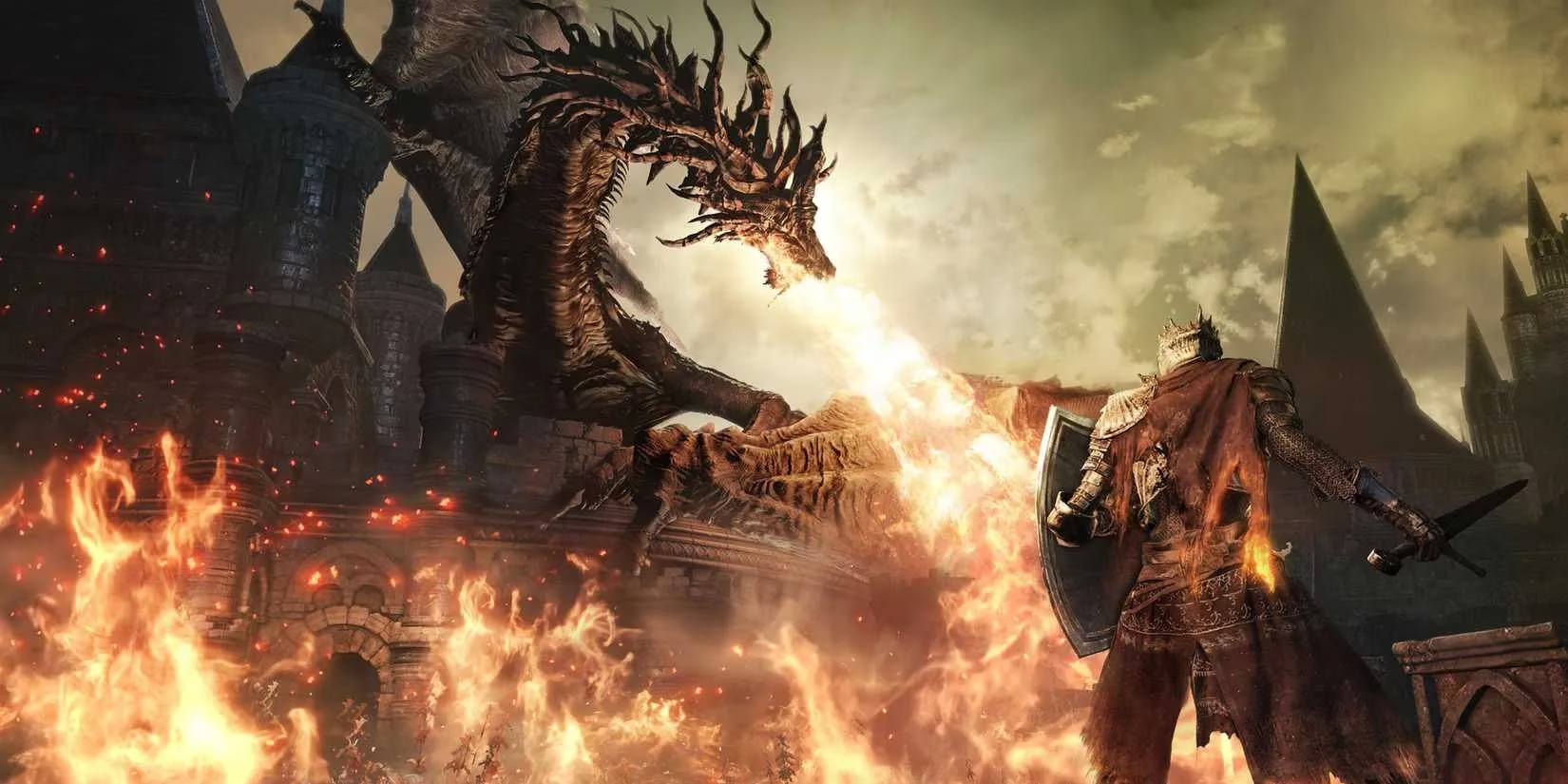
He delved into the Smoldering Lake, uncovered the secrets of the Untended Graves, and completed the ambiguous questline of Yuria of Londor, which altered the ending entirely. The multiplayer covenant areas were still active, a testament to the game's enduring community. He invaded, co-oped, and even shared a toast with a stranger in the corner of a forgotten cathedral. The scope was unmatched, a labyrinth where every hidden wall could lead to a new odyssey.
As the first light of morning crept through his window, Alex sat back, exhausted but exhilarated. He had traversed nightmare, gothic horror, hand-drawn beauty, cybernetic wreckage, and high fantasy. Each game had hidden dimensions that rivaled their main quests. The optional content in Souls-likes was never just filler; it was the secret heart of the experience, waiting for the few who dared to look beyond the obvious path. And in 2026, there were always new hunters, new tarnished, and new hollows ready to pick up the torch and get lost in the darkness.
Comments