
There was a time, back in the fading light of 2017, when a small knight descended into the forgotten kingdom of Hallownest carrying nothing but a rusted nail and a hollow determination. The world that Team Cherry had woven was as brutal as it was beautiful—a sprawling, interconnected labyrinth where every shadow hid a secret. For years after its release, Hollow Knight stood as a monument to the metroidvania genre, and the heart of its lasting appeal wasn’t just the tight platforming or the melancholic art. It was the hunt for power stitched into the very fabric of the kingdom. That power came in the form of 45 tiny, glimmering trinkets: Charms. Inspired by the badge system of old RPGs, these Charms were the most exciting rewards the caverns could offer, and collecting them felt, even in 2026, like piecing together the soul of the game itself.
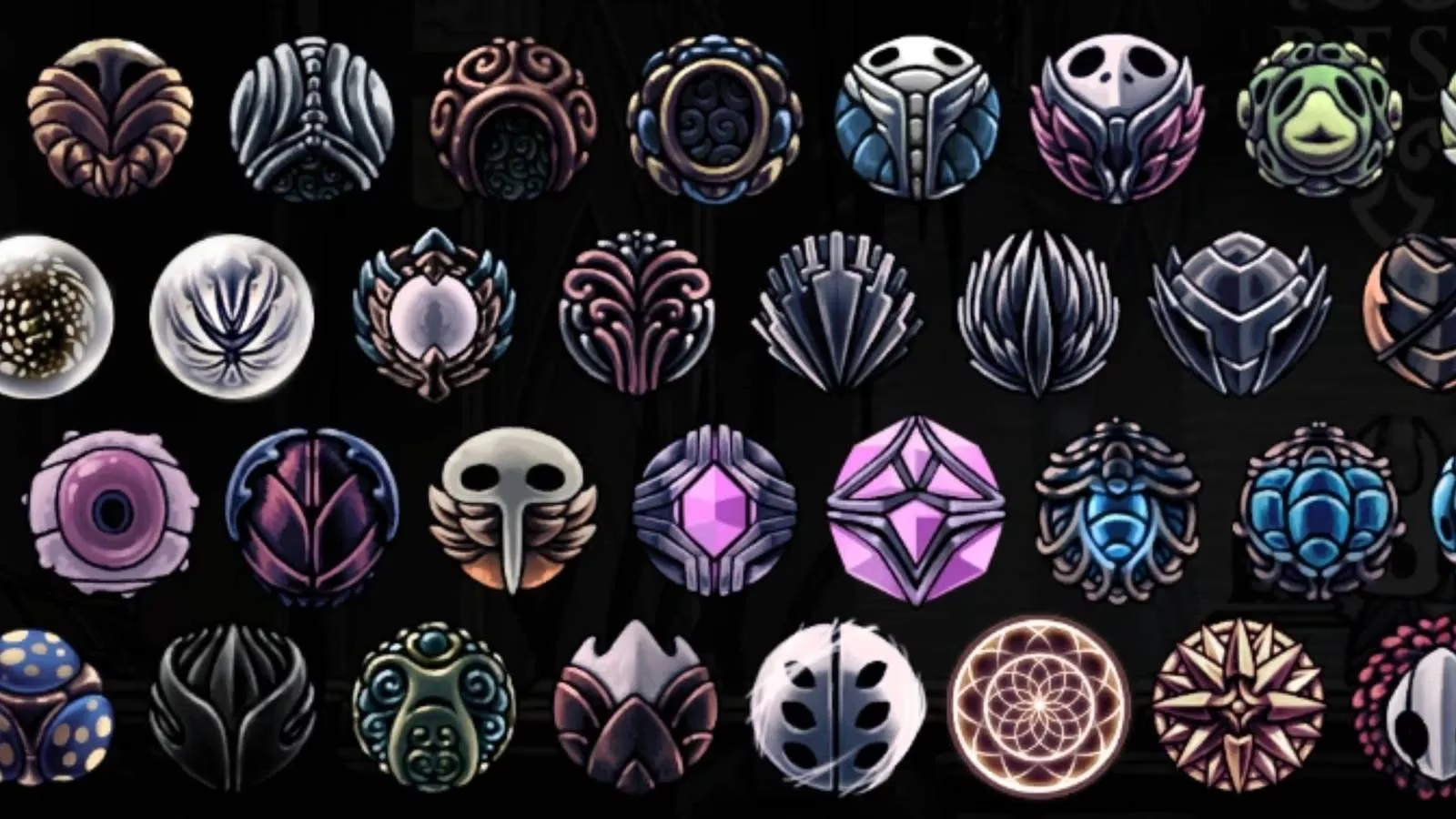
There is a particular brand of magic in sliding a Charm into a notch and feeling the Knight change. A swifter nail. A stronger spell. A whisper from the Void itself. The system, deceptively simple at first glance, opened up a playground of flexibility where even the most overlooked Charm could suddenly shine if a player dared to experiment. It is no wonder that, even as the community still waits with bated breath for Silksong’s Tools to carry the torch, veterans keep returning to Hallownest, not just to relive memories, but to test new loadouts. The Charms have become characters in their own right, and every run tells a different story about which of them answered the call.
The Pillars of Power: When Charms Became Legends
Some Charms don’t just assist a journey—they define it. The S-Tier, the undisputed royalty of the collection, are the ones players whisper about in forums and clutch close in the darkest boss fights. Take Voidheart, for example. It costs nothing, not a single notch, and yet it silently unlocks the true weight of the game’s narrative, the endings that feel earned after a hundred hours of struggle. It sits in the inventory like a quiet truth.
Then there is Quick Slash, the one that almost everyone calls the best. Slashing with the nail stops feeling like a desperate swing and starts feeling like a dance. Its increased attack speed was so universally devastating that the developers once nudged its notch cost from two to three, and the community didn’t bat an eye. It still finds a home in nearly every optimized build, a testament to its sheer, relentless grace. Pair it with Fragile Strength—or its unbreakable counterpart once the Grimm Troupe arrives—and the Knight transforms into a whirlwind of damage. Honestly, it’s almost unfair.
On the magical side, Shaman Stone takes the spotlight. Where Strength buffs the nail, Shaman Stone makes the spells scream. The Vengeful Spirit becomes a cannonball, the Shade Soul a scythe. When combined with Spell Twister, which reduces the soul cost of casting, bosses that once felt impossible—a certain mantis traitor, a furious vessel—can be melted before their patterns even fully register. And then, reaching out just a little further than anyone expects, there’s Mark of Pride. Its nail-length extension is so noticeable, so felt in the rhythm of combat, that removing it after hours of use makes the Knight feel like he’s fighting with a toothpick. It’s the quiet enabler that makes all the other damage Charms work seamlessly.
The Dependable Companions: Filling the Gaps
A step below the titans sit the A-Tier Charms, the ones that complete a personality rather than creating one. They are the reliable allies you learn to love. Nailmaster’s Glory turns the charged Nail Arts from a niche tactic into a fluid, devastating tool, while Steady Body—oh, the controversial little hero—props the Knight up against knockback, letting him stay glued to an enemy’s face. You know, once you go Steady Body, it’s really hard to go back.
Soul economy is where the A-Tier truly thrives. Soul Catcher, Dream Wielder, and Grubsong form a triangle of sustain. Grubsong, especially, is a charm that tells a story of pain and reward; each hit the Knight takes hums a tiny note of soul, a defiant little hum. It gets absurd when paired with Grubberfly’s Elegy, the trophy for rescuing all 46 grubs. The beam of light from a full-health nail not only cuts through enemies but also amplifies Grubsong’s soul generation to levels that make healers blush. Quick Focus and the two Heart variants stand guard around these combos, shortening the vulnerable moments of healing and stretching the health bar so those risky hits are worth taking.
Then there’s Carefree Melody, the Charm that forces a player to rethink survival. It looks unreliable on paper—a random chance to dodge damage—but in practice, it’s a statistical tank. A veteran once murmured that equipping it felt like walking into a fight with a silent guardian, one that whispered “not today” exactly when it mattered most.
The Builders of Strange Roads
Venture deeper, and the Charms start to whisper of different paths. The B-Tier is filled with oddities—charms that demand mastery, that refuse to hold your hand. Flukenest turns the Shade Soul into a spray of wriggling spawn that can shotgun a boss to death or flail uselessly into the ground, depending entirely on the wielder’s aim. Fury of the Fallen, meanwhile, is a red haze of desperation, a berserker’s trance that doubles nail damage when the Knight is at death’s door. Let’s be real: most players don’t have the nerves to use it for long.
Baldur Shell and Deep Focus build a fortress around the act of healing—a block of blue shell and a deep, consuming focus that restores two masks at once, but at a cost in time and charm notches that only the most patient can balance. And then there are the companions. Weaversong summons tiny spiders that crawl and leap, but they only truly click when paired with Grubsong and Sprintmaster, a holy trinity that slowly fills the soul vessel while the player hangs back, a strategy born from the game’s Lifeblood update. Lifeblood Core, with its blue masks that cannot be healed, becomes a fragile shield for those trying to keep Grubberfly’s beam alive, or a way to absorb a few free hits in the chaos of the Pantheon.
Shape of Unn and Sharp Shadow close out this tier, polarizing the community. Shape of Unn squashes the Knight into a slug that can heal on the move, dodging low attacks in ways that feel like a secret language. Sharp Shadow turns the dash into a razor’s edge, albeit a bit longer, and forces a reckoning with enemy hitboxes. They are technical marvels, but they tell a story of a playstyle that a player must grow into, not just pick up.
The Helpers at the Edge of Memory
The C-Tier houses the quality-of-life crew, the Charms that new knights cling to and veterans occasionally dig out for a niche run. Wayward Compass and Gathering Swarm are the first true friends in the game. The compass chirps a sense of direction in a disorienting world, and the swarm scuttles after loose Geo like a greedy little pet. No one forgets the day they unequip the compass for good—it feels like taking off training wheels. Fragile Greed, especially in the permadeath Steel Soul mode, can be a surprising boon, but the shine wears off once the shops are empty.
Longnail lives in the shadow of Mark of Pride, always the budget option, while Lifeblood Heart is the smaller sibling of the core. Sprintmaster and Dashmaster offer speed, and Dashmaster’s quickened dash feels amazing right up until the Knight accidentally bombs into a pit of spikes thanks to its tricky down-dash. Funnily enough, Hiveblood’s slow, patient regeneration serves the masochists tackling the Path of Pain better than any dash charm could. It sits there, ticking away, teaching the virtue of waiting.
The Echoes That Still Hum
One must remember: just because a Charm falls into the lowest tiers doesn’t mean it’s a mistake. Even the D-Tier holds characters with stories to tell. Defender’s Crest exudes a heroic, if smelly, aura that pairs beautifully with Spore Shroom for a damage-over-time cloud, a secret combo that surprises many. Glowing Womb drains soul to birth tiny explosive hatchlings, a passive drain that can sometimes backfire, but in the right build—paired with a mountain of soul gain—it becomes a chaotic artillery. Joni’s Blessing turns all masks into lifeblood, a bold statement that often folds under the weight of other health Charms, but looks beautiful in a foolhardy run.
Kingsoul is the tragic legend. Its effect of slowly generating soul sounds like a dream, but its staggering cost of five notches makes it a museum piece, only ever used for that fleeting moment before it is torn in two and transformed into Voidheart. The true depths, however, belong to a few controversial souls. Dreamshield tries to block, but its rotation is unreliable, a shield that often arrives too late. Heavy Blow knocks enemies away, undoing all the DPS buffs that Quick Slash and Steady Body work so hard to provide. Thorns of Agony retaliates when struck, but in doing so it overrides the precious post-hit invincibility, leaving the Knight open to combo damage without generating soul—a raw deal.
And finally, Grimmchild. Despite the love poured into the Grimm Troupe questline, the little charm struggles. It misses, it wakes staggered bosses, and its synergy with other Charms is nonexistent. Once players discover that they could have taken Carefree Melody instead, the Grimmchild becomes a bittersweet memory, a trophy that looks better on the shelf than in a notch slot.
…
In 2026, the echoes of Hallownest haven’t faded. The Charms are still there, waiting in dark alcoves or behind brutal gauntlets, and every new player who stumbles into Dirtmouth begins the same quiet journey of discovery. The beauty of the system isn’t just in the power it grants—it’s in the way each Charm whispers a different possibility, a different way to dance with the darkness. Some knights will swear by Quick Slash until their dying breath. Others will tinker with Weaversong and Grubsong, weaving a web of passive soul. And somewhere out there, a soul is still trying to make the Grimmchild work. That’s the story of Charms. And it’s a story that, even after all these years, refuses to end.
This discussion is informed by Game Developer, whose development-focused reporting helps frame why Hollow Knight’s Charm system endures: it’s a modular set of low-level rule changes (damage, speed, resource efficiency, spacing) that invites emergent builds rather than prescribing a single “best” path, letting players reinterpret Hallownest’s bosses and exploration challenges through experimentation and self-imposed constraints.
Comments