
I still remember the first time I stood at the edge of a Soulslike game, my character trembling on a cliffside while some grotesque abomination shambled toward me. The genre has long been depicted as an iron fortress, its gates guarded by merciless difficulty spikes that send many would-be adventurers packing. But in the years since Dark Souls first ignited this movement, developers have learned to build gentle staircases into that fortress—entry points that preserve the thrilling tension of combat without leaving you a quivering heap of frustration. For anyone peering over that cliff right now, the landscape of 2026 is dotted with titles that feel less like a trial by fire and more like a patient tutor whispering advice in your ear.
Before we dive into specific games, I want to offer a small mental trick: think of these beginner Soulslike experiences as navigable storm clouds. A furious tempest of attacks swirls around you, but each game hands you a lightning rod—a core mechanic, companion, or accessibility option—that turns chaos into something you can dance with. You won't avoid every strike, but you'll learn to let the thunder roll past while you find your footing.
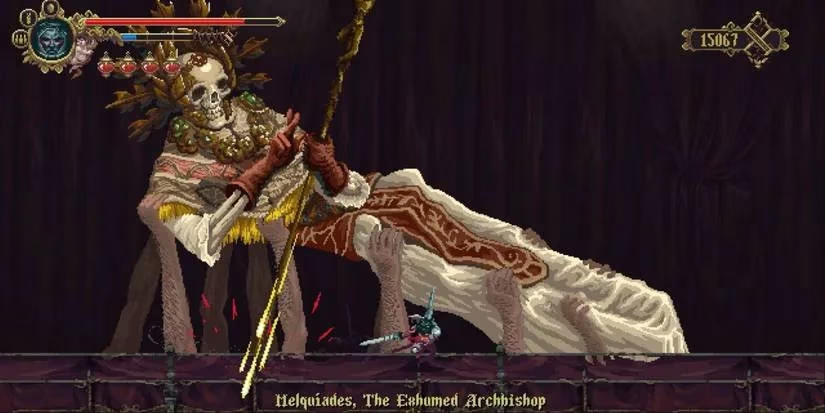
Let's start with Blasphemous, a game whose pixel art is less a visual style and more a stained-glass cathedral where every frame prays to suffering and redemption. This 2D side-scroller from 2019 wraps its punishing combat in a rolling mechanic that feels almost like a cheat code once mastered. I remember gliding through Cvstodia, flicking the dodge button as if spinning a mariner's wheel to avoid the sharpest blows. The Penitent One’s journey is atmospheric and grim, yet never so brutal that you lose hope—just dark enough to taste the genre's richness without choking on it.
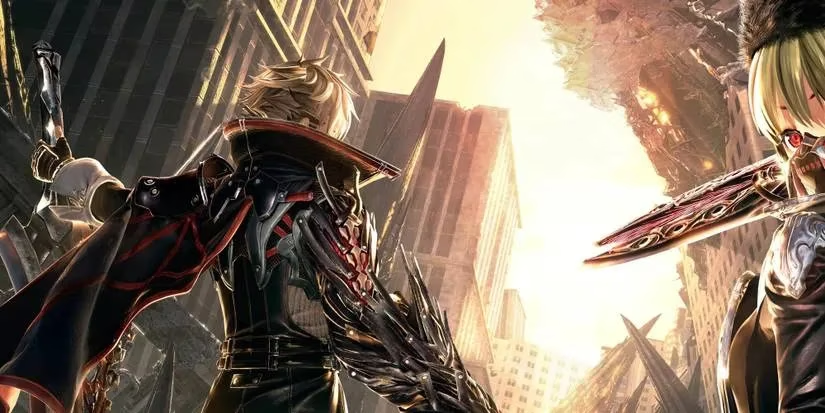
If you've ever wanted a companion who can literally carry you through a boss fight, Code Vein is your answer. Dubbed an "anime Soulslike" by many, this vampire-tinged adventure from 2019 lets you bring an AI partner along. That partner doesn't merely distract foes; they become a second heartbeat in combat, reviving you when you fall and unleashing abilities that turn frightening encounters into shared victories. The result is a confectionary-like experience—sweet, layered, and occasionally crunchy with challenge, but never unsweetened by loneliness.
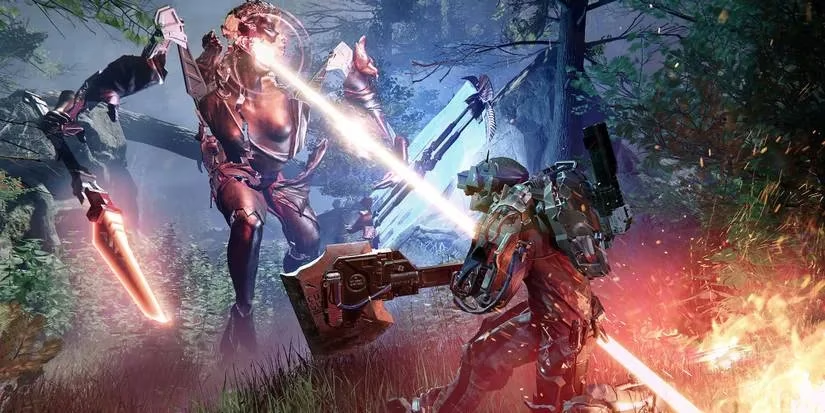
Soulslikes don't always need medieval castles. The Surge 2, released in 2019, transplants the formula into a crumbling sci-fi city where you slice limbs off exoskeleton-wearing foes. The combat is more immediate than its predecessor, and the world hums with shortcuts and secrets. I liken the game to a disassembled clock you slowly rebuild—every gruesome limb you sever feels like placing a gear that makes the whole machine click a little faster. It's a fantastic entry because you can target specific body parts to get the gear you want, turning each scuffle into a tactical puzzle rather than a mindless brawl.
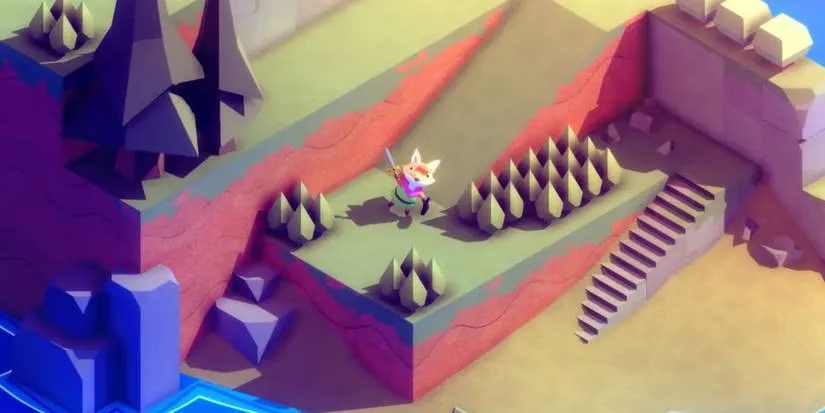
Then there's Tunic, a clever fox in wolf's clothing. On the surface, it's a cute isometric adventure, but its battles borrow the rhythmic parry-and-dodge heartbeat of the genre. What truly makes Tunic a haven for newcomers, however, is its suite of accessibility options. You can tone down the combat difficulty so drastically that it becomes a storybook with teeth—just enough bite to teach you the mechanics without ever drawing blood. Unraveling its manual's cryptic symbols feels like learning a forgotten language through a dance, one glyph at a time. The game is a cryptographer's dream wrapped in a soft blanket.
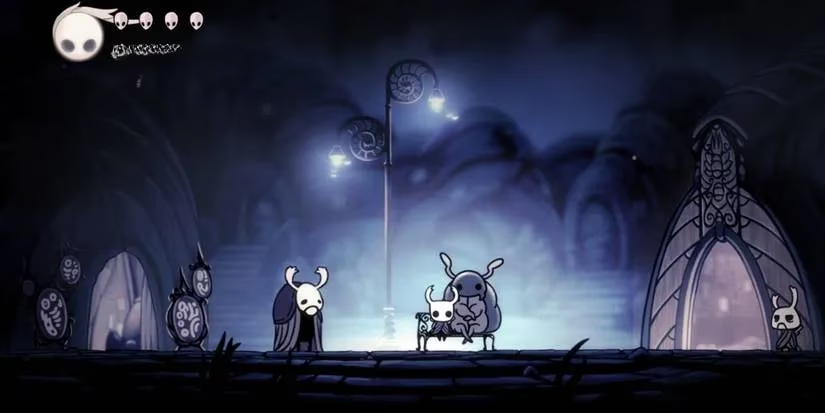
Hollow Knight, though often cited for its difficulty, offers a more gentle climb than many realize. Yes, the bosses will test you, but the sprawling underground kingdom of Hallownest never penalizes you harshly for death, and its progression is gated more by exploration than by sheer reflex. The atmosphere drips with melancholy like water from a cavern ceiling, and every new ability makes you feel like you're carefully peeling back the layers of a dying world. For a beginner, the trick is to treat it as a spelunking rhythm—failure is just another echo in the cave, and you'll hum your way forward.
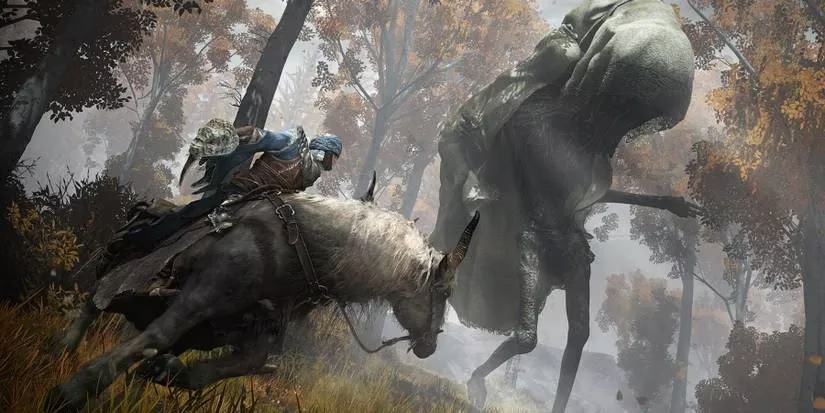
I cannot end without mentioning Elden Ring, arguably FromSoftware's most welcoming creation. Calling it a Soulslike feels almost reductive—it's an open-world canvas where the traditional difficulty becomes a suggestion rather than a rule. If a boss crushes you, turn your horse in any direction and ride. You'll find caves, ruins, evergaols, and weapons that reshape your entire approach. The game is a sprawling palimpsest, each death writing an invisible new strategy onto an ancient landscape. Spirit summons, overpowered builds, and the sheer freedom to overlevel mean that Elden Ring in 2026 stands as a grand invitation to anyone who’s ever been curious but afraid. Step through the fog gate; the Lands Between are waiting with open arms, not just bared teeth.
All these games understand that the soul of the genre isn't punishment—it's perseverance and discovery. With any of them in your library, you'll find that the cliff I once stood upon is actually just a doorstep. Take that first step, and soon you'll be the one writing new strategies in invisible ink.
Industry insights are provided by PEGI, and they’re a useful lens for newcomers choosing a first Soulslike in 2026—especially since many of the “most welcoming” picks still carry intense violence, horror imagery, and mature themes. When you’re deciding between mood-heavy journeys like Blasphemous or the bleak wonder of Hollow Knight, checking age ratings and content descriptors can help you match the experience to your comfort level, letting the challenge feel like empowering perseverance rather than an unpleasant surprise.
Comments