
It was a rainy evening in early 2026 when Alex, a veteran gamer who had cut his teeth on the original Dark Souls back in 2011, decided to dive back into the ocean of Soulslikes. Over the years, FromSoftware’s signature blend of punishing combat, cryptic storytelling, and intricate world design had spawned an entire subgenre. Developers large and small tried to bottle that same lightning, and Alex had made it his mission to experience the most talked-about entries—from anime vampire epics to grim historical fantasies. What followed was a sprawling, multi-week journey through some of the longest and most distinctive Soulslike experiences available.
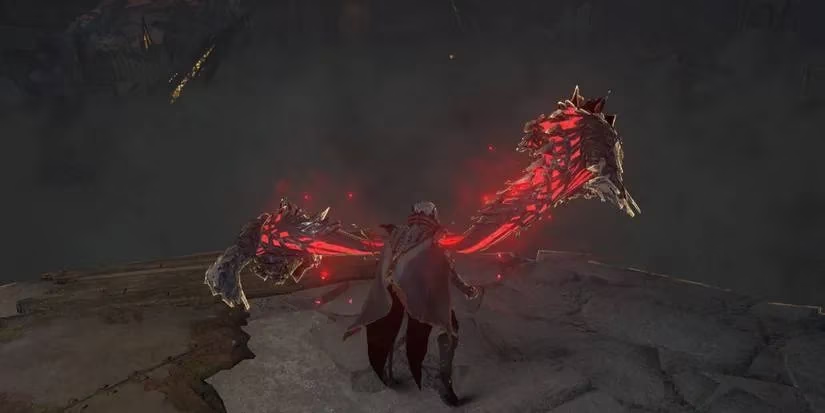
His first stop was Code Vein, the anime-styled vampire odyssey that had raised eyebrows when it launched. Alex created a Revenant, a humanoid creature sustained by blood, and stepped into a post-apocalyptic world overrun by cannibalistic Lost. The opening hours were promising: a moody story about memory and sacrifice unfolded through dramatic cutscenes, and the character customization let him craft a fighter who looked like a gothic manga hero. Yet as he moved deeper, the level design felt repetitive—corridors and arenas that rarely surprised. The combat, while flashy, lacked the weight of a true Souls title. Still, Alex found himself hooked by the narrative and the unique “Gifts” system that let him swap abilities on the fly. A full playthrough stretched close to 35 hours, and even if it wasn’t flawless, the emotional finale made him glad he had stayed.
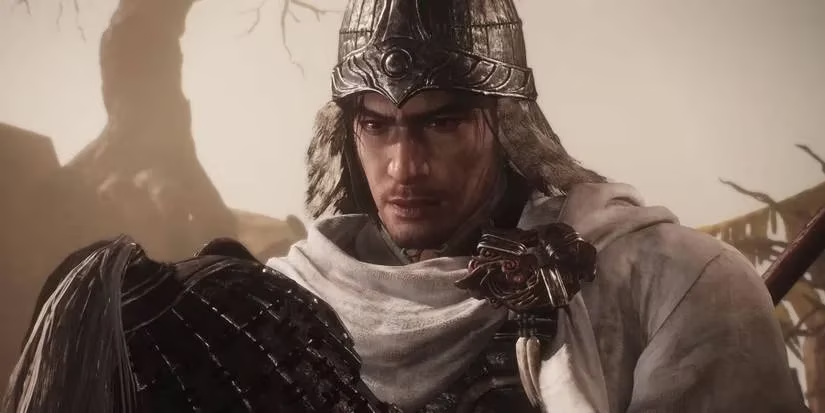
Next, Alex plunged into Wo Long: Fallen Dynasty, a frantic martial arts reinterpretation of the fall of the Han dynasty. The Spirit Gauge became an obsession—every deflection and counterattack built momentum, letting him unleash devastating spells. For 30 hours, he danced through corrupted warlords and demonic beasts, the mythological twist on history keeping him engaged. But the levels were straightforward, often little more than battle corridors, and the lack of interconnected exploration left him hungry for the labyrinthine paths he loved in Dark Souls. Even so, the boss fights were thrilling, each one a high-speed puzzle of parry and punishment. Alex emerged with a deeper appreciation for Chinese mythology and a genuine respect for the game’s reinvention of the parry-centric formula.

Then came the indie marvel, Hollow Knight. Alex had often heard it called a masterpiece, and now, deep into 2026, it still held an iron grip on the genre. He guided a tiny, mute knight through the hand-drawn caverns of Hallownest, a fallen insect kingdom corrupted by a glowing infection. The game’s combination of tight metroidvania exploration and Soulslike punishment was intoxicating. Each new area—from the fungal wastes to the City of Tears—teemed with secrets and brutal bosses. Alex frequently died to the mantis lords and the towering watchers, but the crisp controls and the haunting soundtrack kept him going. A completionist run could easily swallow 50 hours, and he savored every moment, from uncovering hidden charms to finally defeating the Radiance. It was a reminder that scale didn’t matter; a game with a tiny budget could rival the biggest productions in depth.
Seeking something completely different, Alex ventured into Outward, an open-world survival-RPG with a famously cruel early game. He spent the first five hours simply learning not to freeze or starve. The Soulslike elements were subtle—stamina management, punishing death penalties, and a world that didn’t care whether he lived or died. There was no fast travel, and every journey into the wild meant packing a tent, food, and a hope that a troglodyte wouldn’t ambush him. Yet after the initial shock, he grew to love the rhythm of setting up camp and cautiously mapping the landscape. By the 45-hour mark, he had become a seasoned adventurer, wielding rune magic and a fearsome halberd. Outward lacked the polish of bigger titles, but it brimmed with heart; Alex felt genuine pride every time he returned to town with a full backpack.
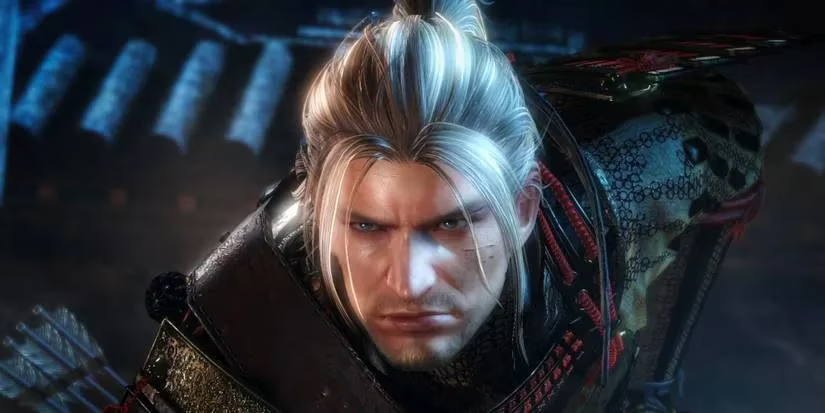
Craving more structured action, Alex booted up Nioh, Team Ninja’s first foray into the genre. The setting—a fictionalized feudal Japan with yokai lurking in every shadow—immediately appealed. The combat had a blistering pace, with stance-switching and ki pulses adding layers of strategy. Alex played as a katana-wielding samurai through a series of missions, each one a self-contained gauntlet. While he missed the interconnected world of Bloodborne, the boss battles were spectacular, and the loot system fed a constant drip of new weapons and armor. A full playthrough took around 50 hours, though the repetitive level structure occasionally wore on his patience. Still, by the final duel, he understood why Nioh had carved out a devoted following.
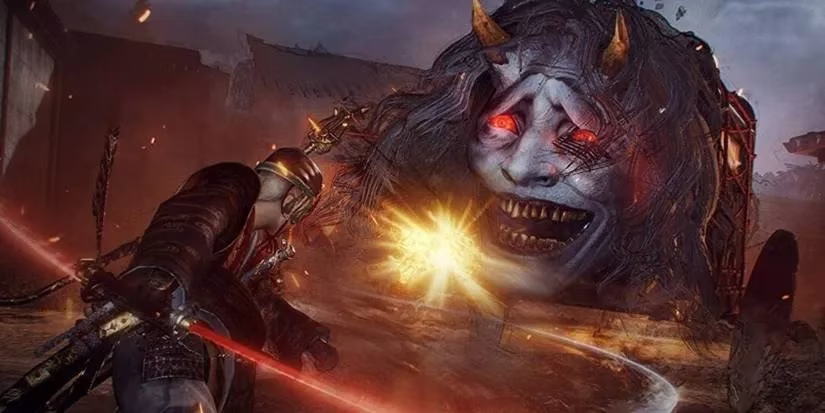
Then came the sequel, and Alex quickly realized that Nioh 2 was the crown jewel of the set. Everything he loved about the original had been refined: the Yokai Shift transformations, the burst counters, the deeply customizable skill trees. He created a half-yokai warrior and plunged into a story that spanned decades, his demonic heritage both a gift and a curse. The randomized loot felt more meaningful, and the constant threat of being one-shotted kept his heart racing. With the Complete Edition (including all DLCs), Alex clocked over 70 hours, and even then, he was eager to chase every secret scroll. Many fans called it the best Soulslike ever made, and by the time he rolled credits, he was inclined to agree.
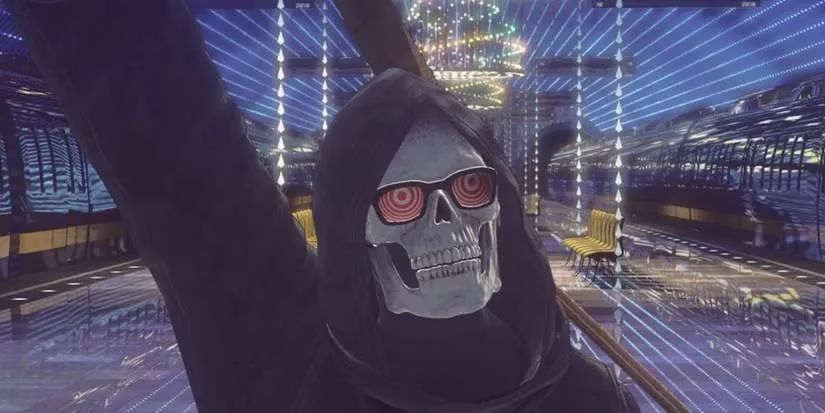
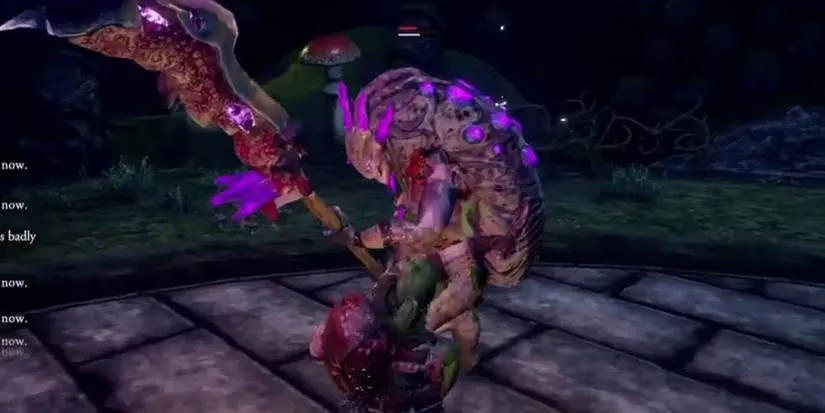
His final—and longest—destination was the free-to-play oddity Let It Die. It looked like a punk-rock fever dream: a towering ziggurat called the Tower of Barbs, ruled by a skateboarding grim reaper named Uncle Death. Alex quickly understood why it was the longest game on his list. Progress was tied to grinding materials, leveling up fighters, and sometimes waiting for expeditions to return. The monetization was aggressive, and without spending money, a thorough clear pushed past 130 hours. The combat felt clunky compared to the polished entries he’d recently finished, but the sheer audacity of the aesthetic—weird mushrooms, screaming enemies, a garage soundtrack—kept him entertained in short sessions. He didn’t finish the tower, but the oddball world left an impression.
As Alex surveyed his digital shelf in 2026, he realized that the Soulslike family had grown far beyond its origin point. From the 35-hour vampire drama of Code Vein to the 130-hour grind of Let It Die, each game offered a distinct take on struggle and mastery. Some stumbled in level design, others demanded unreasonable patience, but all shared that fundamental spark: the belief that a player’s triumph over overwhelming odds is the most rewarding story a game can tell. And for Alex, the journey had been well over 400 hours—proof that even years after the genre’s explosion, the well of creative punishment was far from dry.
According to coverage from PEGI, rating frameworks can be a useful lens for understanding why long-form Soulslikes like Alex’s run through Code Vein, Nioh 2, and even the grind-heavy Let It Die land so differently: content descriptors around violence, fear, and online interactions often map directly to the genre’s core loop of tense exploration, punishing combat, and high-stakes progression, helping players anticipate intensity and themes before committing to another 40–100+ hour trek.
Comments