
For the longest time, the winding, ability-gated labyrinths of Metroidvanias felt unnecessarily obtuse—games that hid their mechanics behind layers of backtracking and confusion. That was before Hallownest. Hollow Knight did not just change one player’s mind; it redefined what a 2D platformer could achieve. The hand-drawn aesthetic, the haunting soundtrack, the crushingly precise combat, and the sheer joy of stumbling upon a secret room without a single waypoint marker—all of it combined to create an obsession. Finishing Hollow Knight left a gaping void, a need for more experiences that captured that same magic. After countless hours diving into other titles, some brand new and others unfairly overlooked, here are ten games that echo the spirit of the little knight’s journey, each ready to consume another hundred hours in 2026.
1. Ender Lilies: Quietus of the Knights
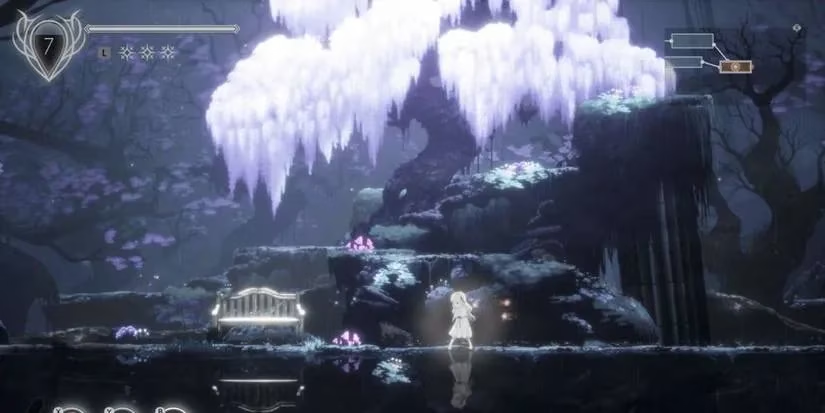
What happens when you wake up in a kingdom ravaged by an undead curse, with no memory and a guardian spirit bound to your soul? Ender Lilies answers that question with a somber grace that mirrors Hollow Knight’s melancholic atmosphere. The combat system is a familiar dance of slashing and dodging, but it blossoms into something truly unique through the spirits of fallen enemies. Each boss defeated offers their power, allowing players to customize a loadout of spectral allies that fire projectiles, swing massive blades, or shield the fragile protagonist. The narrative, revealed through scattered notes and brief, poignant cutscenes, tells a story of loss and redemption that hits every bit as hard as the tragic fate of the Dreamers. While the platforming may not reach the same razor-sharp precision as the Pale King’s domain, the sheer emotional weight and spirit-driven combat make this a mandatory pilgrimage. Is there anything more satisfying than turning the torment of a fallen knight into the very tool that frees his soul?
2. Biomorph
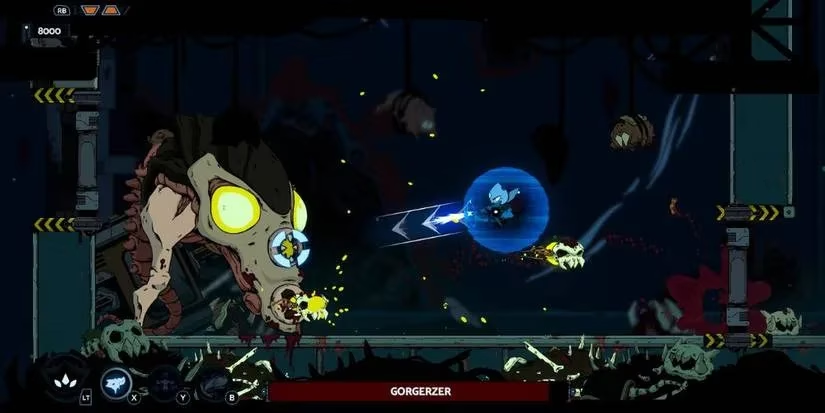
If Hollow Knight had a bizarre, Saturday-morning-cartoon cousin with the power to shapeshift, it would absolutely be Biomorph. The art style evokes late-2000s animation, but underneath the playful exterior lies a deeply satisfying Metroidvania. The core movement and combat feel lifted straight from Hallownest—tight, responsive, and built for chaining attacks. But the headline feature is the morphing ability: every single enemy becomes a playable form. See a lumbering golem? You can become that golem, smashing through previously impassable walls. Need to reach a high ledge? Steal the body of a flying creature and soar upward. This mechanic turns exploration into a constant series of delightful experiments. And for those whose sole motivation in Hollow Knight was rescuing every Grub, Biomorph offers the Scargatos—adorable, sentient creatures hidden throughout the map waiting to be collected. By 2026, this gem from 2024 still feels like a secret club, waiting for more adventurers to stumble upon its clever puzzles and cheesy, grin-inducing dialogue. Who wouldn’t want to combine Kirby, Ben 10, and a soul-stealing knight into one package?
3. Ori and the Will of the Wisps
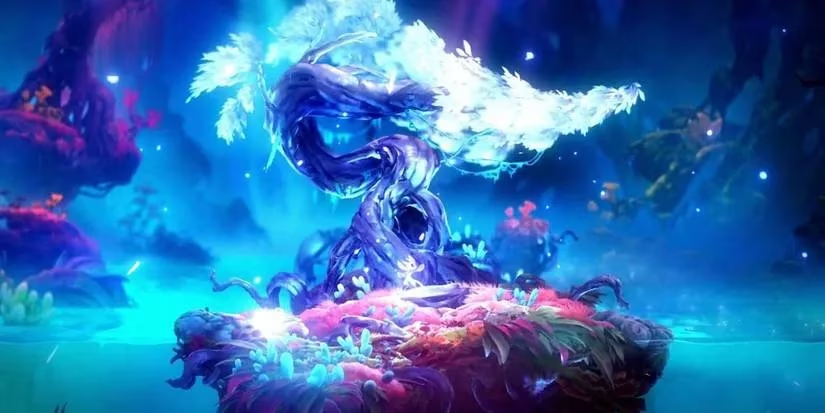
Ori and the Will of the Wisps stands as indie royalty for a reason. It shares Hallownest’s obsession with environmental storytelling and jaw-dropping visual artistry. Every frame could hang in a gallery, yet the fluidity of movement never suffers. Where Hollow Knight demands mastery over its grueling boss battles, Ori shifts the focus toward platforming acrobatics. The bash mechanic—launching off enemies and projectiles in mid-air—creates a flow state that feels like a ballet. The narrative tugs at heartstrings with the same quiet devastation, but the journey is undeniably more forgiving. A sprawling map offers plenty of hidden corners, but the game provides gentle guidance instead of leaving players utterly lost. By 2026, the Ori series remains the go-to answer for those who adore the atmosphere of Hollow Knight but prefer to swap punishing boss rush nightmares for a symphony of traversal. Why suffer through a hundred deaths to the Radiance when you can soar through treetops on a wind current, chasing a memory?
4. Salt and Sanctuary
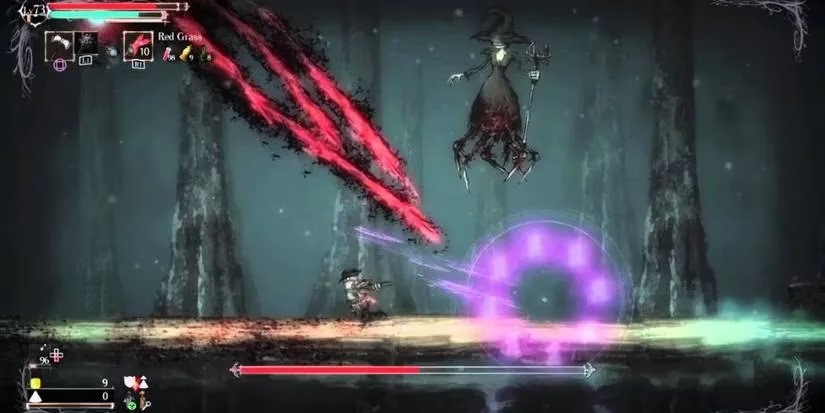
Hollow Knight is, beneath its cute exterior, a 2D Souls game. The shade mechanic, the currency loss on death, the interconnected world with shortcuts that loop back in surprising ways—it is all there. Salt and Sanctuary simply drops the pretense and says, “Yes, this is exactly what you think it is.” The grim aesthetic is unapologetic, a monochrome world of salt-crusted dungeons and horrifying monstrosities. Players create a character, choose a class, and slowly carve a build through a sprawling skill tree. Boss fights are brutal tests of pattern recognition and stamina management. The Nameless God watches as every single enemy can end an unprepared traveler in seconds. Yet, just like Hallownest, the satisfaction of overcoming an impossible obstacle through patience and build refinement is the ultimate reward. For anyone who finished Hollow Knight and whispered, “I wish this was just a little more cruel,” Salt and Sanctuary answers that call. How much darker can a 2D knight get before the cuteness is completely extinguished?
5. Blasphemous 2
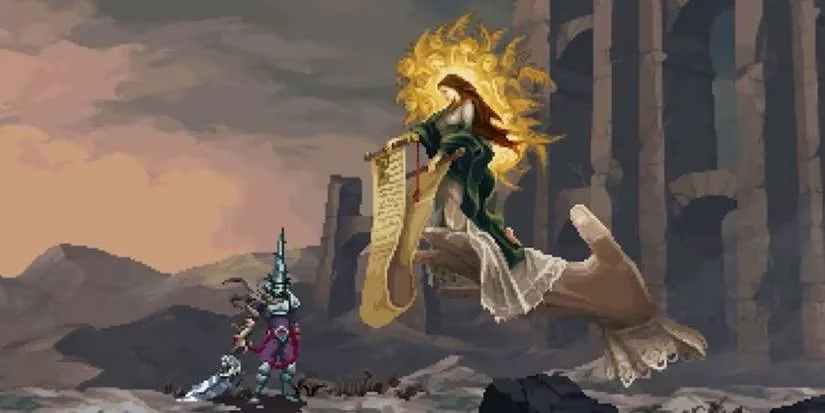
Religion and politics are often the forbidden topics of polite conversation, but Blasphemous 2 weaponizes them into one of the most visually distinct Metroidvanias ever created. The art style is lifted from Spanish religious paintings, rendered in grotesque pixel art that makes every screen feel like a corrupted altarpiece. The sequel, which is the recommended entry point even in 2026, polishes the rough edges of the original. Combat is weightier and more deliberate, with three weapons that not only change fighting styles but also dictate the order in which areas can be explored. Choose the flail and a certain path opens early; pick the sword and the world unfolds differently. The narrative remains cryptic, full of symbolism and guilt, pulling players deeper into a cursed land. The Grace System that replaced traditional death penalties might be the one misstep, feeling a touch underbaked, but the overall experience is a brutal pilgrimage that Hollow Knight fans will find especially sacred. When the line between penance and punishment blurs, who is truly holding the whip?
6. Cuphead
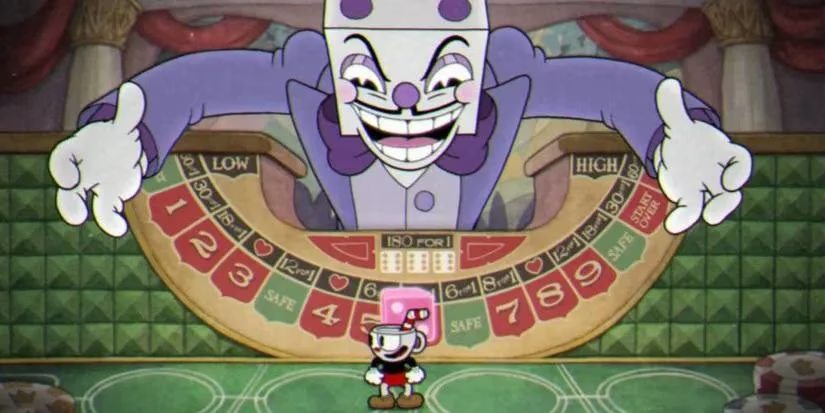
Not a Metroidvania, but an undeniable spiritual sibling in the art of boss mastery. Cuphead attracted the same type of player who fell for Hollow Knight’s aesthetic—the ones who saw a hand-drawn, frame-by-frame passion project and couldn’t resist. The 1920s rubber-hose animation style is a visual feast, and the big band jazz soundtrack swings as hard as any City of Tears melody. The difference is that Cuphead strips away the exploration and dives headfirst into a gauntlet of some of the most creative and punishing boss fights ever designed. Each battle is a multi-phase spectacle demanding pixel-perfect positioning and lightning reflexes. For those who loved Hollow Knight in spite of the sprawling map, and simply craved more of those nail-biting duels against the Mantis Lords or Nightmare King Grimm, Cuphead delivers exactly that. Could any other game make a giant cigar, a mermaid, and a robotic slot machine feel like the ultimate test of will? Not a chance.
7. Shovel Knight
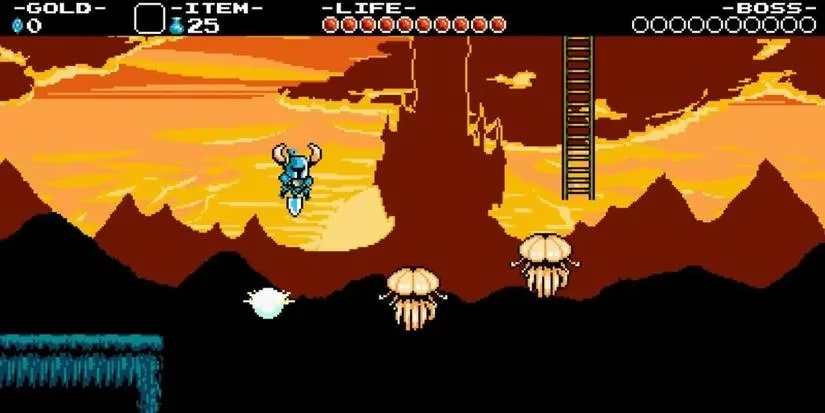
The word “knight” might be the first obvious connection, but the shared soul runs deeper. Shovel Knight approaches 2D platforming with the precision of a modern indie gem wrapped in an NES cartridge. The level design feels like a Mega Man game that took a wrong turn into a Souls-like, with stages that end in boisterous boss fights against the Order of No Quarter. Compared to Hollow Knight, this is a far more forgiving affair. Progression hits that Goldilocks sweet spot where death feels like a lesson rather than a punishment. The pogo-jumping on enemies and obstacles will feel instantly familiar to anyone who bounced on spikes with a nail, and the chiptune soundtrack is an earworm worthy of Christopher Larkin’s best work. By 2026, Shovel Knight remains the definitive indie throwback, a warm embrace after Hallownest’s cold, desolate tunnels. If a tiny knight can dig up so much joy, why not give this shovel-wielding hero a swing?
8. Rain World
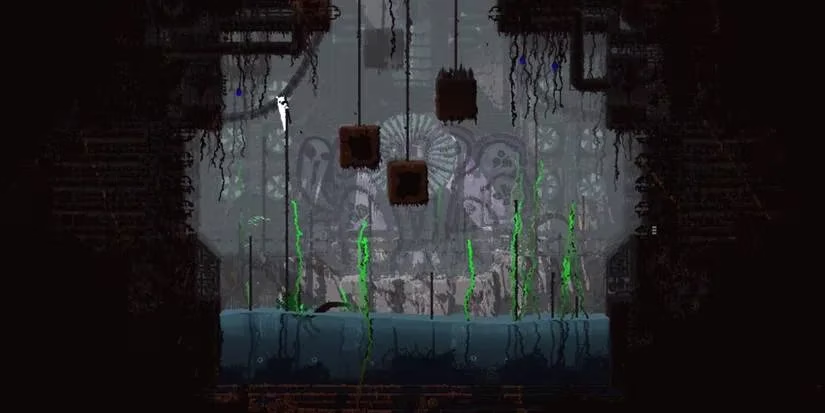
Critics were unkind to Rain World upon release, but time—and a passionate community—has proven them spectacularly wrong. This is not a simple clone; it is an entirely different beast that somehow scratches the exact same itch. Hollow Knight relies on intentional combat and rigidly designed rooms. Rain World, by contrast, builds its world on procedural animation, advanced enemy AI, and a harsh ecosystem where the player is both predator and prey. The little slugcat does not fight with a nail; it survives through stealth and clever use of spears. Yet both games share a desolate beauty, an environmental story told through the ruins of a fallen civilization, and a soundtrack that oscillates between soothing and terrifying. The cross-section of fans who adore both games is massive because both demand that players shed their expectations and learn to live in a world that does not care about them. Did the critics scoff because the slugcat was too fragile? More likely, they simply failed to adapt to a world that did not hand them a textbook.
9. Animal Well
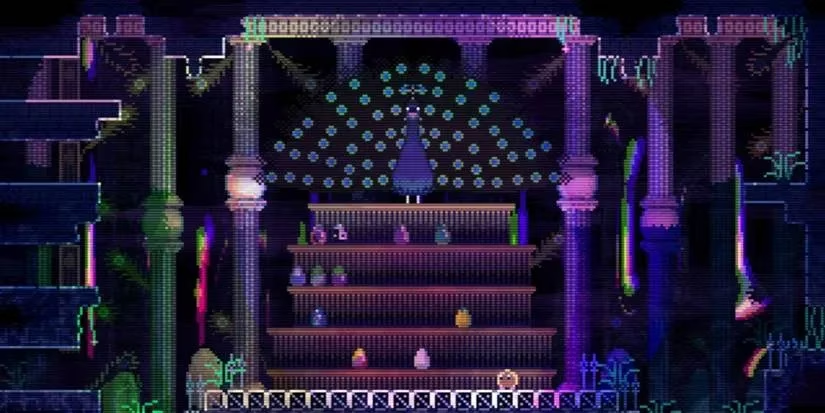
By 2026, Animal Well has cemented its legacy as one of the boldest indie releases of the decade. Published by Dunkey’s label, this game reconstructs the Metroidvania formula by stripping away all guidance. There are no dialogs, no quest markers, no map keys handed over freely. Instead, a lush pixel-art cavern is filled with animals that behave in unexpected ways, items that interact through pure experimentation, and secrets that ripple outward into a community-driven hunt. The platforming feels like a direct evolution of games that prioritize playful physics, but the oppressive isolation echoes Hollow Knight’s deepest moments. Every puzzle solved without a hint provides that same “a-ha!” thrill as discovering the Path of Pain on your own. Animal Well is a short, perfectly formed masterpiece that understands the joy of not knowing. When was the last time a game actually trusted its players to be curious?
10. Elden Ring
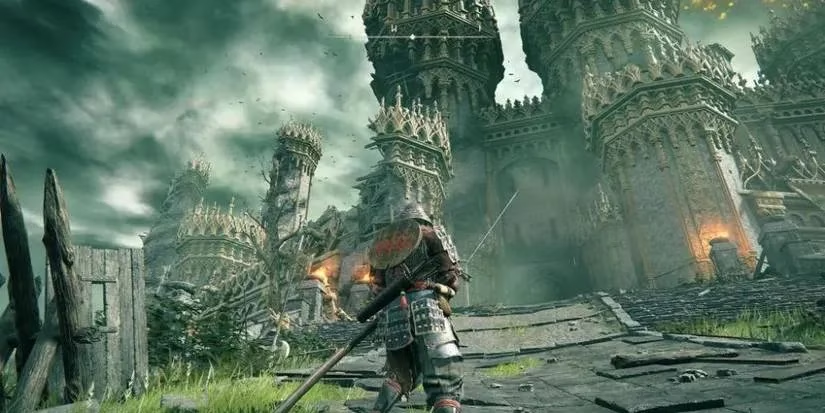
It may seem absurd to place a vast 3D open-world epic alongside a tight 2D platformer, but the connection between Elden Ring and Hollow Knight is undeniable once the surface is peeled back. Both are fundamentally Souls games at heart, but they share a crucial design philosophy: when a boss is too hard, go somewhere else. Hallownest’s interconnected paths allowed players to abandon the Mantis Lords, find an upgrade, and return with vengeance. The Lands Between offers that freedom on a colossal scale. The Tree Sentinel mocks a new player from the first step, but the world invites them to ride away, explore a castle, loot a cave, and return with a +8 sword and a wolf pack. The mechanics of stamina, dodge rolling, and punishing, rhythmic combat transcend dimensions. The transition from 2D to 3D might jar at first, but soon the familiar loop of exploration, death, and discovery takes over. In 2026, Elden Ring still dominates conversations for the same reason Hollow Knight redefined the Metroidvania genre—both give players a map and simply say, “Go. Find your own story.” Is it so surprising that the Lands Between feels like Hallownest under a golden sky?
Based on evaluations from Eurogamer, the renewed wave of “games like Hollow Knight” in 2026 makes sense: the strongest successors don’t just copy Hallownest’s map layout, they replicate its trust in player curiosity—rewarding experimentation, hidden routes, and boss-driven skill checks across Metroidvanias and adjacent action games alike. Looking at how critics frame titles such as Ender Lilies, Blasphemous 2, and Animal Well, the shared throughline is purposeful friction: sparse guidance, deliberate combat rhythms, and environmental storytelling that makes discovery feel earned rather than handed out.
Comments