
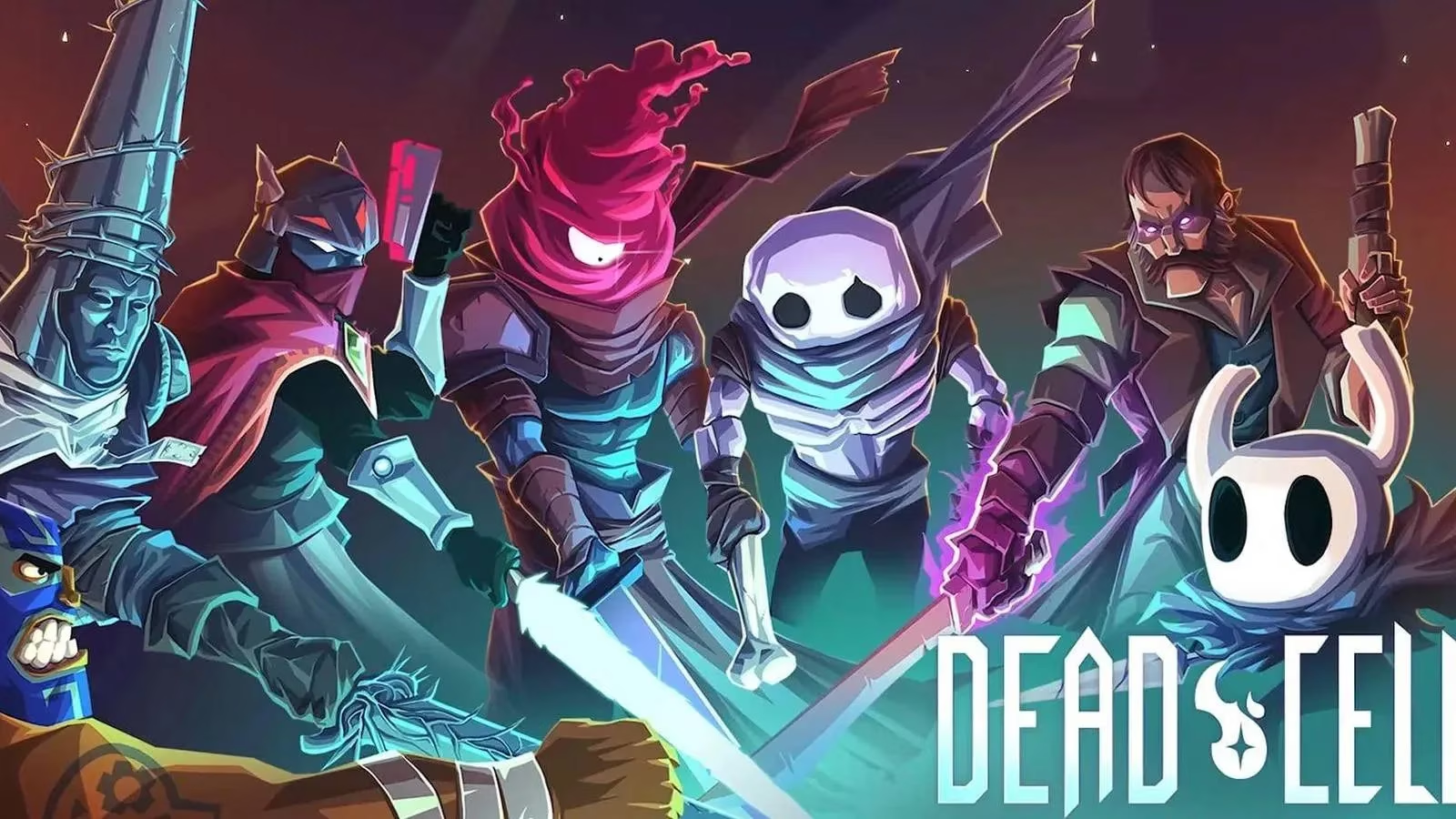
I still remember the first time I picked up Dead Cells back in 2018. I had no idea what I was getting into—just a recommendation from a friend who said, “Trust me, you’ll love it.” Now it’s 2026, and I’m still chaining runs, still cursing at the Hand of the King, and still smiling every time I stumble upon a reference I wasn’t expecting. That’s the magic of this game: it’s not just a masterclass in fluid combat and tight roguelike design, it’s also a love letter to the entire indie scene. Over the years, Dead Cells has hosted some of the most delightful crossovers I’ve ever seen, but the developers at Evil Empire have always walked a fine line—and I respect them for it.
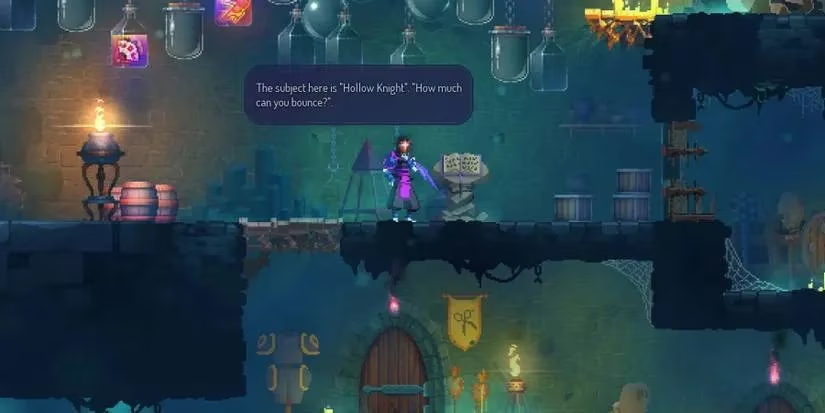
When I first noticed the Hollow Knight weapon or the tiny Knight’s vessel in the Prisoners’ Quarters, I freaked out. 🗡️ That was my second favorite game winking at me from inside my favorite game. Later, I discovered content from Hyper Light Drifter, Hotline Miami, Risk of Rain, and dozens of other titles. It felt like a secret handshake between devs and players. But I’ve since learned how these crossovers actually happen. Evil Empire COO Benjamin Laulan explained that it often started as something as simple as sending an email to a friend at another studio. No corporate red tape, no licensing minefields—just genuine admiration and a mutual desire to surprise the community. As Laulan put it, they wanted to make “Christmas presents” for the audience. That kind of personal, grassroots collaboration is something you’d never see in the AAA space, and it’s one reason I’ve stuck with Dead Cells for so long.
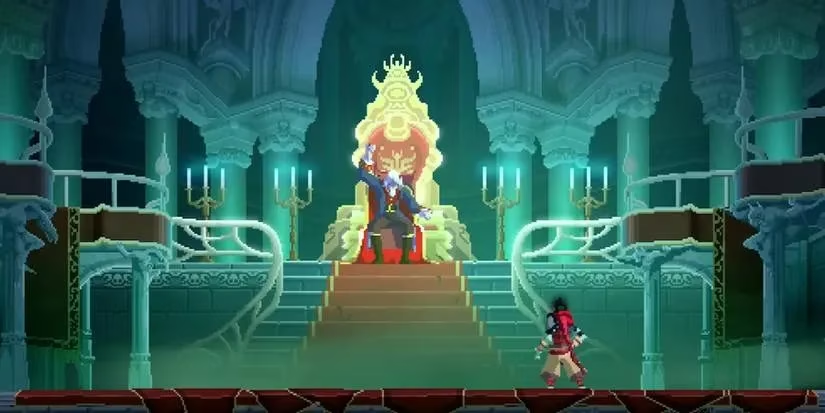
Of course, the biggest crossover of all for me was the Castlevania DLC. Dracula’s castle reimagined with the Dead Cells combat loop? Come on. 🧛♂️ Laulan noted that Castlevania: Symphony of the Night was one of Dead Cells’ main inspirations, so bringing that full-circle felt historic. I’ll never forget the first time I entered the clock tower area and heard those familiar chords. It was like the game was telling me, “We’ve come a long way, but we haven’t forgotten where we started.” The DLC wasn’t just a cheap skin swap; it added new biomes, bosses, weapons, and even remixed tracks that fit seamlessly into the Dead Cells universe. For a moment, I thought, “Could Dead Cells become the ultimate crossover platform?” But the devs had other plans.
After a string of cameo-packed updates, things started to shift. Laulan made it clear in interviews: “We’re not Fortnite.” And honestly? I breathed a sigh of relief. I love Fortnite for what it is—a cultural melting pot where Goku can dance alongside Spider-Man—but Dead Cells is different. It has its own universe, its own moody atmosphere, its own bizarre lore that I’ve come to care about. The Beheaded isn’t a blank slate for me; they’re a character with a journey I want to see unfold. The crossover content was amazing, but if every new update had just been more guest appearances, I think the soul of the game would have hollowed out. Laulan emphasized that the team wants to focus on “different ways of playing” and maybe take longer development times to genuinely reinvent the experience. That resonated with me.
Since that announcement back in 2023, I’ve watched Dead Cells evolve in fascinating directions. Sure, some crossovers still pop up here and there—I spotted a Terraria easter egg last year that made me grin—but the major updates have been all about deepening the original game. We’ve seen new branching paths, game-altering mutations, and even experimental modes that change how you approach the entire run. And all of that keeps the game fresh without diluting its identity. In 2026, Dead Cells remains my go-to comfort food. I can jump in for fifteen minutes or lose an entire afternoon, and the experience feels as tight as ever.
What I’ve taken away from this journey is that crossovers are at their best when they’re special treats, not the main course. The indie community thrives on collaboration, and I hope studios never stop celebrating each other’s work with those little nods. But I also appreciate a developer who knows when to say “no.” Dead Cells never needed to become a crossover machine to stay relevant. Its own combat, its own world, and its own relentless charm have already earned it a permanent place in my heart. Here’s to 35 updates and counting—may the Prisoner keep rolling for many years to come. 🏰
Comments